A Chronicle of Timekeeping
Our conception of time depends on the way we measure it
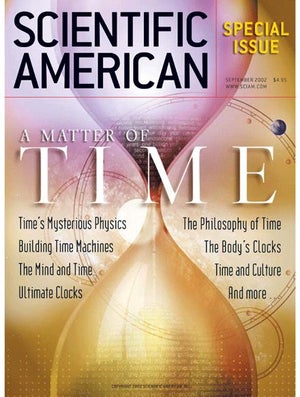
You are currently logged out. Please sign in to download the issue PDF.
Our conception of time depends on the way we measure it
From the fixed past to the tangible present to the undecided future, it feels as though time flows inexorably on. But that is an illusion
It wouldn't be easy, but it might be possible
Physicists can't seem to find the time--literally. Can philosophers help?
The pace of living quickens continuously, yet a full understanding of things temporal still eludes us
Whether they're counting minutes, months or years, biological clocks help to keep our brains and bodies running on schedule
Several brain structures contribute to "mind time," organizing chronologies of remembered events
What is time? The answer varies from society to society
Atomic clocks are shrinking to microchip size, heading for space--and approaching the limits of useful precision
The units of time range from the infinitesimally brief to the interminably long.The descriptions given here attempt to convey a sense of this vast chronological span.