The Vigilance Defense
Proven systems and well-prepared people are our best protection against bioterror
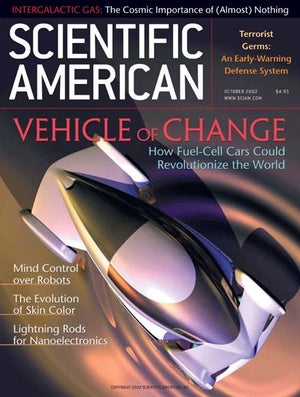
You are currently logged out. Please sign in to download the issue PDF.
Proven systems and well-prepared people are our best protection against bioterror
Throughout the world, human skin color has evolved to be dark enough to prevent sunlight from destroying the nutrient folate but light enough to foster the production of vitamin D
Space comes in degrees of emptiness, but even in the wasteland between galaxies it is not a complete void
Biologists and engineers are devising early-warning systems that can detect a bioterrorist attack in time to blunt its effects
People with nerve or limb injuries may one day be able to command wheelchairs, prosthetics and even paralyzed arms and legs by "thinking them through" the motions
It's not just about transportation: the transition to fuel-cell cars could transform energy infrastructures and developing economies while helping the environment