An Ancestor to Call Our Own
Controversial new fossils could bring scientists closer than ever to the origin of humanity
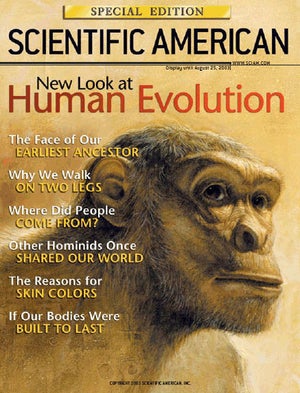
Special Editions are reserved for Unlimited subscribers. We invite you to sign in or upgrade your subscription to read this issue.
Controversial new fossils could bring scientists closer than ever to the origin of humanity
A new species of Australopithecus, the ancestor of Homo, pushes back the origins of bipedalism to some four million years ago
Today we take for granted that Homo Sapiens is the only Hominid on Earth. Yet for at least four million years many Hominid species shared the planet. what makes us different?
Controversial evidence indicates that these hominids interbred with anatomically modern humans and sometimes behaved in surprisingly modern ways
Africa is the birthplace of humanity. But how many human species evolved there? And when did they emigrate?
Both fossil and genetic evidence argues that ancient ancestors of various human groups lived where they are found today
Genetic studies reveal that an African woman from less than 200,000 years ago was our common ancestor
Dietary Change Was a driving force in human evolution
Throughout the world, human skin color has evolved to be dark enough to prevent sunlight from destroying the nutrient folate but light enough to foster the production of vitamin D
The difficulties of childbirth have probably challenged humans and their ancestors for millions of years-- which means that the modern custom of seeking assistance during delivery may have similarly ancient roots
Clear evidence of cannibalism in the human fossil record has been rare, but it is now becoming apparent that the practice is deeply rooted in our history