Our Uhs and Ums May Help Children Learn Language
We think we should remove any ums and uhs when we talk, especially when teaching children language. New research finds that such pauses may be useful. Christie Nicholson reports


Our Uhs and Ums May Help Children Learn Language
We think we should remove any ums and uhs when we talk, especially when teaching children language. New research finds that such pauses may be useful. Christie Nicholson reports
7 Ways to Cultivate Your Creativity [Slide Show]
How to unlock your untapped ingenuity


Are you smarter than a middle schooler? New site tracks science misconceptions

Adult Brain Shows Learning Changes Fast
Less than two hours of training over a few days produced noticeable brain changes in adult learners. Cynthia Graber reports

Readers Respond to "A Geometric Theory of Everything" and Other Articles
Letters to the editor from the December 2010 issue of Scientific American

Getting to Know You: Bit.ly Chief Scientist Finds Rich Data in Shortened Links
The brain behind many of the shortened URLs on the Web talks about data analysis and how it lets her figure out which soccer team won without watching the match

Solving the Cocktail Party Problem
Computers have great trouble deciphering voices that are speaking simultaneously. That may soon change

Cracking a Century-Old Enigma
Mathematicians unearth fractal counting patterns to explain a cryptic claim

Reflections from Science
Editor in Chief Mariette DiChristina introduces the April 2011 issue of Scientific American

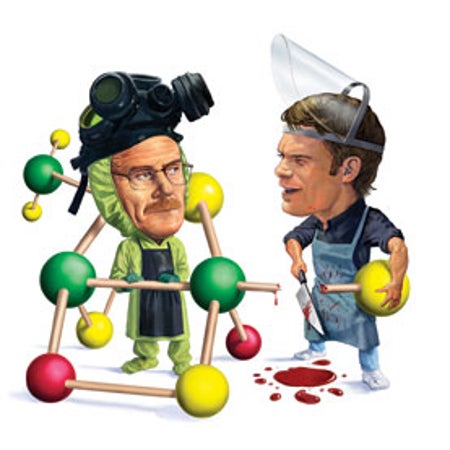
Killer Science Portrayed on Dexter and Breaking Bad
This may be the golden age of small-screen science

UFOs, UAPs and CRAPs
Unidentified aerial phenomena offer a lesson on the residue problem in science

Neuroscience in the Courtroom
Brain scans and other types of neurological evidence are rarely a factor in trials today. Someday, however, they could transform judicial views of personal credibility and responsibility