Mind & BrainJuly 9, 2015
Mentors Matter: In Loving Memory of Nicholas J. Mackintosh (1935-2015)
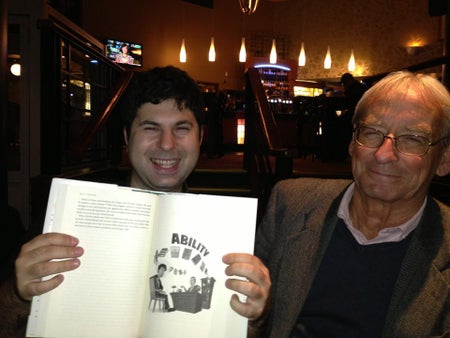
Today would have been my mentor's 80th birthday. Happy Birthday Nick and thanks for showing me that mentors really do matter.
Mentors Matter: In Loving Memory of Nicholas J. Mackintosh (1935-2015)
Today would have been my mentor's 80th birthday. Happy Birthday Nick and thanks for showing me that mentors really do matter.
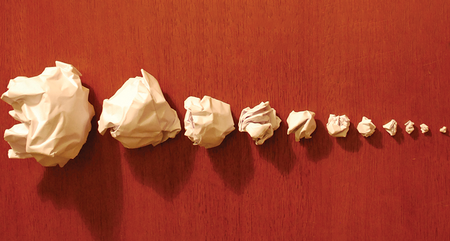
Developing Brains Fold Like Crumpled Paper to Get Their Convolutions
A single mathematical function explains how both a sheet of paper and a developing brain folds

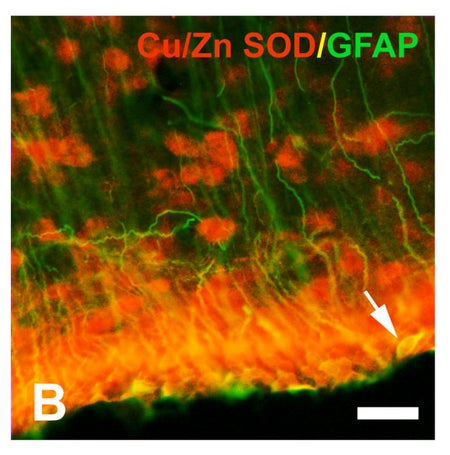
Sex Divide Seen in Mechanism That Produces Persistent Pain
Male and female mice are found to regulate pain sensitivity differently, a result which could explain why some drug experiments have failed

People Who Are Double-Jointed Are More Likely to Be Anxious
An underlying collagen abnormality may heighten both flexibility and fight-or-flight response
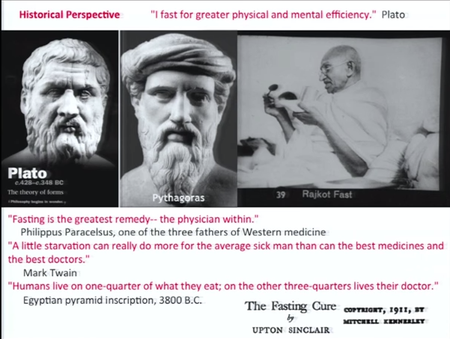
Stress Makes Your Brain Stronger: Try Fasting
A scientist who studies aging describes how going without food for a time can make your brain cells healthier
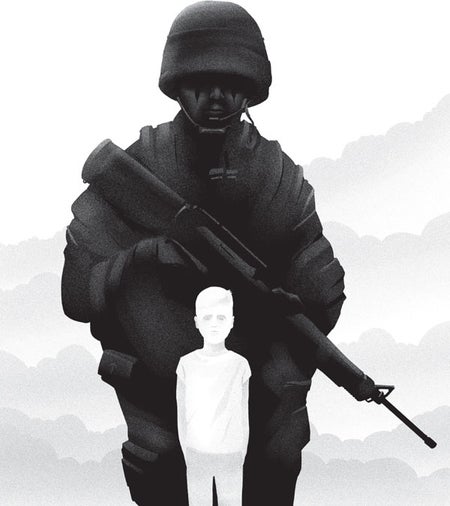
Can We Spot Soldiers at Risk for PTSD?
Telltale differences in the brain and immune system before deployment may predict which soldiers are most likely to succumb later on

Who Benefits Most from PTSD Treatment?
Although several therapies have shown some success in helping people exposed to traumatic experiences, not everyone recovers equally well
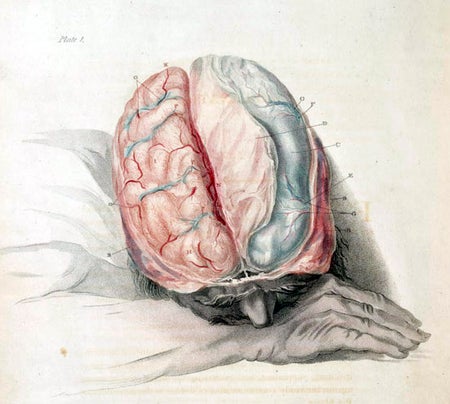
Teenagers Who Don't Get Enough Sleep at Higher Risk for Mental Health Problems
Every hour less per night increases the risk of sadness, substance abuse and suicidal thoughts
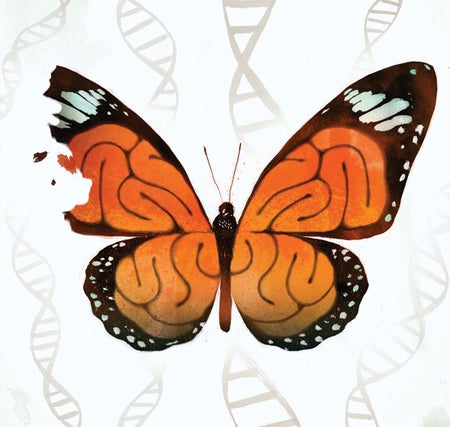
Schizophrenia May Be the Price We Pay for a Big Brain
The disease is linked to genetic changes on the evolutionary road from ape to human

Nail Biting May Arise from Perfectionism
Far more than a nervous habit, body-focused repetitive behaviors may be a response to boredom and frustration
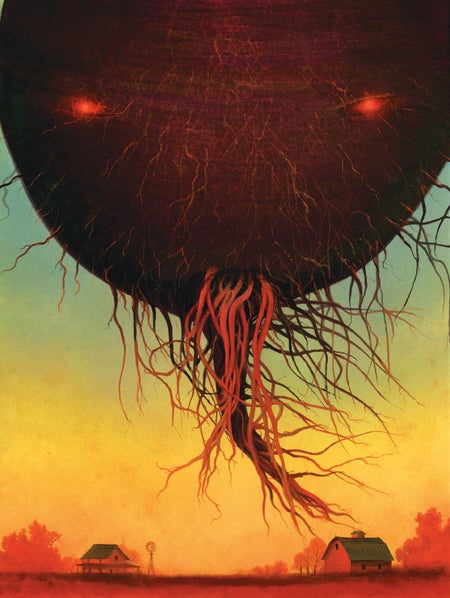
Toxic Chemicals in Fruits and Vegetables Are What Give Them Their Health Benefits
Chemicals that plants make to ward off pests stimulate nerve cells in ways that may protect the brain against diseases such as Alzheimer's and Parkinson's
Motor and Sensory Symptoms Help Predict Who Will Develop Lewy Body Dementia
The second-most common form of dementia has been difficult to study without a better understanding of early symptoms