

Welcome to Scientific American’s Science Talk, posted on April 22nd, 2019, Earth Day. I’m Steve Mirsky. On this episode:
CLIP
That’s Lauren Oakes. She’s a scientist with the Wildlife Conservation Society and an adjunct professor in earth system science at Stanford. She’s also the author of the book In Search of the Canary Tree: The Story of a Scientist, a Cypress, and a Changing World.
On supporting science journalism
If you're enjoying this article, consider supporting our award-winning journalism by subscribing. By purchasing a subscription you are helping to ensure the future of impactful stories about the discoveries and ideas shaping our world today.
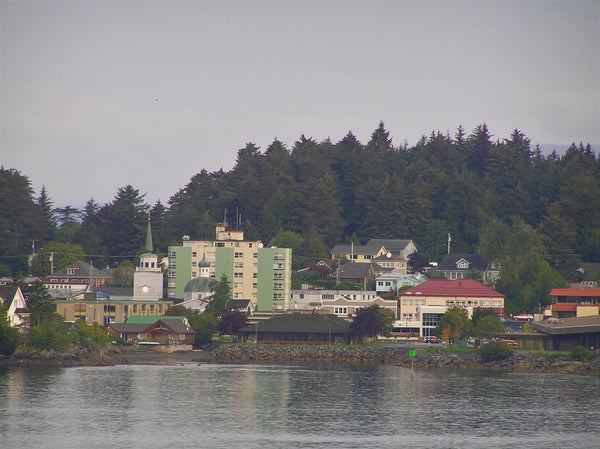
The canary tree is the yellow cedar, a type of cypress that’s native to coastal areas of northwest North America. Another name for it is the Alaska cypress. It’s being called the canary tree because it’s the canary in the coal mine up in Alaska, where Oakes did her research. In March, Alaska temperatures averaged 20 degrees Fahrenheit above historical norms. To talk about the book I called Oakes at her home in Bozeman, Montana.
OAKES SEGMENT
That’s it for this episode. Get your science news at our website, www.scientificamerican.com, where you can listen to a piece of music related to the canary trees. There’s a link to the audio in a story we picked up from Climate Central in September 2016. A Stanford researcher named Nik Sawe used turned Oakes’s tree-loss data into music in a process called data sonification.
And follow us on Twitter, where you’ll get a tweet whenever a new item hits the website. Our twitter name is @sciam. For Scientific American’s Science Talk, I’m Steve Mirsky. Thanks for clicking on us.
