
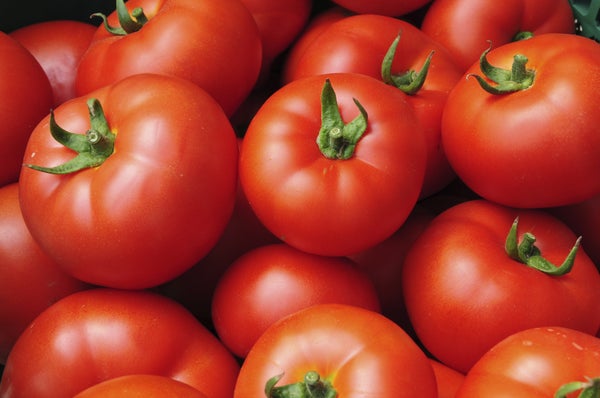

What comes to mind when you think of Alaska? Probably snow. And ice. And extreme cold. But what about tomatoes?
In fact, agriculture is booming in the 49th state. Because in the last seven years, nearly 700 giant greenhouses have popped up there, thanks to a program funded by the U.S. Department of Agriculture’s Natural Resource Conservation Service.
One greenhouse just outside Homer—an area better known for its halibut fishing—includes a tunnel packed with plants that produce fruits and vegetables that you’d expect to find on a dinner table closer to Mexico.
On supporting science journalism
If you're enjoying this article, consider supporting our award-winning journalism by subscribing. By purchasing a subscription you are helping to ensure the future of impactful stories about the discoveries and ideas shaping our world today.
ES: “Look at all those tomatoes back there… This is like the salsa tunnel…”
DF: “It is! It is! Come, come walk inside for a minute.”
ES: Okay!”
Farmer Donna Rae Faulkner. She guides me through rows of wall-to-wall and floor-to-ceiling greenery.
DM: “Yeah, this is the nightshades. So, all things nightshade: eggplants and peppers and tomatoes and tomatillos.”
And that’s her husband, Don McNamara.
With help from the sun, the inside of the tunnel becomes a region with what’s called a good hardiness zone—a standard the USDA uses to describe places where certain plants grow best. Meaning that Alaskan farmers can grow everything from corn to melons. Such tunnels are reliably warm and they help extend the growing season so that even in January, when the sun is only up for about five hours along Alaska’s southern coast, Donna Rae Faulkner can still farm.
DF: “Yeah, some of the Asian greens and kales and things like that can keep going through the winter. We often do covers within covers, so in addition to the high tunnel, which has a double layer of plastic, we might have, for instance, another low tunnel over those things in the winter time to give them the extra added protection.”
Community greenhouses have even popped up above the Arctic Circle in Alaska’s northernmost village, Barrow. That means Barrow residents can now farm for 11 months out of the year. But still not in January. Because that far north the sun never rises in January at all.
—Emily Schwing
[The above text is a transcript of this podcast.]
