Blasey Ford Spells Out Trauma Memory Formation

Christine Blasey Ford's professional expertise came into play during her testimony regarding the Supreme Court nomination.

Illustration of a Bohr atom model spinning around the words Science Quickly with various science and medicine related icons around the text

Join Our Community of Science Lovers!

Christine Blasey Ford is a professor of psychology at Palo Alto University and a research psychologist at the Stanford University School of Medicine. She reminded anyone listening of her scientific qualifications on September 27th when she testified before the Senate Judiciary Committee about Supreme Court nominee Brett Kavanaugh. California Senator Diane Feinstein is the questioner.

DF: “You were very clear about the attack. Being pushed into the room, you say you don’t know quite by whom, but that it was Brett Kavanaugh that covered your mouth to prevent you from screaming. And then you escaped. How are you so sure that it was he?”

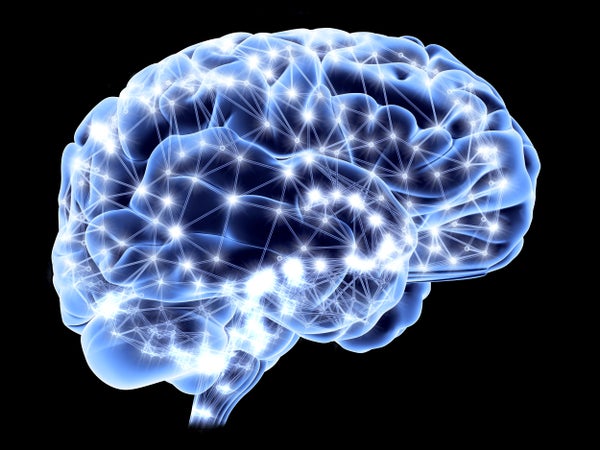
CBF: “The same way that I’m sure that I’m talking to you right now. It’s just basic memory functions. And, also just the level of norepinephrine and epinephrine in the brain that, sort of, as you know, encodes, that neurotransmitter encodes memories into the hippocampus. And so, the trauma-related experience, then, is kind of locked there whereas other details kind of drift.”


On supporting science journalism

If you're enjoying this article, consider supporting our award-winning journalism by subscribing. By purchasing a subscription you are helping to ensure the future of impactful stories about the discoveries and ideas shaping our world today.


DF: “So what you are telling us is this could not be a case of mistaken identity?”

CBF: “Absolutely not.”

—Steve Mirsky

[The above text is a transcript of this podcast.]

It’s Time to Stand Up for Science

If you enjoyed this article, I’d like to ask for your support. Scientific American has served as an advocate for science and industry for 180 years, and right now may be the most critical moment in that two-century history.

I’ve been a Scientific American subscriber since I was 12 years old, and it helped shape the way I look at the world. SciAm always educates and delights me, and inspires a sense of awe for our vast, beautiful universe. I hope it does that for you, too.

If you subscribe to Scientific American, you help ensure that our coverage is centered on meaningful research and discovery; that we have the resources to report on the decisions that threaten labs across the U.S.; and that we support both budding and working scientists at a time when the value of science itself too often goes unrecognized.

In return, you get essential news, captivating podcasts, brilliant infographics, can't-miss newsletters, must-watch videos, challenging games, and the science world's best writing and reporting. You can even gift someone a subscription.

There has never been a more important time for us to stand up and show why science matters. I hope you’ll support us in that mission.

Thank you,

David M. Ewalt, Editor in Chief, Scientific American

Subscribe