
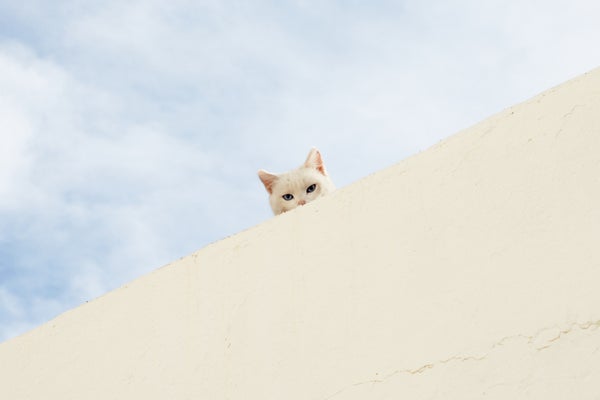

Almost any cat owner will testify to the felines’ apparent indifference to humans when we call their names. But according to a recent study, cats do recognize their names—or at least that we are indeed addressing them. It’s just that they still may not respond.
“I think cats associate sounds of their names with some rewards or punishments.”
Atsuko Saito, a behavioral scientist at Sophia University in Tokyo.
On supporting science journalism
If you're enjoying this article, consider supporting our award-winning journalism by subscribing. By purchasing a subscription you are helping to ensure the future of impactful stories about the discoveries and ideas shaping our world today.
Saito previously demonstrated that cats recognize their owners’ voices. In the new work, she and colleagues investigated the reactions of cats to hearing humans say their names. The study included 78 cats from Japanese households and from a “cat café,” a business where patrons can interact with felines.
Saito and her colleagues had owners say four words that sounded similar to their cats’ names until the animals habituated to those words and stopped responding. Next, the owners said the felines’ actual names. And indeed, the cats had more pronounced responses—moving their ears, heads, tails or meowing—than they did to similar words or to other cats’ names. The study is in the journal Scientific Reports. [Atsuko Saitoet al., Domestic cats (Felis catus) discriminate their names from other words]
The researchers also had people unfamiliar to the cats speak the names. Although the felines’ responses were less prominent than when their owners called them, they still appeared to recognize the words when spoken by strangers. But does that mean the cats know they are being called by name?
“There is no evidence that cats have the ability to recognize themselves, like us. So the recognition about their names is different from ours.” But Saito says she thinks we might be able to teach cats to recognize other words in addition to their names. “Our colleagues are investigating whether cats recognize other cohabiting cats’ names.”
Could this knowledge mean that humans could eventually train cats to respond to voice commands, the way dogs do? Purr-haps.
—Jim Daley
[The above text is a transcript of this podcast.]
