

The COVID-19 pandemic has a lot of people stuck at home with their cats—which raises some obvious questions: Can cats catch the new coronavirus from their owners? Can cats spread the disease to each other? And can people get infected by their cats?
Scientists have been so busy studying human-to-human transmission of the virus that few, so far, have looked at how it may be able to spread among cats and the humans they live with. But a few preliminary reports within the past few days suggest that cats can catch COVID-19, probably from humans, and then give it to other cats.
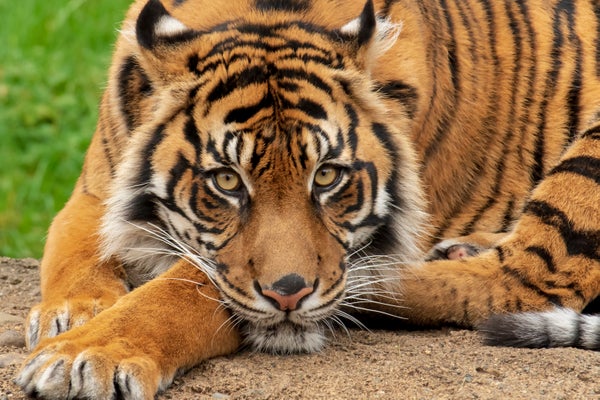
On April 5, the Bronx Zoo announced that four tigers and three lions have developed symptoms of the disease. Scientists at Cornell University and the USDA tested samples from one of the tigers and confirmed that it was infected with the SARS-CoV-2 virus. And researchers at the University of Illinois looked at the samples and found that the virus in the tiger was genetically indistinguishable from strains seen in humans.
On supporting science journalism
If you're enjoying this article, consider supporting our award-winning journalism by subscribing. By purchasing a subscription you are helping to ensure the future of impactful stories about the discoveries and ideas shaping our world today.
So the tiger must have caught this from a zookeeper—which is a little surprising. I mean, I would think six feet would be a minimum safe distance from a tiger under any circumstance. But perhaps someone coughed on her food.
COVID-19 doesn’t seem to be limited to big cats, either. Two research groups in China recently published studies on house cats in Wuhan and young cats raised in a lab. These preprints have not yet been peer-reviewed, and this is very early science that may well change with further study. That said, their findings are worrisome.
The Wuhan study did blood tests on 102 cats there to see whether any had antibodies to SAR-CoV-2, which would mean that they had been infected with the virus at some point. Fifteen percent of the cats tested positive. Three of those had been living with people who were diagnosed with COVID-19—those three had the most antibodies. The rest of the cats were strays or had been in pet hospitals.
The authors write that “immediate action should be implemented to keep a suitable distance between humans and companion animals such as cats..., and strict hygiene and quarantine measures should also be carried out for these animals.”
In a second study, scientists at a high-containment lab for animal diseases control in Harbin, China, deliberately squirted coronavirus into the noses of cats and other kinds of animals to see whether they became infected. In some good news, they did not see the virus taking hold in dogs, pigs, chickens or ducks. But it did replicate rapidly the respiratory tracts of both cats and ferrets.
Within a few days after infection, all of the cats they inoculated started shedding virus in their feces. The researchers placed an uninfected cat in a cage adjacent to each infected one. One third of those healthy cats then caught the virus from their sick neighbors.
So far, the CDC says, there is no evidence that people can catch COVID-19 from their cats. But absence of evidence is not evidence of absence. So until it’s clearer whether the virus can leap back from cats to their owners, it would seem smart to keep your cats indoors, to wear gloves and a mask when changing the litter box and to avoid kissing or rubbing noses with your little snookums.
—Wayt Gibbs
[The above is a transcript of this podcast.]
