

Are you afraid of sharks? What about snakes or spiders? Put those fears aside: because in the U.S. you’re far more likely to be killed or injured by a deer bounding across the road.
Bambi and his kind cause more 200 humans deaths each year, plus some 29,000 injuries, all because of 1.2 million collisions between vehicles and deer. Most incidents occur in the eastern U.S., where deer thrive without natural predators like wolves and mountain lions.
"That's the region in the U.S. where deer-vehicle collisions are such a problem, and where it seems like an effective large carnivore restoration could make a really big difference."
On supporting science journalism
If you're enjoying this article, consider supporting our award-winning journalism by subscribing. By purchasing a subscription you are helping to ensure the future of impactful stories about the discoveries and ideas shaping our world today.
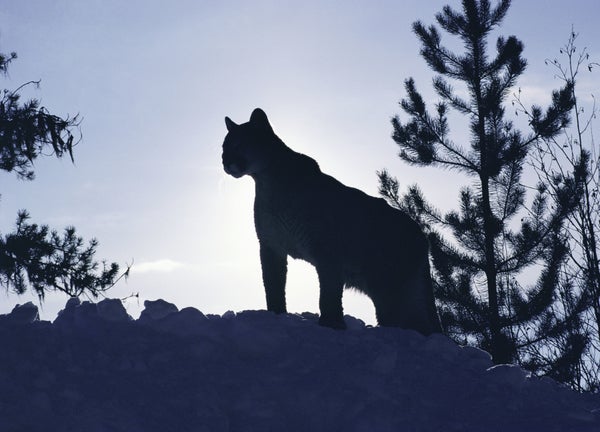
University of Washington wildlife biologist Laura Prugh. She thinks it would help to reintroduce predators like mountain lions, also known as cougars, pumas or panthers, to parts of their historic range from which they've been driven out.
Crunching the numbers, the researchers say that bringing the big cats back to the eastern U.S. would mean 22 percent fewer collisions between cars and deer over three decades. Each year would see five fewer human deaths, 680 fewer injuries and a savings of some $50 million. [Sophie L. Gilbert et al., Socioeconomic benefits of large carnivore recolonization through reduced wildlife-vehicle collisions, in Conservation Letters]
"Cougars have shown that they can coexist in close proximity with people, with very few conflicts, in a lot of areas out west."
Still, some folks might be understandably nervous about this kind of plan. After all, reintroducing predators doesn't come without risks to pets and to livestock, and very occasionally to people.
"Our fear of large carnivores is so primal and ingrained that I don't think it's possible to just completely override it with statistics…what I hope is that knowing that there actually can be some measurable benefits might make people a little more favorably inclined and maybe balance that fear a little bit."
Indeed, the statistics show that cougars would prevent five times as many human deaths from deer-related accidents as they would cause by attacks. But it’ll be a tough sell: the press will cover cougar attacks, but a statistically prevented death does not make the news. Nevertheless, “If people in Hollywood can put up with having mountain lions around, I would hope that New Yorkers would be up for the challenge as well."
—Jason G. Goldman
[The above text is a transcript of this podcast.]
