
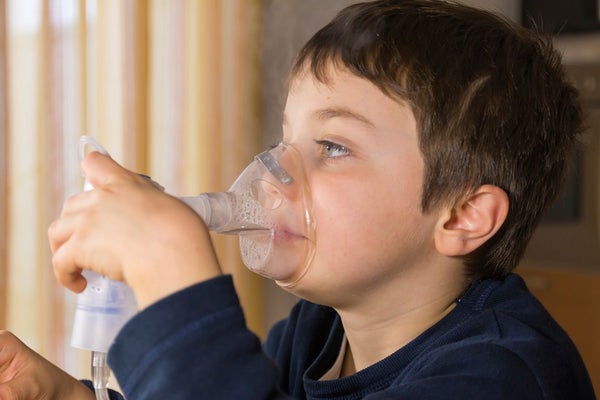

“Asthma is a very prevalent disease in our society now. It wasn’t so 50 years ago. And we now realize that the very early life microbes seem to have set you up or not for asthma.”
Microbiologist Brett Finlay, from the University of British Columbia. In a study of Canadian infants, his team found “at three months of age, which is a really tiny little kid, there are four microbes, if you had these four microbes you had very very low risk of getting asthma, if you didn’t have these microbes you were at very very high risk of asthma.”
Finlay spoke February 17th at the annual meeting of the American Association for the Advancement of Science in Boston. Where he also discussed a recent follow up study among kids in rural Ecuador.
On supporting science journalism
If you're enjoying this article, consider supporting our award-winning journalism by subscribing. By purchasing a subscription you are helping to ensure the future of impactful stories about the discoveries and ideas shaping our world today.
“And a big risk factor associated with asthma whether they had potable, clean water. So ironically the kids that got the clean water had higher asthma rates than the kids that had the dirty water. Now that makes sense in terms of microbial acquisition…it makes sense but I must admit I was surprised to see that, you’d think if we clean the water up that’s good for the world…this is all part of the big ‘hygiene hypothesis’…I say we’re suffering from a hygiene hangover, we have cleaned our world up too much, and we’re just not getting the microbes that our grandparents got. And as a result that’s affecting many, many of the diseases that we experience in our society that we didn’t experience a hundred years ago...
“And one of the things that I’m starting to realize is that maybe these microbes are actually endangered species and you think about your great grandkids, they’re gonna have very different microbes than you do and as we urbanize more and more our microbes become less diverse. And anyone that knows ecosystems, that’s not good, you want large diversity in rainforests, same as your microbes. So there are people that are bio-banking things, I’m not suggesting that maybe you should biobank your poop now and give it to your great grandkids, I don’t know. But…I worry we’ve gotten too clean and we have to ease off a bit…because we’ve taken a piece of our evolution right out of our bodies. We’ve evolved with these microbes all along, and they’re just not there anymore and I think we’re starting to see the effects in these diseases.”
—Steve Mirsky
[The above text is a transcript of this podcast.]
