
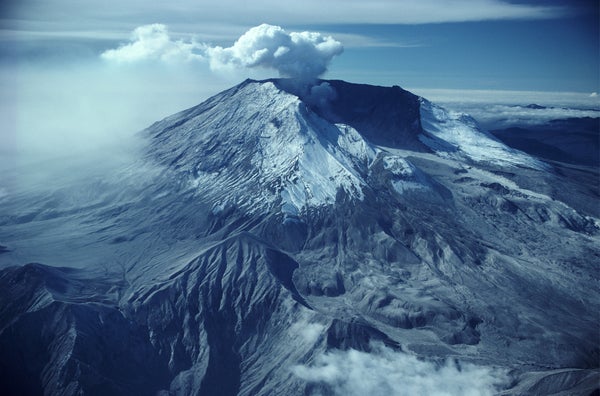

May 18th is the 37th anniversary of the massive explosion of Mount Saint Helens. But within days of the volcano erupting, the local ecosystem started to bounce back. Thanks to some unassuming little animals that spend lots of time underground.
“The pocket gophers were the ecological heroes of Mount Saint Helens.”
Emory University paleontologist and geologist Anthony J. Martin.
On supporting science journalism
If you're enjoying this article, consider supporting our award-winning journalism by subscribing. By purchasing a subscription you are helping to ensure the future of impactful stories about the discoveries and ideas shaping our world today.
“You normally don’t hear those words put together, pocket gopher and hero. But they were…these small burrowing mammals were able to survive this massive, devastating volcanic eruption.”
Just as numerous animals that live underground have survived catastrophes and predators for hundreds of millions of years. As Martin discusses in his new book The Evolution Underground: Burrows, Bunkers, and the Marvelous Subterranean World Beneath Our Feet.
“The reports I was reading about this, about how these researchers in helicopters are flying over the devastated landscape—just a few days later there were the burrow mounds. Pop pop pop. Thinking about these gophers that were below the ground. And they survived that....
“So that to me was a golden opportunity to talk about that, as this incredible story of survival, but also renewal. That these little burrowing mammals brought back that landscape. Because their burrows served first of all as refuge for any other small animals that were there. So other small mammals and other vertebrates, such as amphibians and reptiles that lived there, they were either in their own burrows or they were in pocket gopher burrows or other small mammal burrows in the area.
“The burrowing also brought up seeds. The seeds are already buried, so that caused plants to start sprouting in the area, where it wasn’t so much wind-blown seeds…then of course once other animals started coming back into the area, like elk, and they started dropping seeds through their feces and otherwise affecting the surface ecology, that then worked together to bring those ecosystems back to life. But the gophers were key in this. They really were essential for these ecosystems to be able to bounce back.”
You can hear an extended interview with Martin about his book in a Science Talk podcast posted on our website. And there’s a children’s book just about the gophers and Mount Saint Helens called Gopher to the Rescue by Terry Jennings. Finally, for general information about gophers and their effect on landscapes, check out the nature documentary Caddyshack.
—Steve Mirsky
[The above text is a transcript of this podcast.]
