

“Labeling is much better than it used to be.”
Marian Burros, retired New York Times food columnist.
“And when you read the labels you should really read them very, very carefully. Because they’ll give you all kinds of clues that you didn’t expect to see.”
On supporting science journalism
If you're enjoying this article, consider supporting our award-winning journalism by subscribing. By purchasing a subscription you are helping to ensure the future of impactful stories about the discoveries and ideas shaping our world today.
Burros spoke April 24th at a symposium honoring N.Y.U. food researcher Marion Nestle called Marion Nestle and the State of Food: Policy, Media, Education and More.
“A lot of people are now labeling with GMOs. I don’t worry about GMOs as much as I worry about the pesticides that are put on GMOs. I think that they’re very, very questionable. There’s big, big disagreement in the scientific community.
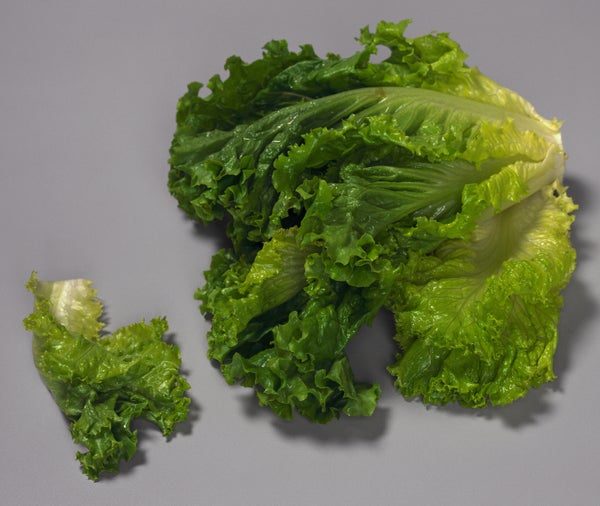
“So, there’s nothing in food today that isn’t political, but what is changing to a certain extent…is what consumers expect from their food. And it’s a whole lot more than they used to expect. They want fresh food. They want clean food. I’m not sure they know what clean food means, and I’m not sure I know what clean food means either. I don’t think it has anything to do with whether it’s been washed or not. How many people know about romaine lettuce in this audience right now?”
A recent E. coli outbreak traced to romaine from Yuma, Arizona, has so far hospitalized almost 50 people around the country. The CDC has recommended avoiding romaine unless it’s definitely not from the Yuma area.
“The federal government says that they’re not going to do any more than tell everybody that this is a problem, and not to eat it. They’re not going to look any further into it. Because the romaine will be coming from somewhere else than the place where it’s coming from right now, so everything will be settled. Well, everything won’t be settled. But that’s the kind of government you have to deal with. So, you have to be your own scientist, your own investigator, maybe you have to spend more time in the supermarket than you really want to spend in the supermarket.
“But the other kinds of things people are anxious to have are things that are very easy and quick to do, but are very healthful. So, they want purity—a lot of people want organics…I can go into Walmart and get lots and lots of organics. Well, that’s the last place in the world I would ever have expected to find organics. But you can find them.
“So, what you have today is a combination of some things getting better. But you can’t ever let down your guard…and even though it’s really a pain in the neck you have to look very carefully at everything you buy and don’t pay attention to any of the advertising. None of it. Because that’s not really what you need to know.”
—Steve Mirsky
[The above text is a transcript of this podcast.]
