
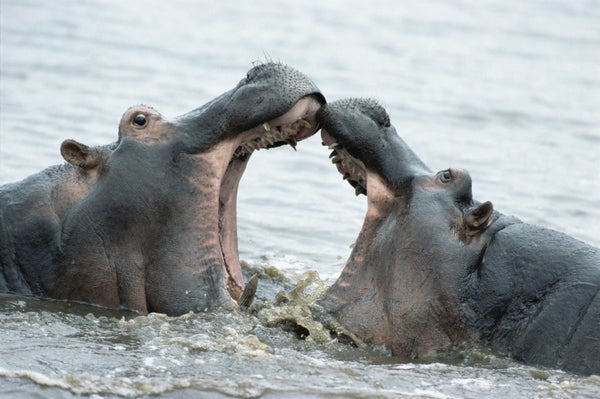

Hippopotamuses. People usually think of them as massive, lumbering hulks of plant-eating muscle. Reports do crop up of hippos snacking on crocs or chowing down on a drowned wildebeest. Those anecdotes are often dismissed as aberrant behaviors—opportunistic protein snacks added to a diet made mostly of salad. But it turns out that hungry, hungry hippos intentionally seek out the sweet, sweet taste of animal flesh.
“We saw a bunch of wild dogs come and attack an impala, and the impala jumped into the water, tried to swim across the little lake, and the hippo killed it. Then a few minutes later, that hippo and a bunch of other hippos started eating on that impala.”
University of Alaska research Joseph P. Dudley was in Zimbabwe studying elephants when he saw this scene play out more than 20 years ago.
On supporting science journalism
If you're enjoying this article, consider supporting our award-winning journalism by subscribing. By purchasing a subscription you are helping to ensure the future of impactful stories about the discoveries and ideas shaping our world today.
“About that time, the wild dogs caught and killed another impala right next to the edge of the water hole, and three hippos came out of the water and tried to take away the carcass of the impala, the antelope, from the wild dogs. As far as I had ever heard, hippos didn’t do either of these things.”
We now know that carnivory is actually common among hippos. And meat-eating could explain what’s been a hippo public health mystery: anthrax outbreaks happen naturally among African herbivores, but the pattern of anthrax transmission in hippos has always puzzled researchers. Could their hankering for meat explain it?
Dudley’s latest research suggests that the hippos’ could owe their unique susceptibility to anthrax die-offs to their practice of eating meat that carries the infection—including the bodies of other dead hippos. The study is in the journal Mammal Review. [Joseph P. Dudley et al, Carnivory in the common hippopotamus Hippopotamus amphibius: implications for the ecology and epidemiology of anthrax in African landscapes]
And that means that humans who come into contact with hippo meat need to take care. At least 511 Zambians became infected, and five died, because they handled or consumed hippo meat during a 2011 anthrax outbreak among the amphibious mammals. That’s one advantage of being a vegetarian—for both hippos and humans.
—Jason Goldman
[The above text is a transcript of this podcast.]
