

INTRO: This is Scientific American’s 60-Second Science. I'm Ashleigh Papp.
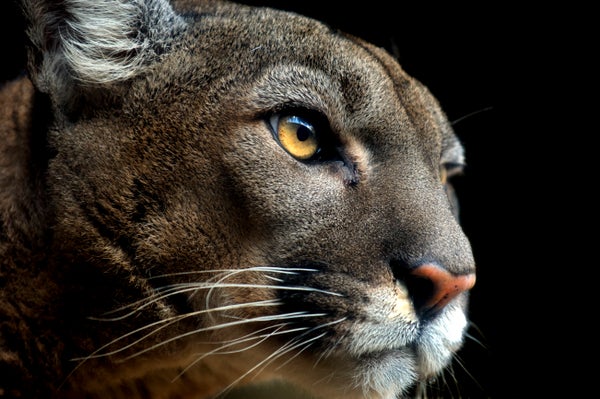
Papp: Mountain lions are now posing for their close ups. Researchers based in the greater Yellowstone National Park area have figured out a new way to identify these cats by using facial recognition. And this method is proving to be a better way to monitor these highly elusive creatures.
Alexander: Mountain lions are just really, really hard to directly observe. They're just so cryptic and secretive. And so we've had to find these non-invasive methods, they're often called to, to get information about a mountain lion population.
On supporting science journalism
If you're enjoying this article, consider supporting our award-winning journalism by subscribing. By purchasing a subscription you are helping to ensure the future of impactful stories about the discoveries and ideas shaping our world today.
Papp: That’s Peter Alexander, a research biologist based in Kelly, Wyoming, who led the research project.
One tool that researchers like Alexander are using is a camera trap. The traps, which are about the size of a shoe box or even a coffee cup, are attached to something that's along the animal's regular path, like a tree that the puma has territorially scraped.
When motion is detected, the trap gets triggered, resulting in a snapshot of the mountain lion as it strolls by. The cameras even have an infrared flash so that nighttime photos are captured without disturbing the animal.
Researchers around the world use this type of tool to estimate population numbers and overall abundance of species. They comb through the images, sometimes using machine learning algorithms, and analyze them to identify individuals. But according to Alexander, there's a problem with this method when it comes to ID'ing mountain lions:
Alexander: Tigers that's kind of the classic example of using cameras for individual identity. Because those stripes, they're like a fingerprint. (10:17) And so a cougar, they do not have any of those really conspicuous stripes on their sides. And so yeah, just your typical flank view shot can be pretty nondescript.
Papp: That’s because nearly all pumas around the world, with exceptions of distinguishing things like scars, have light, sandy colored fur down their sides. The scientific name for a mountain lion, Puma concolor, literally translates to "one color". This lack of unique coloration on the sides of their bodies means that researchers like Alexander can't usually tell if one puma crosses a camera trap five times, or if five individual animals pass by.
However, it’s a different story when it comes to their facial markings — they're kind of a show stopper.
Alexander: You get a close up image of a face, they're stunning. Just those huge eyes, and there's a lot of detail in whisker patterns and all sorts of stuff. They really are beautiful.
Papp: So, Alexander and his team decided to capitalize on the dramatic facial features of mountain lions. They added a few gadgets to their camera traps so that when motion was detected, a cougar kitten call was played. This noise reliably peaked the interest of passerby pumas so that they looked up long enough for the camera trap to grab a face shot.
Five independent investigators reviewed the puma headshots and attempted to ID the individual animals. Compared to the traditional side angle camera trap, the new attention-getting device was about 92% more accurate. This work was recently published in the journal Ecology and Evolution.
This study is an important step on the path to being able to more confidently identify and track animals, in a really scalable way. Snapping headshots of mountain lions also opens up new opportunities to involve AI techniques. Like, the facial recognition technology used by airport security — this could really expedite the image analyzation process for researchers.
Alexander: I think that's very possible. That could be a really useful technique in the future. There have been a lot of other facial recognition studies done on animals, but it's never been with a camera trap. So that was kind of the unique thing about this study was merging these two ideas.
Papp: And beyond being able to more precisely understand how many mountain lions are in an area, Alexander says that this new camera trap method could be used for tracking other critters that lack distinguishing side colors but have unique features elsewhere. This includes vulnerable species like wolverines, pine martens, and even grizzly bears. That’s worth saying "cheese" for the camera, don't you think?
OUTRO: Thanks for listening! For Scientific American's 60-Second Science, I’m Ashleigh Papp.
[The above text is a transcript of this podcast.]
