
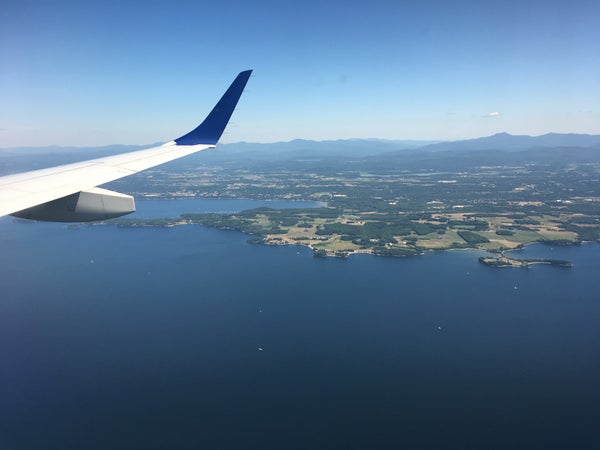

Here are two things that you probably didn’t think were connected: the COVID-19 pandemic and weather forecasts. But there is a link: commercial air travel. As jetliners carry passengers around the world, they also collect vital weather measurements, like air temperature and wind speed. During the pandemic, however, air travel has come almost to a halt.
“In February, let’s say, we have 100 percent. And then in March we go down by half. And April go down by another half. So currently, possibly, we just have one quarter of aircraft running. So you can imagine the gap of observations.”
Ying Chen, a meteorologist at the University of Lancaster in England.
On supporting science journalism
If you're enjoying this article, consider supporting our award-winning journalism by subscribing. By purchasing a subscription you are helping to ensure the future of impactful stories about the discoveries and ideas shaping our world today.
To create weather forecasts, meteorologists need to feed accurate information about current weather conditions into their models. And planes are one of the best ways to get such info, since they sample the atmosphere at different altitudes and locations. But with the coronavirus grounding flights around the world, meteorologists are feeling the loss.
“I analyzed three months of spring, which is March, April and May. And I see temperature, wind speed—forecast accuracy all goes down.”
Forecast quality declined the most for long-range projections and over remote areas where planes are one of the few sources of data. In Greenland, for example, the accuracy of temperature forecasts has decreased by as much as 3.5 degrees Fahrenheit.
Areas with heavy air traffic, like the U.S. and China, were also affected because fewer flights means less data. Europe made out better, thanks to its dense network of ground-based weather stations. The results are in the journal Geophysical Research Letters. [Ying Chen, COVID-19 pandemic imperils weather forecast]
Subpar forecasts may sound like little more than a headache. After all, weather is notoriously unpredictable. But Chen says it could be a big problem for many industries—like utilities, which have to estimate household heating and cooling needs in order to meet electricity demand. Farmers also rely heavily on forecasts to decide when to plant and harvest crops.
And Chen says that lower-quality forecasts could make it harder to provide early warning for extreme weather events.
“Now we are going into summer, so we have hurricane season or monsoon season.”
If so, we can only hope that while the COVID keeps the skies quiet, the weather stays quiet, too.
—Julia Rosen
[The above text is a transcript of this podcast.]
