How Your Homes and Buildings Affect You

Journalist and author Emily Anthes talks about her book The Great Indoors: The Surprising Science of How Buildings Shape Our Behavior, Health, and Happiness.

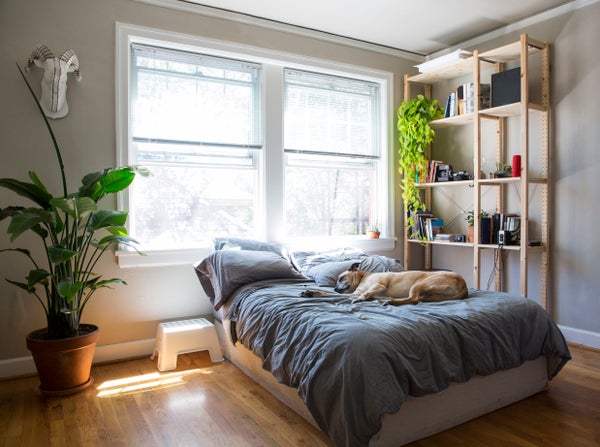
Good dog.

Join Our Community of Science Lovers!

This is Scientific American’s Science Talk, posted on July 30, 2020. I’m Steve Mirsky. On this episode:

[ANTHES CLIP]

That’s Emily Anthes. She was on the podcast back in 2013 to talk about her biotech book Frankenstein’s Cat. Her new book is The Great Indoors: The Surprising Science of How Buildings Shape Our Behavior, Health, and Happiness.


On supporting science journalism

If you're enjoying this article, consider supporting our award-winning journalism by subscribing. By purchasing a subscription you are helping to ensure the future of impactful stories about the discoveries and ideas shaping our world today.


We’ll also listen to a segment, sponsored by AstraZeneca, about easier and more widely available cancer biopsies.  

But first, Emily Anthes. I called her at home in Brooklyn. So you’ll also hear some of the authentic sounds of the streets of New York’s most populous borough.

[ANTHES 1]

More with Emily Anthes coming up. But first, a segment sponsored by AstraZeneca.  

[ASTRAZENECA SEGMENT]

Now more with Emily Anthes, author of The Great Indoors.

[ANTHES 2]

That’s it for this episode. Get your science news at our Web site (www.ScientificAmerican.com), where all of our coronavirus coverage is out from behind the paywall, available free.

And follow us on Twitter, where you’ll get a tweet whenever a new item hits the Web site. Our twitter name is @sciam. For Scientific American’s Science Talk, I’m Steve Mirsky. Thanks for clicking on us.

It’s Time to Stand Up for Science

If you enjoyed this article, I’d like to ask for your support. Scientific American has served as an advocate for science and industry for 180 years, and right now may be the most critical moment in that two-century history.

I’ve been a Scientific American subscriber since I was 12 years old, and it helped shape the way I look at the world. SciAm always educates and delights me, and inspires a sense of awe for our vast, beautiful universe. I hope it does that for you, too.

If you subscribe to Scientific American, you help ensure that our coverage is centered on meaningful research and discovery; that we have the resources to report on the decisions that threaten labs across the U.S.; and that we support both budding and working scientists at a time when the value of science itself too often goes unrecognized.

In return, you get essential news, captivating podcasts, brilliant infographics, can't-miss newsletters, must-watch videos, challenging games, and the science world's best writing and reporting. You can even gift someone a subscription.

There has never been a more important time for us to stand up and show why science matters. I hope you’ll support us in that mission.

Thank you,

David M. Ewalt, Editor in Chief, Scientific American

Subscribe