

In North America, many critters commonly encountered today—like wild turkeys or white-tailed deer—were brought back from near oblivion through conservation efforts led by hunters. Meanwhile, in Africa, some of the most charismatic species are now being hunted into extinction. But hunting can also have impacts that are far more subtle.
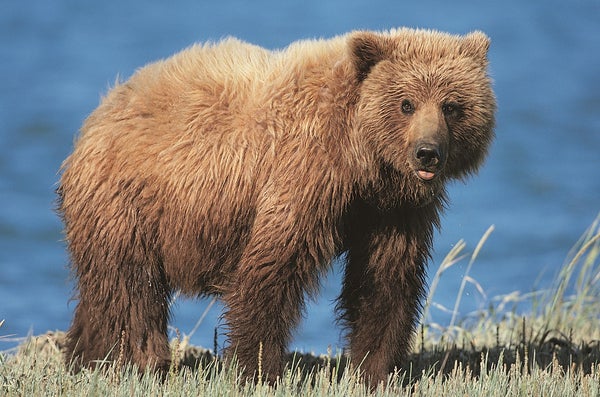
Take the brown bear, known here in the U.S. as the grizzly. When large mammals like grizzlies are hunted, evolution might select for speedier life cycles. That is, in order to successfully reproduce before they risk getting shot, bears might begin having cubs at a younger age. That change also allows them to reproduce more times throughout their lives. But that’s not the only possible reaction to being hunted.
"The brown bear population in Sweden has been monitored for about 30 years. And researchers in Scandinavia have noticed that females started to change their reproductive strategies. They would observe that females would keep their cubs for longer periods of time nowadays."
On supporting science journalism
If you're enjoying this article, consider supporting our award-winning journalism by subscribing. By purchasing a subscription you are helping to ensure the future of impactful stories about the discoveries and ideas shaping our world today.
University of Sherbrooke biologist Joanie Van de Walle.
"Usually females give birth in January while in their den… But some females, rather than weaning their cubs after one year and a half, continue to care for them for an extra year."
So some brown bear mothers in this population began to spend more time, not less, caring for their cubs.
"And we have seen that since 2005 the proportion of females that keep their cubs for two years and a half has increased dramatically. Nowadays, its about 36 percent of females that use that tactic, whereas before 2005, it was about only 7 percent or so."
But that increased investment comes at a cost: by spending more time with their cubs, it takes longer before the mothers reproduce again. It seems as if evolution settled on a tradeoff: have fewer offspring, but invest more energy in their care. The finding is in the journal Nature Communications. [Joanie Van de Walle et al., Hunting regulation favors slow life histories in a large carnivore.]
And the change can be traced to Swedish hunting regulations. The law prohibits killing females if they are accompanied by cubs. So females that happen to have the urge for extra maternal care don’t get shot—and this also gives the youngsters protection and guaranteed nutrition.
The study underscores how different kinds of hunting regulations can lead to different outcomes for wild animals. This kind of knowledge helps wildlife managers ensure the long-term viability of wildlife populations, while also allowing for sustainable hunting—which itself can be a conservation tool.
—Jason G. Goldman
[The above text is a transcript of this podcast.]
