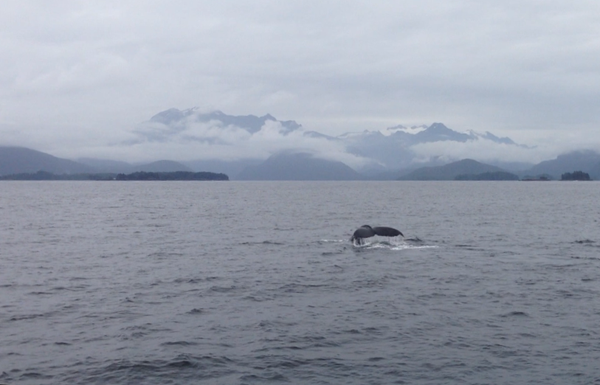
Blue Planet II is a critically acclaimed 2017 BBC documentary series about the world’s oceans, hosted by the great David Attenborough. And it’s now available on Netflix. Which presents a unique opportunity. Shark researcher David Shiffman, a postdoctoral fellow at Simon Fraser University in Vancouver, explains:
“This Sunday, Monday and Tuesday join us for a synchronized viewing where everyone no matter where you are presses play on Netflix at the same time and follow along on Twitter with #blueplanetchat as a team of ocean science and conservation experts watch the show, some of us, like me, for the first time, and provide our own running commentary. We’re also happy to answer any questions that anyone has about ocean science and conservation issues as the series progresses.”
The live tweeting commences with the first episode of Blue Planet II at 6pm Eastern time on Sunday, December 16th. Followed by episodes two and three. Four and five start at 8 P.M. Eastern on Monday. Six and seven begin at 8 P.M. Eastern on Tuesday. For the full schedule go to #blueplanetchat.
On supporting science journalism
If you're enjoying this article, consider supporting our award-winning journalism by subscribing. By purchasing a subscription you are helping to ensure the future of impactful stories about the discoveries and ideas shaping our world today.
—Steve Mirsky
[The above text is a transcript of this podcast.]
Subscribe to Support Independent Journalism
Great science journalism requires human expertise, time, effort and creativity. And it costs money. That’s why I and the journalists here at Scientific American hope you’ll join our community.
When you subscribe, you are supporting staff and freelance journalists who are passionate about telling science stories that are true, important and compelling. Our editors and reporters are often experts in their fields, which means they understand the nuances of big discoveries and can untangle the breakthroughs from the hype. With a subscription, you are also supporting rigorous fact-checking to ensure the words we publish are precise and accurate. And you’re supporting original illustrations, graphics and photos that bring you closer to an advanced laboratory, an ice sheet in Antarctica or a space mission in orbit. You’re helping us craft other types of high-quality journalism as well: Our newsletters are carefully written, edited and curated by staffers you have or will come to know and love. Our Science Quickly podcast is based on original reporting, collaboration with editors and scientists and exacting production.
Subscriptions keep this engine running so we can continue to deliver thoughtful, rigorous and independent science journalism to you. In an era of viral misinformation, this work is crucial. If you value what we do, I hope you’ll consider joining us as a subscriber