
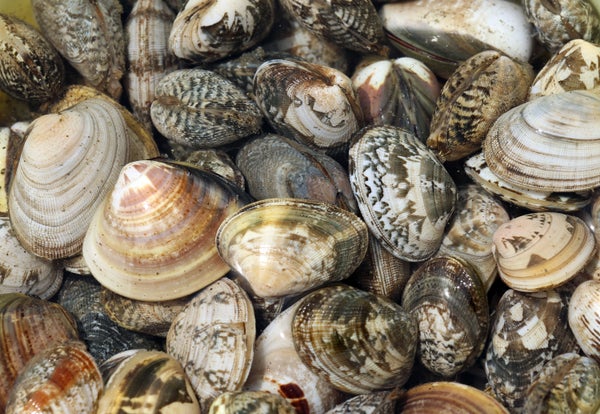

Around 100,000 years ago, in what is now Italy, our Neandertal cousins waded out into the shallow coastal waters of the Mediterranean Sea in search of clams. They grabbed the mollusks from the seafloor and perhaps even dived for them in deeper water. And they also simply collected clams from the beach. But the creatures weren’t just food.
In a recent study, University of Colorado, Boulder, archaeologist Paola Villa and her team report that Neandertals modified the clams’ hard shells into tools for cutting and scraping. The clam-derived implements were found inside the Grotta dei Moscerini, a coastal cave that was first rediscovered around 85 years ago.
By examining wear and tear on the shells, the researchers determined that about 75 percent of the tool source material had been found dead on the beach. These shells had been worn down from being battered by waves and sand. But the remaining shells were smooth and shiny, indicating that the clams were still alive on the seafloor when they were gathered.
On supporting science journalism
If you're enjoying this article, consider supporting our award-winning journalism by subscribing. By purchasing a subscription you are helping to ensure the future of impactful stories about the discoveries and ideas shaping our world today.
These shells were also thicker and therefore might have made more durable tools. So even though gathering clams underwater took more work than picking them up on the beach, the effort may have been worth it.
Also found in the Grotta dei Moscerini were pumice stones from volcanic eruptions that had occurred to the south of the site. Those stones may have been used by Neandertals as abrasive tools.
The study is in the journal PLOS ONE. [Paola Villa et al., Neandertals on the beach: Use of marine resources at Grotta dei Moscerini (Latium, Italy)]
Neandertals were making these tools more than 50,000 years before modern humans first arrived in Western Europe. But Neandertal intelligence was dismissed by the scientific community during much of the 20th century. In recent years, however, evidence of their tool use and even artistic abilities has grown. Neandertals hunted, made cave art, cooked with fire, used boats and went fishing. Just last year, for example, research by Villa and others found that Neandertals living not far from the Grotta dei Moscerini site used resin adhesives to attach handles to stone tools.
They may have gone extinct some 40,000 years ago, but it’s becoming ever more clear that Neandertals were intelligent, creative people—who led fully human lives.
—Susanne Bard
[The above text is a transcript of this podcast.]
