

“As somebody who is part of the executive branch and serving in this role which I can consider to be a great privilege, as director of NIH, I am confident that the convictions that are held by many Americans and by most members of the Congress, that biomedical research is one of most important investments that our government makes, will carry the day and that I think that there’s no reason for people to commence hand-wringing by this unexpected turn of events.”
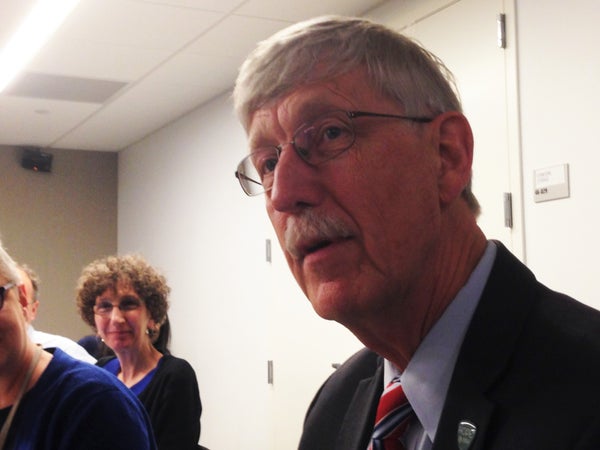
Francis Collins, director of the National Institutes of Health, at the offices of Scientific American and the Nature journals on November 14th. He was asked about the future of the NIH after the election and the inauguration of the new president on January 20th.
“I do think the case for what medical research is doing right now in terms of its advances in human health, its way of stimulating the economy—which is quite substantial—and it’s achieving American leadership, which has made a big difference over the decades, is a sufficiently compelling case that people looking at the evidence all pretty much come to the conclusion that this is an area that we, if anything, ought to enhance and certainly not retrench.
On supporting science journalism
If you're enjoying this article, consider supporting our award-winning journalism by subscribing. By purchasing a subscription you are helping to ensure the future of impactful stories about the discoveries and ideas shaping our world today.
“So I think the facts and the circumstances cause me to be quite confident that the area that I’ve had the privilege of representing will continue to do well, regardless of exactly what happens in the course of political events. You can watch and see if I turn out to be wrong, but that’s my position and I’m sticking to it.”
As for his own future:
“I have no idea. I am appointed by the president. I, like every other presidential appointee and Senate-confirmed person am required to submit a letter of resignation by December 7th, I will do that. The letter will say I am resigning effective January 20th. And until that moment it may not be that clear what happens next, my mind is pretty open to that. I’m actually kind of enjoying the ambiguity of not knowing what comes next. I will continue to oversee my research lab at NIH come what may. I run a lab of about 10 people…I have some incredibly gifted postdocs right now who are making major advances in diabetes and aging research. And I will continue to be their mentor and their research advisor as I have done for the past now 23 years since I’ve been at NIH. So at least that part of what happens after January 20th is clear. The rest—it’s really not up to me.”
—Steve Mirsky
[The above text is a transcript of this podcast.]
