
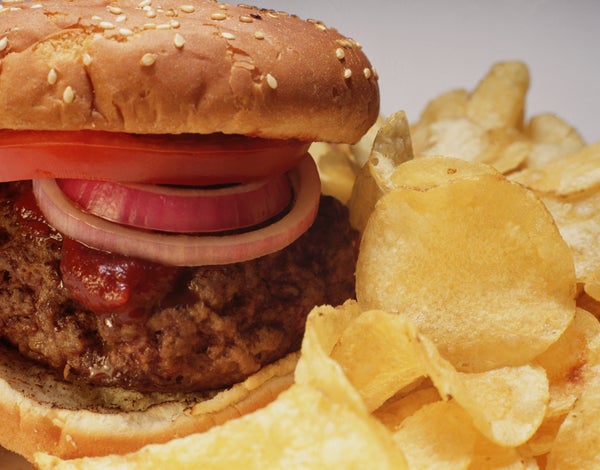

In Marcel Proust’s iconic Remembrance of Things Past, a taste of cake elicits a flood of memories.
Now a study finds that the stronger your memory of a particular food, the more likely you are to choose it again. And it doesn’t matter how objectively unattractive the food may be—which perhaps explains why you may crave those peanut butter and marshmallow sandwiches from your youth or can’t break that fried chicken habit when trying to diet.
The food-memory study is in the journal Neuron. [Sebastian Gluth et al, Effective Connectivity between Hippocampus and Ventromedial Prefrontal Cortex Controls Preferential Choices from Memory]
On supporting science journalism
If you're enjoying this article, consider supporting our award-winning journalism by subscribing. By purchasing a subscription you are helping to ensure the future of impactful stories about the discoveries and ideas shaping our world today.
Researchers asked 30 hungry young people to rate snacks such as potato chips and chocolate. No actual food was presented. The snacks were merely displayed on screens associated with locations. Then the study participants were asked to choose between two locations, as proxies for the snacks. And the hungry subjects went with memory over taste preference—that is, they picked what they were better able to remember even if they had rated them lower in the first part of the test.
The participants’ brains were scanned during the process of choosing. And the researchers found that the exercise caused increased communication between the hippocampus, associated with memory, and the part of the frontal lobe home to decision-making.
Which may show why when we’re making food decisions, familiarity often wins out over other factors—and why your shopping list looks virtually the same week after week.
—Erika Beras
[The above text is a transcript of this podcast.]
