Science Briefs from around the World

Here are some brief reports about science and technology from all over, including one from Antarctica about how there’s something funny about penguin poop.

Nitrous oxide formation formation.

Illustration of a Bohr atom model spinning around the words Science Quickly with various science and medicine related icons around the text

Join Our Community of Science Lovers!

Hi, I’m Scientific American assistant news editor Sarah Lewin Frasier. And here’s a short piece from the August 2020 issue of the magazine, in the section called Advances: Dispatches from the Frontiers of Science, Technology and Medicine. The article is titled “Quick Hits,” and it’s a rundown of some noncoronavirus stories from around the globe.

From Canada:
A new study models how a gigantic, morphing blob of liquid iron in Earth's outer core underneath the Canadian Arctic is losing its grip on the North magnetic pole. A second, intensifying blob below Siberia is pulling the pole away.

From Scotland:
A geologic-dating effort suggests the fossil of a millipedelike creature found on the island of Kerrera formed 425 million years ago, making it possibly the oldest-known fossilized land animal. (Older land animals have been spotted indirectly, through preserved tracks.)


On supporting science journalism

If you're enjoying this article, consider supporting our award-winning journalism by subscribing. By purchasing a subscription you are helping to ensure the future of impactful stories about the discoveries and ideas shaping our world today.


From Tanzania:
Researchers discovered Africa's largest-ever collection of fossilized human footprints, left in volcanic mud about 10,000 years ago. Many of them came from a group of 17 people, mostly women, all walking in the same direction.

From Norway:
Archaeologists are excavating a 20-meter Viking ship, buried below a farmer's field, to stop a wood-eating fungus from destroying it. Ground-penetrating radar had found the ship in 2018, and a new wood sample analysis revealed that it could not be preserved underground.

From Zambia and Mongolia:
This spring a satellite-tagged cuckoo completed an epic 12,000-kilometer journey from Zambia to Mongolia. It had originally been tagged in Mongolia in 2019 and traversed 16 countries in its round-trip migration.

And from Antarctica:
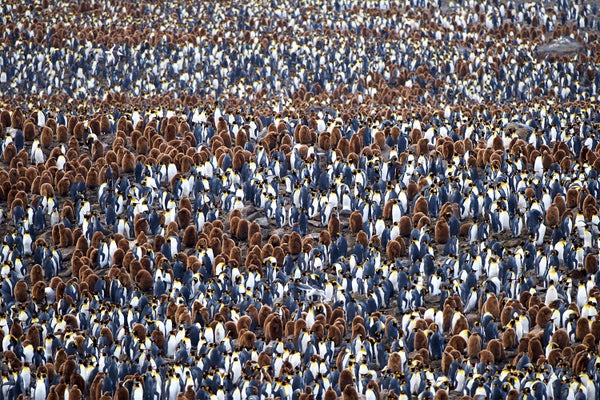
Scientists found that king penguin excrement releases nitrous oxide–also known as laughing gas. It forms as soil bacteria eat the droppings' nitrogen-rich compounds.

That was “Quick Hits.” I’m Sarah Lewin Frasier.

[The above text is a transcript of this podcast.]

Sarah Lewin Frasier is a senior editor at Scientific American. She plans, assigns and edits the Advances section of the monthly magazine, as well as editing online news, and she launched Scientific American’s Games section in 2024. Before joining Scientific American in 2019, she chronicled humanity’s journey to the stars as associate editor at Space.com. (And even earlier, she was a print intern at Scientific American.) Frasier holds an A.B. in mathematics from Brown University and an M.A. in journalism from New York University’s Science, Health and Environmental Reporting Program. She enjoys musical theater and mathematical paper craft.

More by Sarah Lewin Frasier

It’s Time to Stand Up for Science

If you enjoyed this article, I’d like to ask for your support. Scientific American has served as an advocate for science and industry for 180 years, and right now may be the most critical moment in that two-century history.

I’ve been a Scientific American subscriber since I was 12 years old, and it helped shape the way I look at the world. SciAm always educates and delights me, and inspires a sense of awe for our vast, beautiful universe. I hope it does that for you, too.

If you subscribe to Scientific American, you help ensure that our coverage is centered on meaningful research and discovery; that we have the resources to report on the decisions that threaten labs across the U.S.; and that we support both budding and working scientists at a time when the value of science itself too often goes unrecognized.

In return, you get essential news, captivating podcasts, brilliant infographics, can't-miss newsletters, must-watch videos, challenging games, and the science world's best writing and reporting. You can even gift someone a subscription.

There has never been a more important time for us to stand up and show why science matters. I hope you’ll support us in that mission.

Thank you,

David M. Ewalt, Editor in Chief, Scientific American

Subscribe