

[CLIP: Snapping shrimp sound]
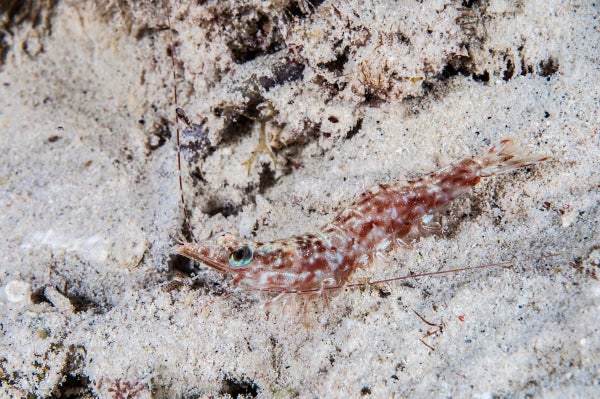
Rice Krispies? Rain hitting a tin roof? Bacon frying? How about noisy creatures known as snapping shrimp.
Warm temperate and tropical coastal waters around the world are teeming with these noisy little creatures. They snap their claws so fast that they produce a bubble. When the bubble bursts, it makes a loud popping sound.
On supporting science journalism
If you're enjoying this article, consider supporting our award-winning journalism by subscribing. By purchasing a subscription you are helping to ensure the future of impactful stories about the discoveries and ideas shaping our world today.
“It’s this sort of persistent background noise, these snapping shrimp kind of crackling.”
Aran Mooney, a marine biologist at Woods Hole Oceanographic Institution.
The shrimp produce the loud sound to stun prey. So how would this persistent background noise be affected by oceans getting warmer in coming years? To find out, Mooney and his colleague Ashlee Lillis analyzed audio recordings of the critters in their natural environment.
They also performed lab experiments with snapping shrimp collected fromthe wild, in water of varying temperatures. And they found that when water heats up, the shrimp start snapping more—and the water’s soundscape gets louder. They shared their findings in February at the Ocean Sciences Meeting 2020 in San Diego.
The researchers aren’t sure what’s causing this change in shrimp behavior—but they have an idea.
“We don’t precisely know the mechanism of why they’re snapping more often. What we think is that these guys are basically just ectothermic animals. So that means they’re directly responding to environmental conditions around them. So basically, as you increase the water temperature, it increases their metabolic rate—they get more metabolically active, so they are able or trying to snap more.”
If these shrimp do make the ocean noisier as the climate warms, both marine creatures and humans could face new problems. Many ocean animals use sound to communicate. And both the Navy and fishermen rely on marine acoustics to do their work.
“You know, we never really thought about how that ocean background noise or its own fog is sort of naturally increasing, in what we think is temperature driven or climate change driven. So as you raise those levels, it gets harder to ‘see’ through that acoustic fog.”
—Annie Sneed
[The above text is a transcript of this podcast.]
