

“I think we all agree that there is a crisis, even, in our society about how we use science. We all know about climate change denial on one side, but there's also all the issues about opposing GMO's or anti-vaccination.”
Lucy Jones. She’s a seismologist and a policy advisor on earthquake risk. She spoke February 17th at the annual meeting of the American Association for the Advancement of Science in Washington, D.C.
“And what we are seeing here is there is a significant part of society that doesn't understand how the scientific process works. And looks at scientific information as something you get told to believe because the scientists said it's true. And then if you’re believe that authority figure, there are several others you could turn to as well.”
On supporting science journalism
If you're enjoying this article, consider supporting our award-winning journalism by subscribing. By purchasing a subscription you are helping to ensure the future of impactful stories about the discoveries and ideas shaping our world today.
So, what to do? In 2016 she founded the Dr. Lucy Jones Center for Science and Society, which tries to get the public and policy makers to use scientific information to improve the resiliency of their communities. And here’s a brief portion of her talk proposing solutions to the problem of the gap between scientists and society.
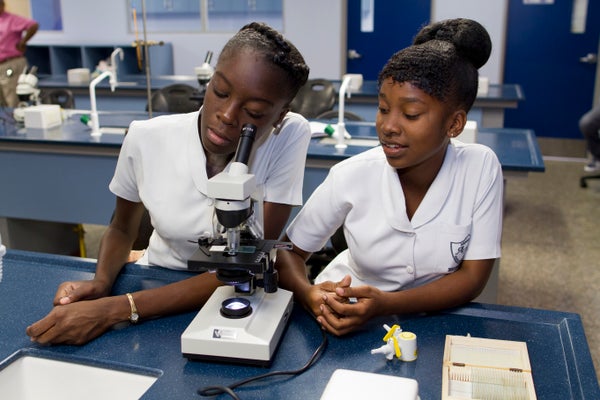
“We need to look at science education for the broader public more focused on process rather than results. And this is another place where the internet has really changed things. When I was in school, if you want to learn those facts, you sort of had to get it from the teachers and learn enough to be able to go out and start doing research. Now if you want a result you can get it on your computer right away. What we need to do is not be teaching kids, for instance, that dinosaurs evolved into chickens, but rather how to recognize that the ‘connection-between-dinosaurs-and-the avian-species’ Web site is more reliable than one that tells us we descended from visitors from Mars. Both of them are out there on the internet.”
You can listen to Lucy Jones’s entire talk. Just look for the annual meeting live stream at meetings.aaas.org.
—Steve Mirsky
[The above text is a transcript of this podcast.]

