

Foraging for food in urban areas is on the rise. Not dumpster diving. Collecting fruits and herbs.
Throughout cities, forgotten fruit trees still produce, well, produce. For example, there was a peach tree in my former backyard in Somerville, near Boston. And today there are even maps to some of those trees so foragers can take advantage of free produce that otherwise goes largely uneaten—by people, anyway.
But after one member of what’s called the League of Urban Canners in the Boston area was discovered to have relatively high levels of blood lead, researchers at Wellesley College decided to test urban fruit and herbs. They wanted to see if the fruit posed a threat due to lead or other contaminants in urban soils.
On supporting science journalism
If you're enjoying this article, consider supporting our award-winning journalism by subscribing. By purchasing a subscription you are helping to ensure the future of impactful stories about the discoveries and ideas shaping our world today.
The League of Urban Canners provided 166 samples of foraged fruit, including apples, peaches, and cherries, and herbs. The scientists dehydrated samples in a manner similar to that of the urban canners, and they compared those specimens to commercially available fruit.
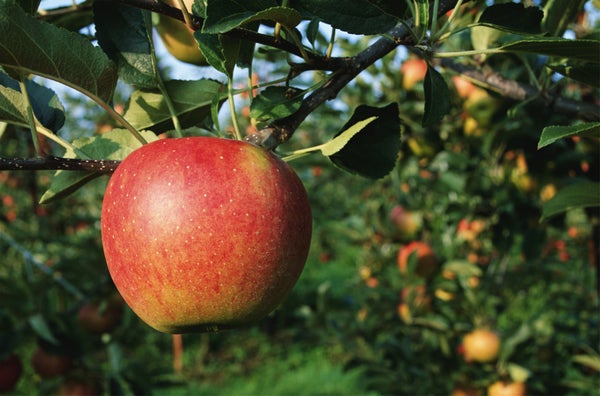
Apples did indeed contain lead. But the amount in an average apple was significantly lower than what the EPA considers safe in a day’s supply of tap water.
Next, the team investigated the nutrients in foraged urban fruit. And the picked fruit in general had higher levels of most micronutrients than did store-bought fruit. Calcium and iron were higher in all urban samples, and other nutrients including manganese, zinc, magnesium and potassium were higher in some urban fruits. The study was presented at a recent meeting of the Geological Society of America. [Ciaran L. Gallagher et al, Assessing Risks and Potential Benefits of Harvesting Urban Fruit]
The scientists thus conclude that it’s safe and healthy to eat fruit from most urban trees in common spaces. Just make sure that peach does not belong to somebody else before you pick it.
—Cynthia Graber
[The above text is a transcript of this podcast.]
