
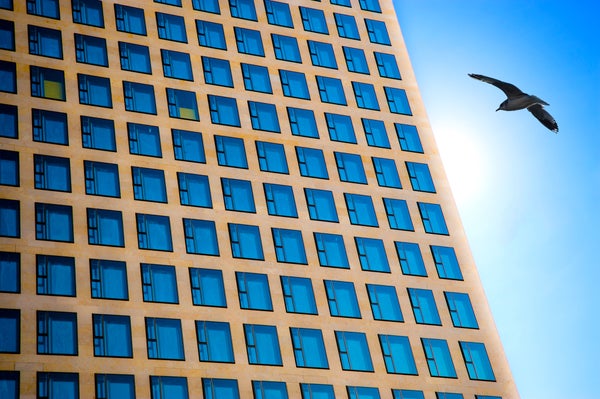

About a billion birds die from flying into buildings each year in North America. Suspicions have been that birds may perceive the open areas behind glass as safe passageways. Or they may mistake the reflected foliage for the real thing.
Researchers would like to reduce collisions, which requires a solid understanding about what makes a bird more or less likely to die by smacking into a building in the first place.
“There was, and still is, relatively little known at a broad scale. Most studies are at one small study site.”
On supporting science journalism
If you're enjoying this article, consider supporting our award-winning journalism by subscribing. By purchasing a subscription you are helping to ensure the future of impactful stories about the discoveries and ideas shaping our world today.
Jared Elmore, a graduate student in natural resource ecology and management at Oklahoma State University. He and his colleagues used a previously created data set of building collisions for birds at 40 sites throughout Mexico, Canada and the U.S.
The first finding was obvious: bigger buildings with more glass kill more birds. But the details were more noteworthy.
“We found that life history predicted collisions. Migrants, insectivores and woodland-inhabiting species collided more than their counterparts.”
Most migratory species travel at night, when lights near buildings can distract or disorient them. And Elmore thinks that insect-eating birds might be attracted to buildings because their insect prey is attracted to the lights. He suspects that woodland species get fooled by the reflections of trees and shrubs in the windows. The results are in the journal Conservation Biology. [Jared A. Elmore et al., Correlates of bird collisions with buildings across three North American countries]
By understanding which birds are more likely to collide with buildings, researchers can perhaps determine the best way to modify buildings, or their lighting, to help prevent such accidents. And by knowing risks, along with migration timing and behavior, building managers can better anticipate when birds are at their greatest danger—and modify lighting strategies accordingly.
Elmore’s next project will use radar to help predict bird migrations.
“I think that would maybe go a long way in terms of providing information to people, to the public, to building managers, on when they can get the most bang for their buck in terms of lights-out policies.”
—Jason G. Goldman
[The above text is a transcript of this podcast.]
