
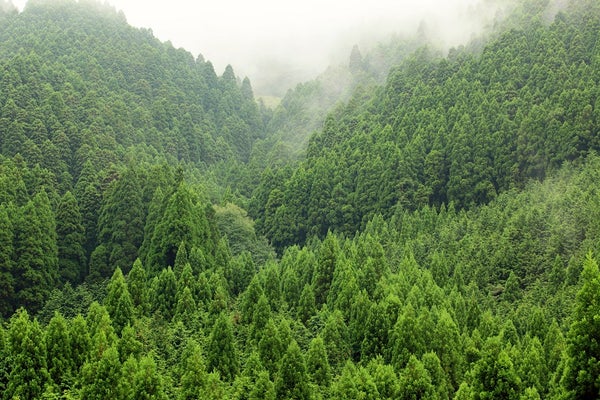

Only about 23 percent of the world’s land area is still what you’d call wilderness—where indigenous people, wildlife, plants and microbes get a chance to live with little or no disturbance from large human populations. But even that current figure of 23 percent is down by a tenth in just the last couple of decades. Which translates into an area the size of Alaska being converted away from wilderness since the 1990s. That’s according to a study in the journal Current Biology that was also announced at the just completed Honolulu meeting of the International Union for Conservation of Nature. [Watson et al, Catastrophic Declines in Wilderness Areas Undermine Global Environment Targets]
The research found that the regions that suffered the biggest wilderness losses were South America and Central Africa. South America lost almost a third of its wilderness while Africa’s is down about 14 percent.
James Watson is the lead author of the study. He’s with the Wildlife Conservation Society and the University of Queensland—he’s no relation to the more famous DNA double helix James Watson.
On supporting science journalism
If you're enjoying this article, consider supporting our award-winning journalism by subscribing. By purchasing a subscription you are helping to ensure the future of impactful stories about the discoveries and ideas shaping our world today.
In the journal article he and his colleagues write: “The continued loss of wilderness areas is a globally significant problem with largely irreversible outcomes for both humans and nature: if these trends continue, there could be no globally significant wilderness areas left in less than a century. Proactively protecting the world’s last wilderness areas is a cost-effective conservation investment and our best prospect for ensuring that intact ecosystems and large-scale ecological and evolutionary processes persist for the benefit of future generations.” And future generations includes both the organisms in the remaining wilderness—and us.
—Steve Mirsky
[The above text is a transcript of this podcast.]
