

Space & PhysicsMay 4, 2015
Astronomers Seek Super-Size Hubble Successor to Search for Alien Life
Controversy swirls around a bold proposal for a bigger, better—and expensive—replacement for NASA’s premier space telescope
Our In-Depth Report commemorates the Hubble Space Telescope's unprecedented 25 years in orbit
Astronomers Seek Super-Size Hubble Successor to Search for Alien Life
Controversy swirls around a bold proposal for a bigger, better—and expensive—replacement for NASA’s premier space telescope
Hubble's Repairman Reflects on the Telescope's Legacy
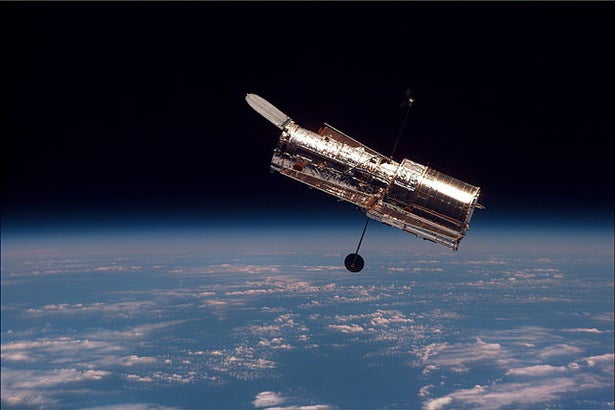
Twenty-five years ago, on April 24, 1990, the Hubble Space Telescope soared into orbit. Since then, its great discoveries have been legion, and the story of how it became the most successful and productive astronomical observatory in human history is destined to become legendary.
Agony and Ecstasy: Hubble's Top Moments and Near-Death Episodes
Scientists and astronauts recall the telescope’s finest hours as well as threats to its 25-year existence
Scientific American Editor's Career Soared with Hubble
Mariette DiChristina, Scientific American's Editor in Chief, has a special place in her heart for the Hubble Space Telescope
NASA’s Next Space Telescope Promises the Stars—and Planets, Too
The much-hyped James Webb Space Telescope promises to revolutionize exoplanet science, but only if astronomers can agree on how to use it.
Hubble's archive shows hidden exoplanet discovered 10 years later
Dome Big Dome: Giant Observatories Augur New Era of Cosmology
When a new generation of giant ground-based telescopes comes online in the next decade, human eyes will see what no one has seen before
The Expanding Universe: From Slowdown to Speed Up
Distant supernovae are revealing the crucial time when the expansion of the universe changed from decelerating to accelerating
Discovering a Dark Universe: A Q&A with Saul Perlmutter
Dark energy is pushing the universe apart at an ever faster rate. Astrophysicist Saul Perlmutter recounts the experimental approaches he took to make that discovery