Scientists Relieved as Joe Biden Wins Tight U.S. Presidential Election
The new president has the opportunity to reverse four years of anti-science policies—but he has a hard road ahead as he inherits a nation divided

Scientists Relieved as Joe Biden Wins Tight U.S. Presidential Election
The new president has the opportunity to reverse four years of anti-science policies—but he has a hard road ahead as he inherits a nation divided

The Denialist Playbook
On vaccines, evolution, and more, rejection of science has followed a familiar pattern


An Open Letter to Joe Biden
You must rebuild public trust in the scientific impartiality of the EPA, the DOE and other agencies
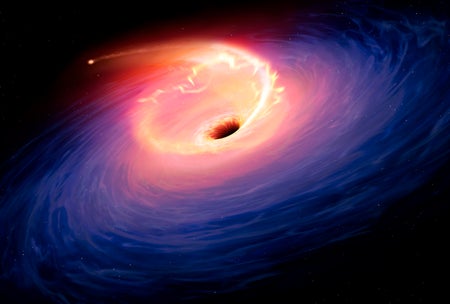
Black Holes Are Finally Trending
A Nobel Prize is just the latest proof that a concept rejected by Einstein in 1939 has become one of the hottest topics in physics

Mark Kelly Becomes 4th Astronaut Elected to Congress
After a special election in Arizona, the veteran spacefarer is set to become a senator
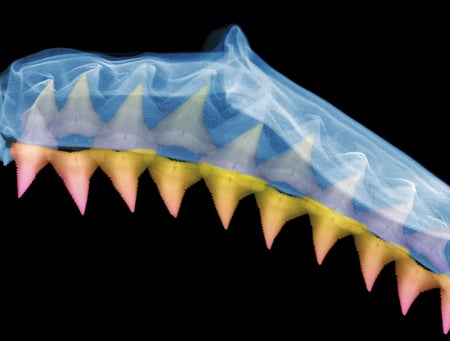
Sharks Never Run Out of Teeth
The fish always have another set ready to fill their jaws
Will the Universe Remember Us after We’re Gone?
Physicists insist that information never vanishes, not even in black holes, but this “law” reflects wishful thinking
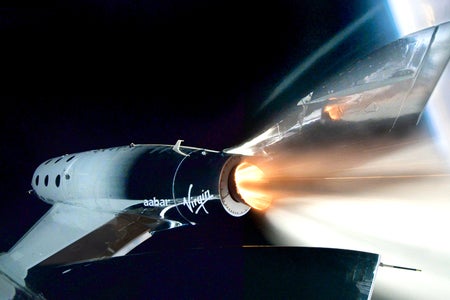
Suborbital Scientists Prepare to Storm the Heavens
Pluto pioneer Alan Stern and other researchers are on the cusp of flying to space alongside their experiments

To Understand Gravity, Toss a Hard Drive into a Black Hole
We probably think we know gravity pretty well. After all, we have more conscious experience with this fundamental force than with any of the others (electromagnetism and the weak and strong nuclear forces). But even though physicists have been studying gravity for hundreds of years, it remains a source of mystery.
In our video Why Is Gravity Different? We explore why this force is so perplexing and why it remains difficult to understand how Einstein’s general theory of relativity (which covers gravity) fits together with quantum mechanics.
Gravity is extraordinarily weak and nearly impossible to study directly at the quantum level. We cannot scrutinize it using particle accelerators like we can with the other forces, so we need other ways to get at quantum gravity.
Enter black holes. In a paper in the early 1970s the late physicist Jacob Bekenstein investigated the question of what happens to entropy—a measure of disorder, or randomness, in a system—when matter succumbs to a black hole’s massive gravitational pull and falls through its event horizon.
Bekenstein noted that the matter’s entropy seems to disappear inside the black hole. Yet this would violate the second law of thermodynamics, which states two things: information cannot be destroyed, and entropy can only increase. Thus the entropy of the black hole must compensate for the loss. Bekenstein argued that this black hole entropy must not be proportional to the black hole’s volume, but to the area of its event horizon.
If we are describing the contents of black holes in terms of area instead of volume, we should think about laws of physics in terms of area as well. This would mean a theory of everything (gravity included) should be able to play out in fewer than three spacetime dimensions.
Now let’s imagine the information that describes the state of the entire universe—all stored on a single hard drive. And then throw that hard drive into a black hole. The stored information cannot be lost, so it must be contained in the surface area of the black hole (albeit scrambled).
This scenario leads to a dramatically new way of thinking in which the universe could effectively be a hologram, a seemingly 3-D object that is actually just a projection from a 2-D surface. Our ostensibly three-dimensional experience of the world would then be an illusion, convincingly generated by a fundamentally lower-dimensional reality.
Maybe we’re all just paper-thin cutouts drifting in gravity’s cosmic breeze.

Frog Vocals Lead to Small Preference
The concave-eared torrent frog's unusual ear anatomy lets it hear high-frequency calls, which gives a mating advantage to the littler males that sing soprano.

The International Space Station Is Doomed to Die by Fire
Twenty years after the famed orbital outpost went up, scientists and engineers are deciding how and when it will come back down

Change Species Names to Honor Indigenous Peoples, Not Colonizers, Researchers Say
New Zealand scientists make a case for updating long-held scientific names to incorporate more meaningful terms