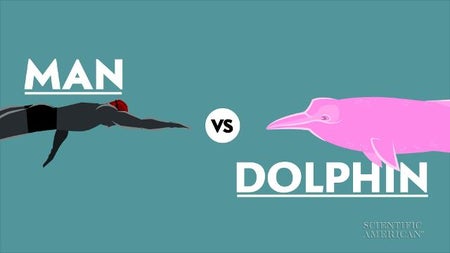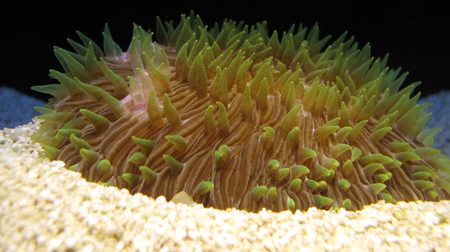
An Olympic Showdown: Human versus Dolphin
Can a hot pink dolphin outswim an Olympic champion?

An Olympic Showdown: Human versus Dolphin
Can a hot pink dolphin outswim an Olympic champion?

Jupiter's Red Spot Is Red Hot
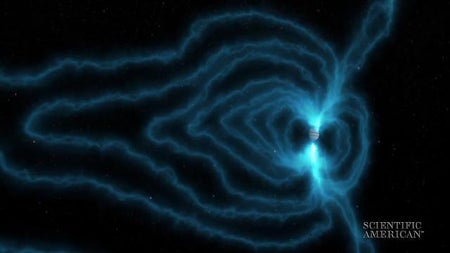
What Jupiter’s spot is not, is tranquil. New infrared images taken by Boston University scientists on a NASA telescope in Hawaii show that whereas Jupiter’s north and south poles are heated by strong magnetic fields, its large, stormy red spot generates its own heat by a different mechanism. Shock waves from turbulent winds in the spot and other storms help explain how the planet's upper atmosphere stays warm so far from the sun.
Produced with support from Explore Scientific

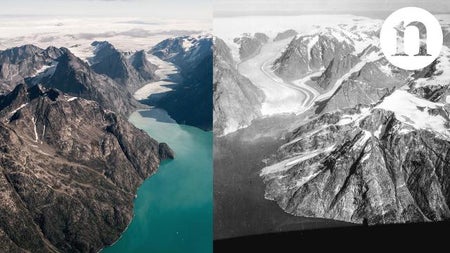
80 Years of Greenland's Vanishing Glaciers
Re-creating photographs from the 1930s can help scientists understand Greenland’s melting glaciers and predict how quickly climate change might make them disappear into the sea.
This video was reproduced with permission and was first published on July 27, 2016. It is a Nature Video production.

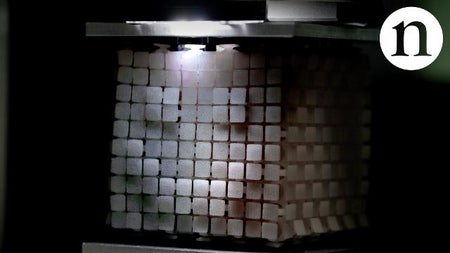
This Cube Shape-Shifts When Squished
Metamaterials don’t react the way you would expect. Push down on this cube from the top and a face appears on the side. The secret? A carefully designed substructure.
This video was reproduced with permission and was first published on July 27, 2016. It is a Nature Video production.

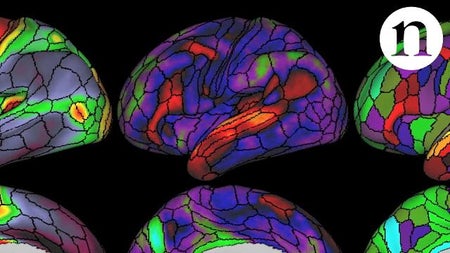
Scientists Map Nearly 200 Areas in the Human Brain
A newly updated map of the human brain may be the most accurate yet, helping solve over 100 years of arguments.
This video was reproduced with permission and was first published on July 20, 2016. It is a Nature Video production.

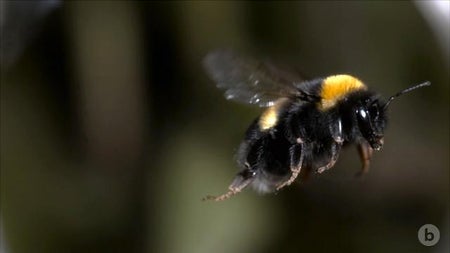
Bumblebees Collide Midair Like Bumper Cars
Slow-motion footage of bees reveals their high-speed collisions and in-flight recovery systems.
“Lens of Time: Bumper Bees” was first published on bioGraphic © 2016, California Academy of Sciences.

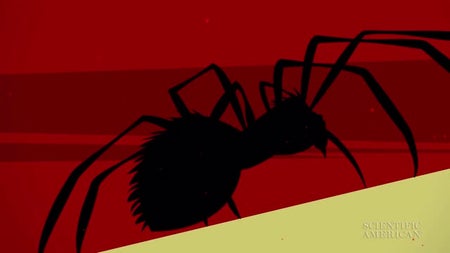
What Makes Spiders Scary
Scientists hope to learn whether arachnophobes' perception of spiders as larger than actual size causes their fear—or whether it is the fearfulness itself that causes their visual misperception.

A Clone Alone No More: The 20-Year Legacy of Dolly the Sheep
The world’s most photographed ewe was born in Scotland on July 5, 1996. Nature Video talks to two of the researchers who created her.
This video was reproduced with permission and was first published on June 29, 2016. It is a Nature Video production.

How Slime Molds Make Decisions
Slime molds have no brains, yet they make complex decisions. In this film scientists use time-lapse video to figure out how slime molds make those decisions.
"Lens of Time: Slime Lapse" was first published on bioGraphic and reproduced with permission. © 2016 California Academy of Sciences

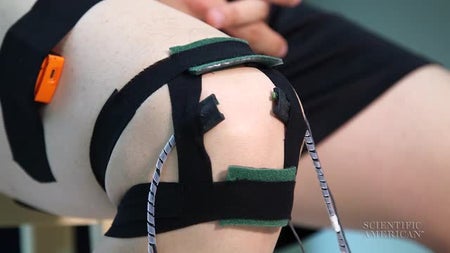
Wooden Skyscrapers Coming to a City Near You
A new type of laminated wood is as strong and fire-resistant as steel and concrete. And whereas concrete adds CO2 to the atmosphere, which contributes to global warming, growing trees pull carbon out of the air.
Video courtesy of Nexus Media

How Hobbits Happened: The Evolution of Homo floresiensis
New fossils shed light on the origin of the unusual human relative known as ‘the hobbit’.
This video was reproduced with permission and was first published on June 8, 2016. It is a Nature Video production.

Sneeze Physics Caught in Video
One lab is using slow motion footage of people sneezing to study the physics of these disease-spreading expulsions.
This video was reproduced with permission and was first published on May 31, 2016. It is a Nature Video production.