
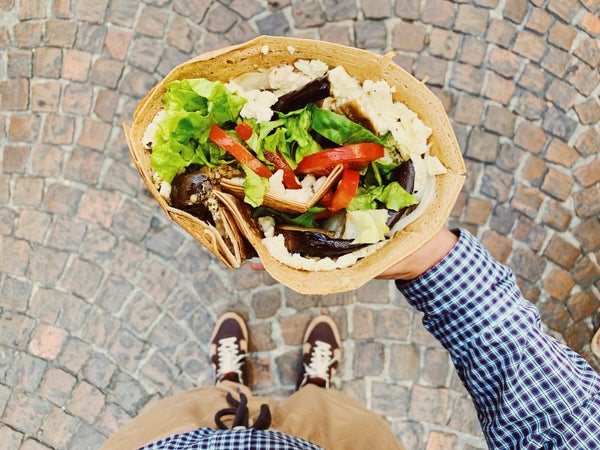

Could your eating habits be better?
You’re in good company. Despite decades of haranguing by parents, health professionals, government agencies, and podcasters, the average American is still eating too much sugar and highly processed foods and too few fruits and vegetables. We’re taking in too many calories and too few nutrients. As a result we’re both overweight and undernourished.
On supporting science journalism
If you're enjoying this article, consider supporting our award-winning journalism by subscribing. By purchasing a subscription you are helping to ensure the future of impactful stories about the discoveries and ideas shaping our world today.
The causes of our dietary discretions are well-documented. The proliferation of cheap, high-calorie, and hyper-palatable food and beverages, as well as the normalization of huge portion sizes and constant snacking have created an environment and culture in which it takes super-human effort and willpower to not overeat.
The question: How do we change all this? Put calories on restaurant menus? Hide the ice cream in the back of the freezer? Serve dinner on smaller dinner plates? Post healthy eating messages in cafeterias, breakrooms, and on our refrigerators at home?
You name it, someone has tried it. And many of these strategies work—at least a little. But are any of them really making a dent?
Best ways to promote healthy habits
What are the most effective ways to encourage healthy behaviors that will ultimately result in improved health? A pair of French researchers (Romain Cadario and Pierre Chandon) set out to find out. They identified 96 research studies that employed various strategies for nudging people toward healthy choices and compared their results to determine which seemed to be most effective.
In this particular study, the researchers calculated how each nudge impacted total daily calorie intake. Now, admittedly, reducing calories is not the only way a nudge might improve your nutrition. But with obesity being such a primary concern, it’s certainly relevant. And this metric does allow us to compare the effects of a lot of different types of interventions.
A nudge, in this case, was defined as anything that altered people’s behavior without outright forbidding something or using economic incentives. For example, if an employer wanted to encourage their employees to drink less soda and more water, they could remove all the soda from the vending machines or double the the price of the soda in so that bottled water was much cheaper. But neither of those would be nudges.
A nudge is something that influences the choices that you make (or, in the language of the researchers, alters the choice architecture) without removing your ability to make or afford a different choice. The researchers found that nudges divided themselves into three categories.
»3 Strategies for Eating Healthier—Which One Works Best?” on QuickAndDirtyTips.com