
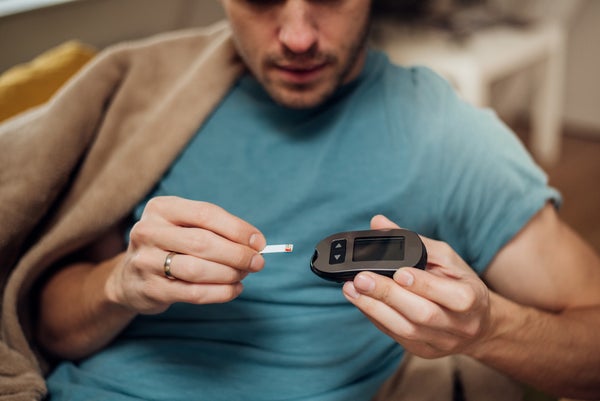

Type 2 diabetes affects one in ten American adults—that’s 30 million people. A quarter of these don’t even realize they have the disease! And for every person with Type 2 diabetes, there are two more who are considered prediabetic, meaning their blood sugar levels are in the high-normal range.
If you or someone you love has been diagnosed with diabetes, you probably have a lot of questions. In this article, I’ll clear up some of the most common misunderstandings, and answer the following questions people often ask.
On supporting science journalism
If you're enjoying this article, consider supporting our award-winning journalism by subscribing. By purchasing a subscription you are helping to ensure the future of impactful stories about the discoveries and ideas shaping our world today.
Do all Type 2 diabetics need to take medication?
Can diabetics eat fruit?
How much carbohydrate can Type 2 diabetics eat?
If I’m on medication for diabetes, can I eat what I want?
Can you reverse Type 2 diabetes with diet?
What is Type 2 diabetes?
In Type 2 diabetes, either the body does not produce enough insulin or the cells ignore the insulin. As a result, your blood sugar stays too high.
In old medical texts, you’ll often see Type 2 diabetes referred to as Adult Onset Diabetes, because this condition usually developed in midlife. Unfortunately, as childhood obesity rates have increased, Type 2 diabetes is now routinely diagnosed in kids. The earlier someone develops diabetes, the more likely it is that they will eventually experience serious complications.
Having Type 2 diabetes increases your risk for heart disease, blindness, nerve damage, and kidney damage—especially if your disease is poorly managed. However, people can live long and healthy lives with diabetes if they take proper care of themselves. In many cases, it’s even possible to reverse the disease.
Let’s take a look at the most common myths and misunderstandings about Type 2 Diabetes.
Myth #1: All people with Type 2 diabetes will need to take insulin or other anti-diabetic drugs for life
This is not true. Many newly diagnosed diabetics will not have to take medication at all if they make appropriate lifestyle modifications such as managing their diet, exercising, and losing weight if they need to. Even diabetics who are currently taking medications can sometimes reduce or even eliminate their need for these medications by losing weight and managing their diet better. You shouldn’t discontinue medications without checking with your doctor, of course. But this is a real possibility.
Myth #2: Diabetics shouldn’t eat fruit
Fruit does contain sugar and carbohydrates, which do affect your blood sugar levels. This leads many to assume that it’s off limit for diabetics. But fruit can be a very healthy part of your diet, even if you are diabetic. Fruit contains a lot of valuable nutrients and has a milder effect on blood sugar than other types of sweets. A healthy diabetic meal plan might contain two or three servings of whole fruit each day.
Myth #3: Diabetics only need to pay attention to carbohydrates, not protein or fat
Carbohydrate-rich foods have the most dramatic effect on blood sugar. These are foods like breads, cereal, pasta, rice, potatoes, and desserts. If you’re diabetic, you’ll definitely need to watch these types of foods. But you need to pay attention to the rest of your diet, too.
If you’re eating too many calories, even if they’re not coming from carbohydrates, it’s going to make it hard for you to maintain your weight and that’s going to make it hard to manage the disease.
Myth #4: People with Type 2 diabetes have to eat a low carbohydrate diet
Diabetes can be successfully managed on a higher or lower carbohydrate diet. In fact, for decades, the American Diabetes Association recommended that Type 2 diabetics eat a low fat diet, which tends to be higher in carbohydrates. But many studies have now demonstrated that lower-carbohydrate diets can be very effective in helping diabetics lose (or maintain) weight and improving insulin sensitivity.
»Continue reading “6 Myths About Type 2 Diabetes” on QuickAndDirtyTips.com