
The science news of 2022 has been strange, dramatic, intriguing and more than occasionally alarming—but the year also saw awe-inspiring breakthroughs and heartwarming successes. Here we’ve pulled together some of the most interesting positive stories of the year, plus a couple that are just plain cool. As Scientific American’s editors wrote in an August editorial, “Exploration is science in its most basic form—asking questions of the natural world and, we hope, using the answers for the betterment of everything on Earth.”
Folding Frenzy
Proteins perform crucial functions across the human body, and the twisty molecules’ actions are intimately tied to their intricate shapes. Researchers have sometimes spent years trying to determine individual protein structures. In 2022, however, the artificial intelligence program AlphaFold predicted the 3-D structures of about 200 million proteins—almost every one that is known. Scientific American talked with Demis Hassabis—CEO of the Google-owned company DeepMind, which developed AlphaFold—about the program’s creation, the power of knowing protein shapes and the future of artificial intelligence.
On supporting science journalism
If you're enjoying this article, consider supporting our award-winning journalism by subscribing. By purchasing a subscription you are helping to ensure the future of impactful stories about the discoveries and ideas shaping our world today.
Save Our Snakes
A Texas Facebook group’s goal to identify locally found snakes illustrates a growing trend of wildlife enthusiasts on social media promoting accurate information and shooting down myths about much maligned creatures. Locals are learning which snakes are dangerous and which can be safely removed from the premises—or simply admired from afar. By engaging with such groups, people are learning to be less afraid of their scaly neighbors and to get through encounters without harming them.
Ultimate Selfie
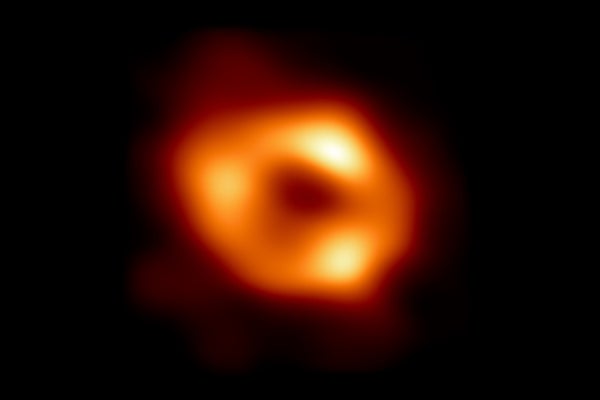
This year researchers released the first image of Sagittarius A*, the supermassive black hole at our galaxy’s center. This beast at the heart of the Milky Way was first proposed in the early 1960s. But it took a global network of observational facilities working as one virtual unit, called the Event Horizon Telescope, to pierce the 26,000 light-years’ worth of gas and dust, distorted space and destroyed matter that shrouded its form. The new image shows the ever changing doughnutlike halo of microwaves streaming from just outside the black hole’s event horizon, from which nothing can return.
A Glowing Reveal
Speaking of “milky,” researchers are getting closer to understanding mysterious, transient, miles-long stretches of ocean suffused with steady white light. While these “milky seas” were considered tall tales for more than a century, researchers eventually learned to discern the phenomenon using night-vision satellites and are poised to dispatch divers to explore when a long-lasting one comes along. This large-scale bioluminescence illuminates the vastness of what we still don’t know about Earth’s oceans.
Gut Feeling
Researchers helped revive a failing river near Seattle that urban construction had harshly straightened and narrowed. To do so, they restored its underresearched “gut”—the layer of stones and sediment between a riverbed and groundwater where microbes cycle nutrients and metabolize inorganic compounds into plant and bug food. A deep dive into the process reveals how a comparatively minor addition to restoration can have a major impact on reducing pollution and flooding and on regenerating biodiversity.
Emission Remission
A record-setting boost in renewable energy use helped keep global carbon dioxide emissions from spiking this year despite a global surge in natural gas prices potentially driving the mass use of coal. Energy sources such as wind and solar power may have avoided 600 million metric tons in additional carbon dioxide emissions during 2022. (These sources are also set to generate more power than coal did in the U.S. this year.)
High-Resolution Collab
Museum researchers are partnering with Indigenous North American groups to digitally replicate culturally important artifacts to safeguard them from damage. Such models can be used for preservation and education, as well as the production of physical replicas for display—and even for ritual use when the originals are too delicate, thanks to close collaboration with tribal officials.
Telescope Triumph
After decades of ballooning costs and production delays, the most powerful space observatory ever built launched on Christmas 2021 before beginning an eye-wateringly delicate unfolding process in the depths of space. Finally, the James Webb Space Telescope released its first full set of images this summer, revealing awe-inspiring vistas of the universe we call home and the promise of fascinating science to come.
Teary-Eyed Pups
And finally, this year we learned that dogs’ eyes actually well up with tears when they are reunited with their owners, an oxytocin-driven reaction that seems to spark humans’ caregiving behavior.