
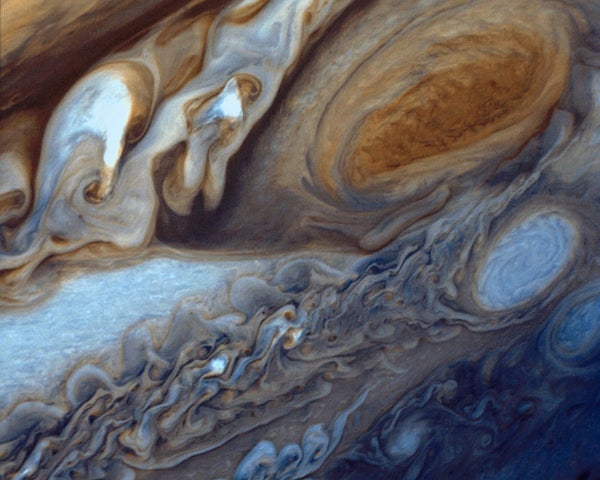
You probably know the GIF as the perfect vehicle for sharing memes and reactions. We believe the format can go further, that it has real power to capture science and explain research in short, digestible loops.
So each Friday, we’ll round up the week’s most GIF-able science. Enjoy and loop on.
Something Slams into Jupiter (?)
On supporting science journalism
If you're enjoying this article, consider supporting our award-winning journalism by subscribing. By purchasing a subscription you are helping to ensure the future of impactful stories about the discoveries and ideas shaping our world today.
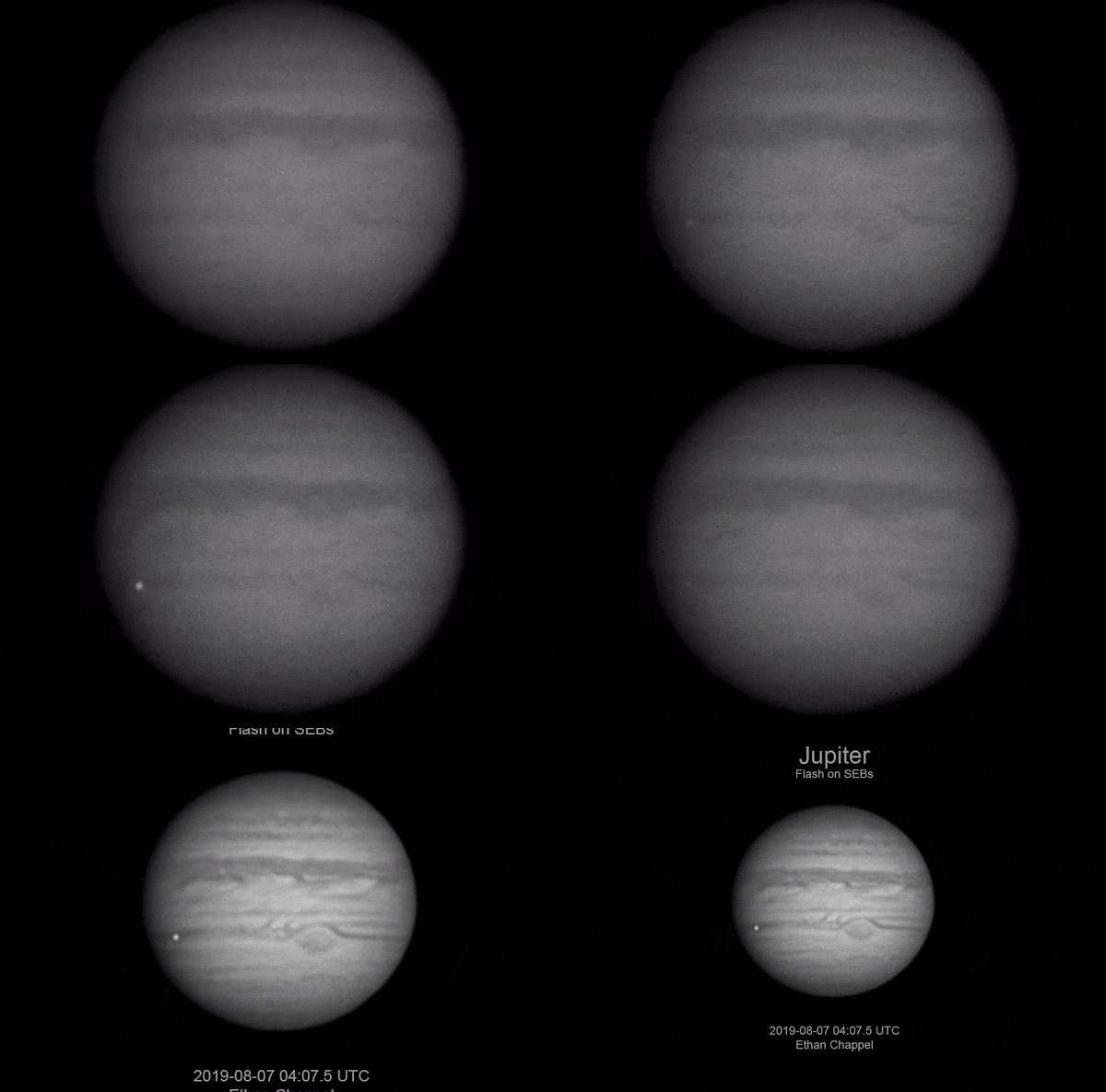
Credit: Ethan Chappel
“It looks awfully like an impact flash to my eyes,” wrote Ethan Chappel, an amateur astronomer in Cibolo, Tex., in a recent post sharing a night’s observations of Jupiter at the image-hosting Web site AstroBin. The flash, which pops up in the lower left corner of the planet, appears massive—for scale, the circumference of Jupiter is 11 times that of Earth.
In the past week and a half, the serendipitous capture has reverberated on social media and in the news. Chappel’s initial post of the image on Twitter got more than 14,000 likes and more than 5,700 retweets. Even a scientist working on NASA’s James Webb Telescope tweeted congratulations to Chappel for the capture. “I think the coverage speaks volumes about the importance of amateur astronomers to our professional counterparts,” Chappel says.
Flashlights in the Deep
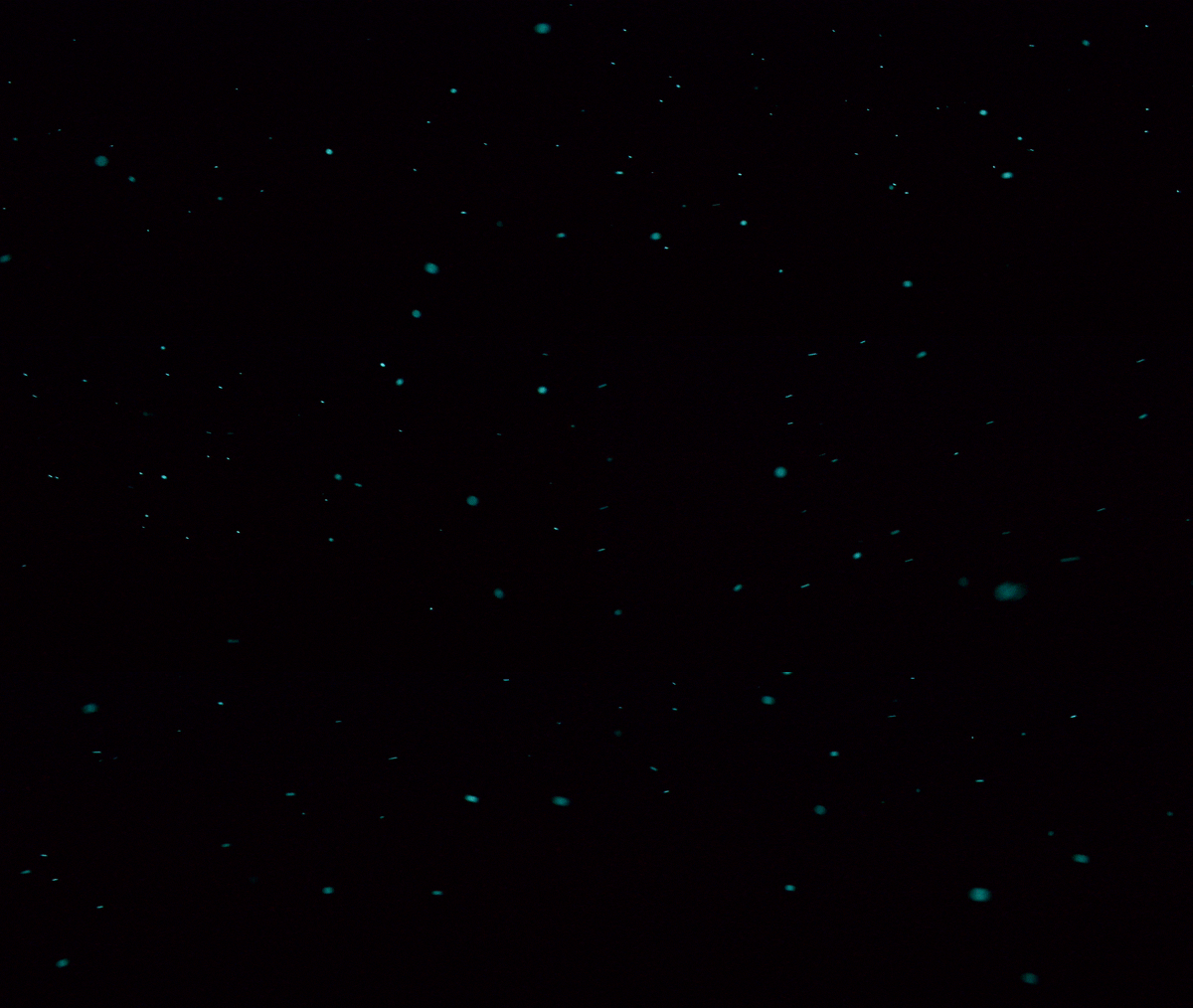
Credit: John Sparks
When fish swim in a school, no one individual directs the zigging and zagging—the school’s movement is a complex coordination that’s not yet completely understood. Researchers have found that schooling breaks down when the fish can’t see one another, but at least one species has found a way to keep coordinated even when the lights go out.
Flashlight fish have small, pill-shaped organs below their eyes that are filled with symbiotic bioluminescent bacteria. Their bioflashlights are always on, but the fish can flick this organ downward to block the light when they want to disappear in the dark. Diving near the Solomon Islands, researchers recorded hundreds of flashlight fish at night. They tracked and assigned the flashes to their luminous owners, determining that the fish were forming schools in the darkness and also that only a few percent of a school had to flash to show others where to swim next. Talk about passing the torch.
Cutting Off Cancer’s Life-Support System
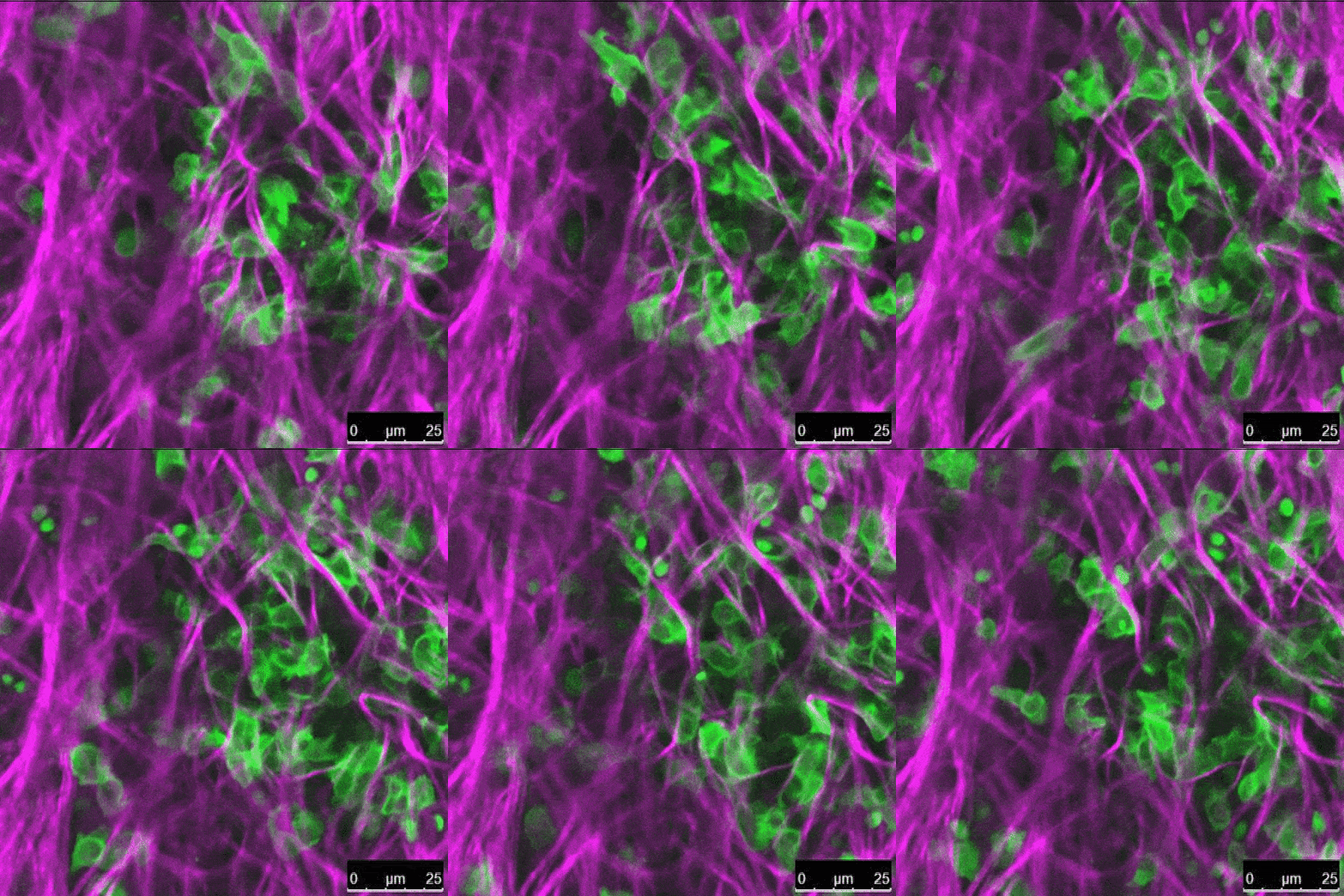
Credit: Max Nobis
This image, though beautiful, should also be terrifying. It shows metastatic pancreatic cancer cells (green) crawling through body tissue. Pancreatic cancer has one of the worst five-year survival rates, and this GIF shows how it spreads with deadly efficiency.
New research has found tantalizing clues about the way pancreatic cancer metastasizes. The purple web seen in the GIF is part of a mouse’s extracellular matrix, the scaffold that holds together organs’ cells. The spread of pancreatic cancer can either be helped or hindered by this matrix. Fibroblasts, the cells that produce most of the matrix, can even be recruited by the cancerous cells to aid their advance.
The researchers also found that tumors can use a protein produced in the connective tissue of cells, called perlecan, to help their spread. Restricting the amount of this chemical could translate to new cancer treatments in the future.
Bloodsucker Revealed
Credit: Ian Cook
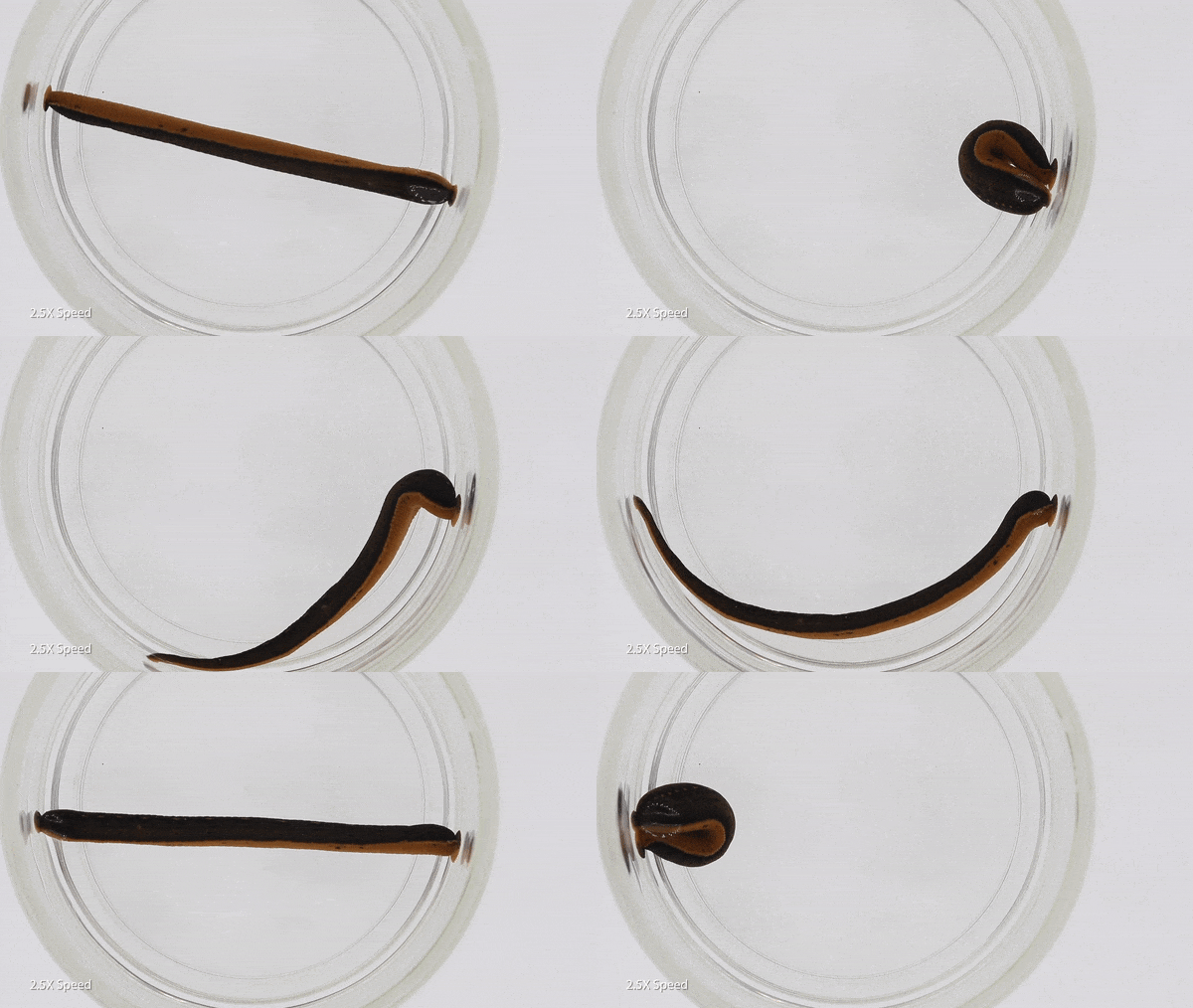
Medicinal leeches. Still a thing. Really. And now hirudotherapy (named for Hirudo, a genus of leeches) has a new treatment option.
In 2015 a researcher from the Smithsonian National Museum of Natural History and her colleagues collected some leeches from a swamp in Maryland. They thought they’d found members of a well-known species named Macrobdella decora, but DNA analysis showed that the leeches were yet undocumented by science.
The researchers went back into the field and found more of the leeches in North Carolina, South Carolina and Georgia. They even opened up the Smithsonian’s collection, ran DNA tests on old specimens and found that the little suckers were there, too—a new species hiding in storage under a different name. There is no word yet on when the new species might show up on Leeches U.S.A.
Mitochondria in Life (and in Death)
Credit: © ITbM, Nagoya University
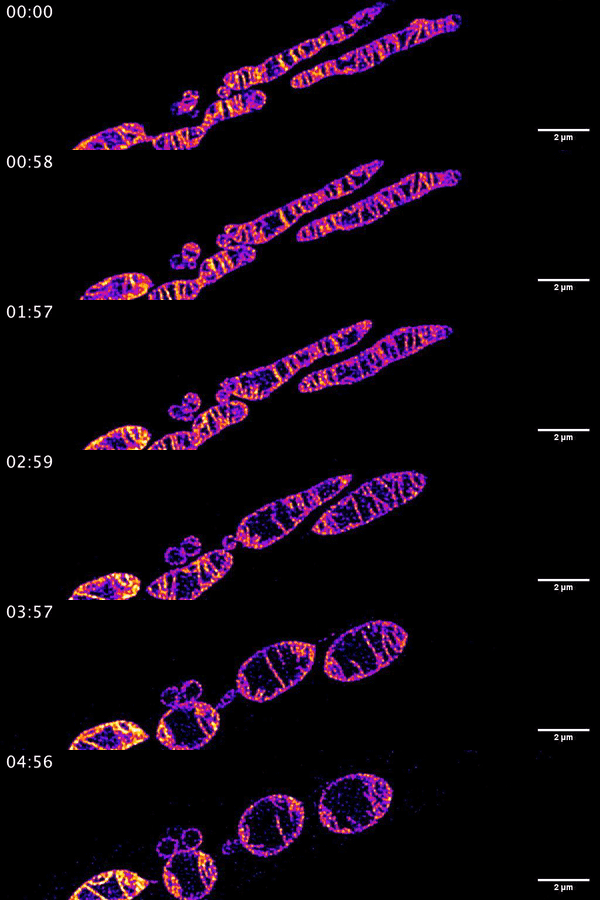
You remember high school bio class, right? What are mitochondria? They’re the powerhouses of the cell, of course. What you see above are those powerhouses alive and up close—really close.
You also happen to be catching them at a rather difficult moment in their life. Researchers used a live-cell imaging technique called stimulated emission depletion microscopy, developed by Nobel laureate Stefan Hell, to image the mitochondria, applying a special fluorescent marker molecule to their samples to see them. To observe how the mitochondria reacted to stress, they took away their nutrients and suppressed DNA replication in the cell they resided in.
What you see is their last metaphorical gasps. After elongating in response to the nutrient deficiency, the mitochondria lose their cristae (the little folds on their inside) and ball up. Ultimately, the intense laser beam of the microscope kills them, but their deaths let scientists capture how they actually live—if for just a moment.
Your Beautiful Collagen
Credit: Susumu Saito Kyoto University
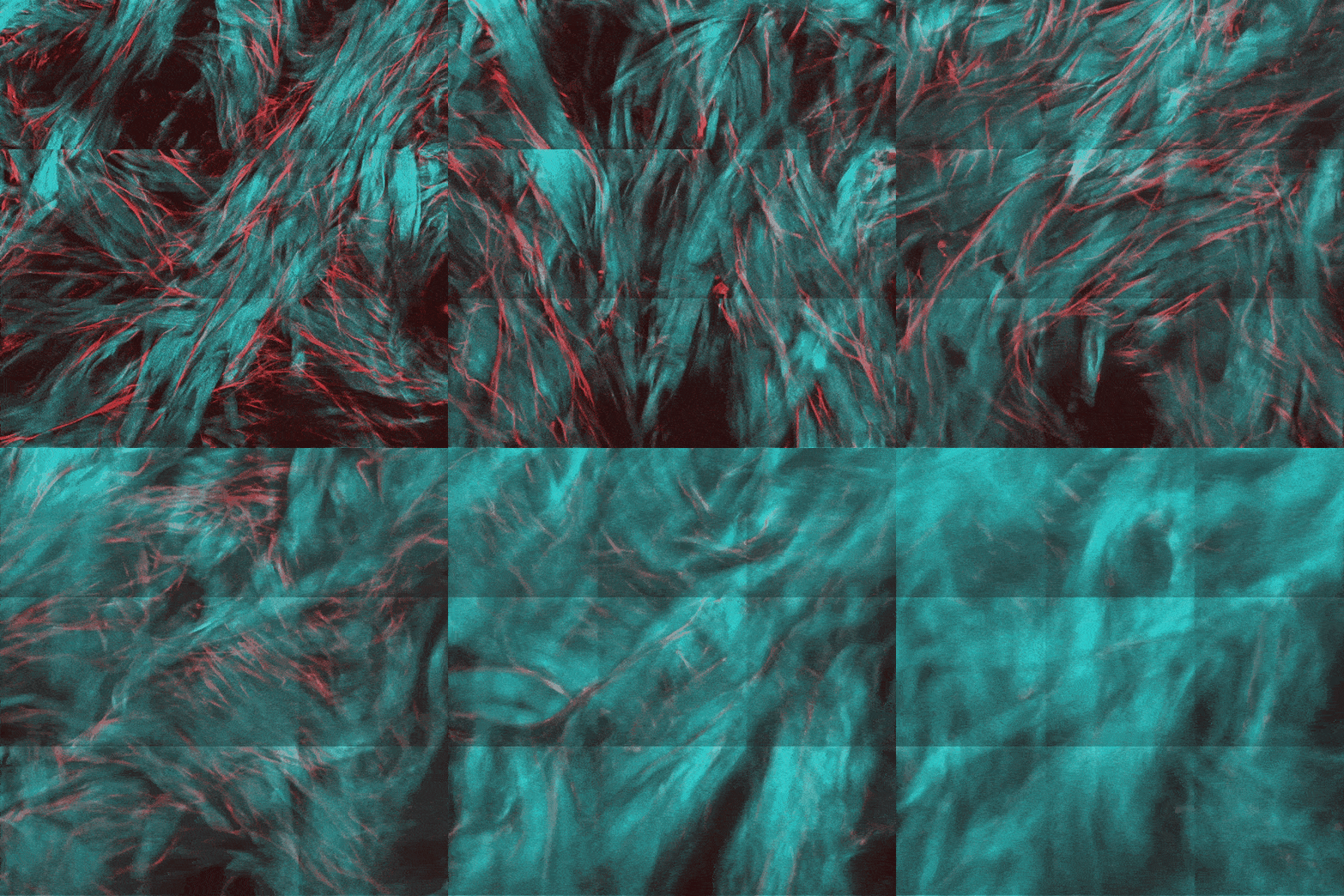
Researchers in Japan have worked out a way to peer into human skin to see what makes it so pliable. Studying sheets of abdominal tissue donated from seven middle-aged surgical patients, the scientists used a technique called multiphoton microscopy to image deep into the samples. They stretched the skin to increase the separation between the collagen fiber (the body’s main structural protein) and elastic fiber (the protein that helps hold the body together).
Though researchers have been unsure how these different elements of skin are arranged, these images clearly show that collagen and elastic fibers form a dense, braided mesh. We hope that helps you feel even more comfortable in your skin.
Want more science GIFs? Here you go.