A Classic Graphic Reveals Nature’s Most Efficient Traveler

A famous graphic, now updated, compares locomotion in the animal kingdom

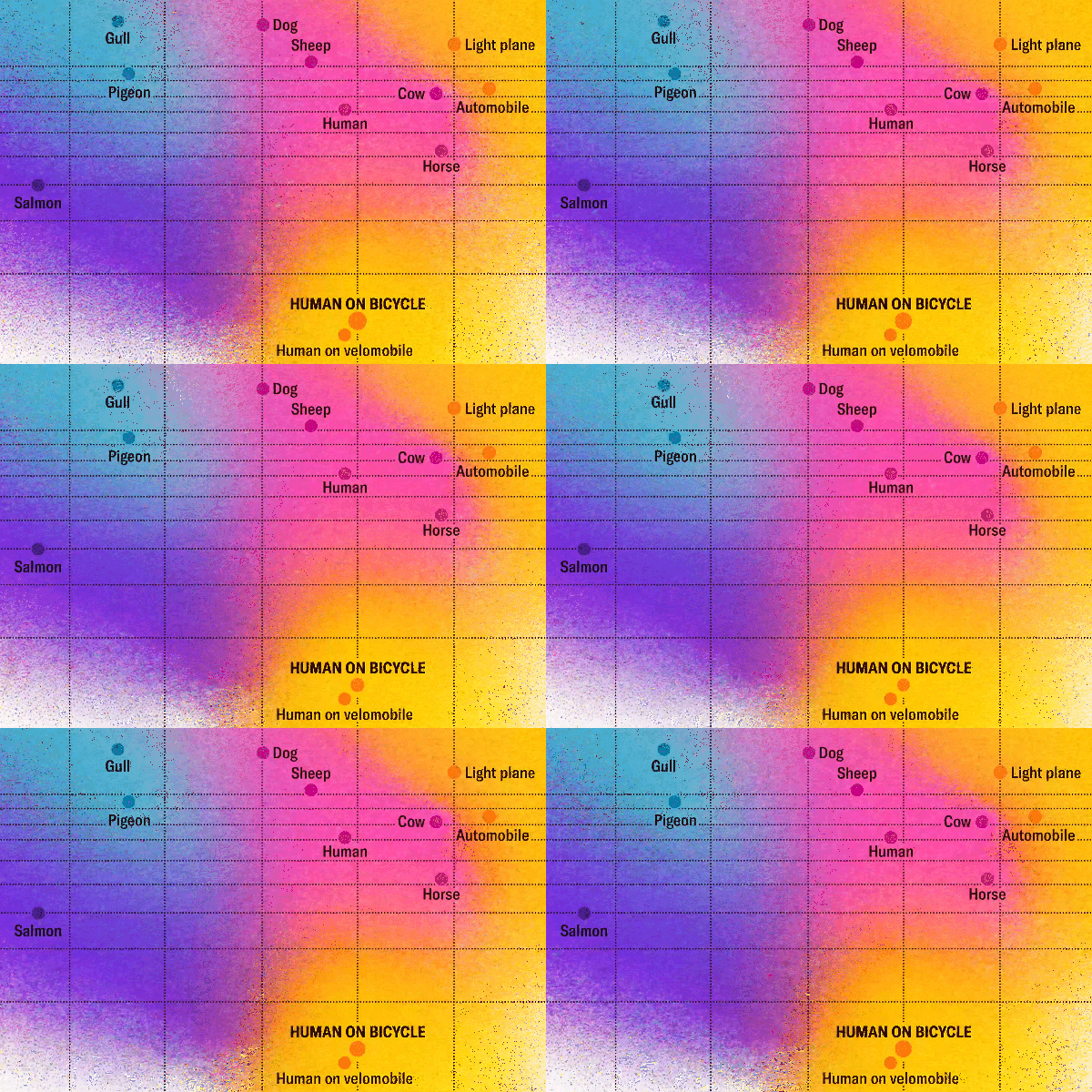
Detail of a chart shows data points labelled human on a bicycle, human on a velomobile, human, horse, automobile, pigeon, dog, salmon and others.

DTAN Studio

We’re celebrating 180 years of Scientific American. Explore our legacy of discovery and look ahead to the future.

Join Our Community of Science Lovers!

Humans aren’t very efficient movers—until you put us on a bicycle, when we become some of the most energy-efficient land travelers in the animal kingdom. For Scientific American’s 180th birthday, we’ve updated a classic graphic comparing different forms of animal locomotion, first published in this magazine in 1973.

Travel involves two main expenditures of energy: fighting gravity and propelling yourself forward. Most terrestrial animals must expend energy first to stand up, then to take each step forward. (Longer-legged land creatures tend to be more efficient because they get more distance out of each step, which explains why mice are so inefficient.) Flying animals, though, can move forward cheaply by gliding through the air, carried more by currents than by their own power. Swimming animals can similarly glide through water while letting their natural buoyancy minimize the need to fight gravity.

Bikes allow us terrestrial folk to be more like fish. Wheels and bearings roll with low friction, letting us coast without putting in power by pedaling, and the rigid frame supports the sitting rider against gravity.* “They turn humans into this hyperefficient terrestrial locomotor because they make being on land more like swimming,” says Tyson Hedrick, a comparative physiologist at the University of North Carolina at Chapel Hill. The main drawback is our clunky human shape; bicyclists aren’t streamlined like bluefin tuna, so they must overcome more drag. Hedrick calculates that bicycles with an aerodynamic shell, called velomobiles, can let humans move with even more aquatic efficiency.


On supporting science journalism

If you're enjoying this article, consider supporting our award-winning journalism by subscribing. By purchasing a subscription you are helping to ensure the future of impactful stories about the discoveries and ideas shaping our world today.
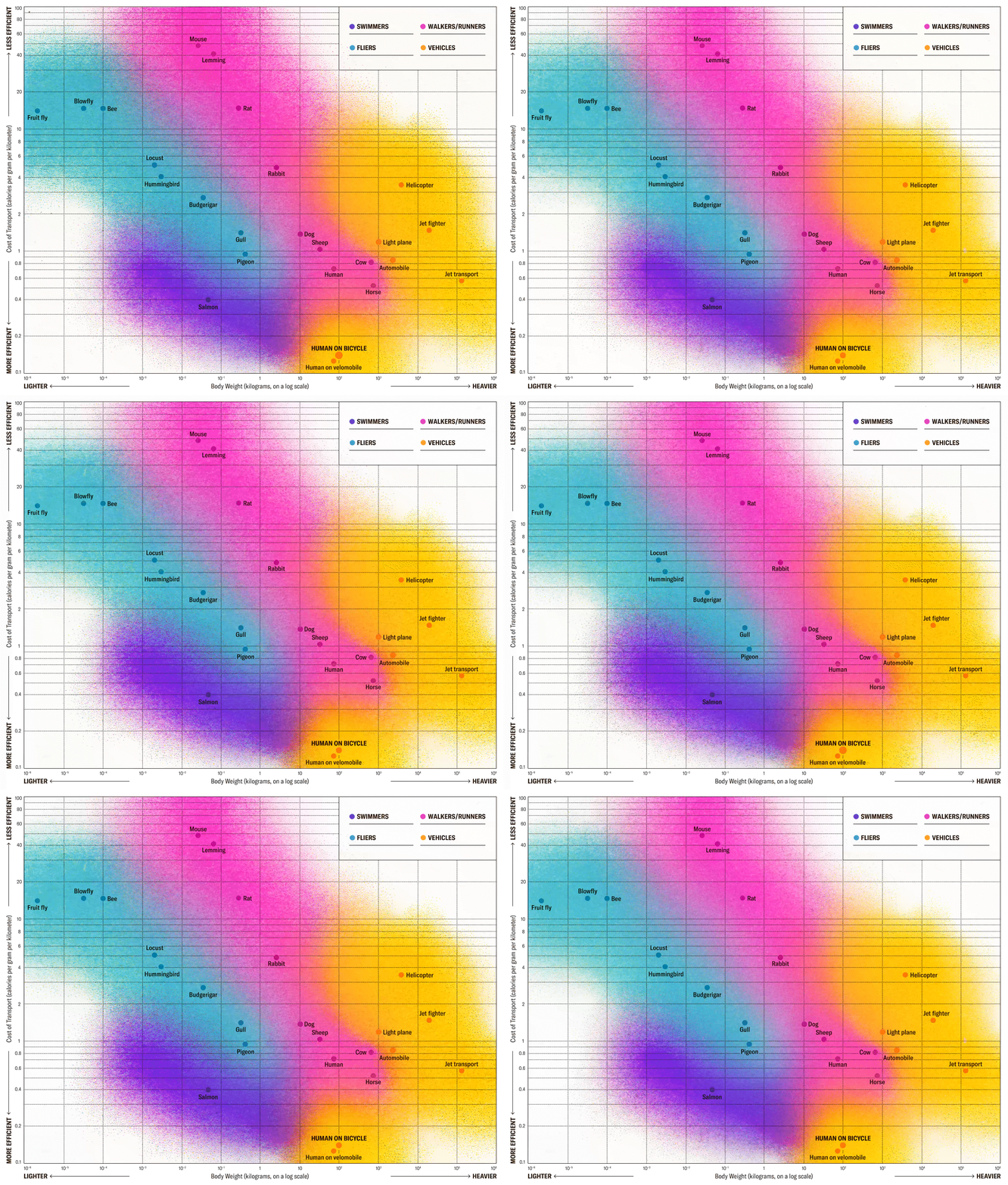

Chart shows cost of transport values plotted against body weight for four categories: swimmers, fliers, walkers/runners and vehicles. Human on a bicycle is more efficient than a human alone and is in-line with the trend formed by swimmers.

DTAN Studio; Sources: “Energetic Cost of Locomotion in Animals,” by Vance A. Tucker, in Comparative Biochemistry and Physiology, Vol. 34; June 15, 1970 (most data); chart by Dan Todd in “Bicycle Technology,” by S. S. Wilson, in Scientific American, Vol. 228, No. 3; March 1973 (data for human on a bicycle); Tyson Hedrick/University of North Carolina at Chapel Hill (velomobile calculation)

*Editor’s Note (2/5/26): This sentence was edited after posting to better clarify how bicycles let us coast.

Allison Parshall is associate editor for mind and brain at Scientific American and she writes the weekly online Science Quizzes. As a multimedia journalist, she contributes to Scientific American's podcast Science Quickly. Parshall's work has also appeared in Quanta Magazine and Inverse. She graduated from New York University's Arthur L. Carter Journalism Institute with a master's degree in science, health and environmental reporting. She has a bachelor's degree in psychology from Georgetown University.

More by Allison Parshall

DTAN Studio is a design and creative studio based in Berlin. They specialize in using digital tools to reclaim traditional techniques.

More by DTAN Studio
Scientific American Magazine Vol 333 Issue 4This article was published with the title “Human on a Bicycle” in Scientific American Magazine Vol. 333 No. 4 (), p. 76
doi:10.1038/scientificamerican112025-6jrS98PNdNIHq32fJvabA

It’s Time to Stand Up for Science

If you enjoyed this article, I’d like to ask for your support. Scientific American has served as an advocate for science and industry for 180 years, and right now may be the most critical moment in that two-century history.

I’ve been a Scientific American subscriber since I was 12 years old, and it helped shape the way I look at the world. SciAm always educates and delights me, and inspires a sense of awe for our vast, beautiful universe. I hope it does that for you, too.

If you subscribe to Scientific American, you help ensure that our coverage is centered on meaningful research and discovery; that we have the resources to report on the decisions that threaten labs across the U.S.; and that we support both budding and working scientists at a time when the value of science itself too often goes unrecognized.

In return, you get essential news, captivating podcasts, brilliant infographics, can't-miss newsletters, must-watch videos, challenging games, and the science world's best writing and reporting. You can even gift someone a subscription.

There has never been a more important time for us to stand up and show why science matters. I hope you’ll support us in that mission.

Thank you,

David M. Ewalt, Editor in Chief, Scientific American

Subscribe