New Issue: Orbital Catastrophe Ahead? Read Now

U.S. Spy Agency Releases Amelia Earhart Records

The U.S. Office of the Director of National Intelligence released long-promised records related to vanished pioneering aviator Amelia Earhart. More records are promised on a rolling basis

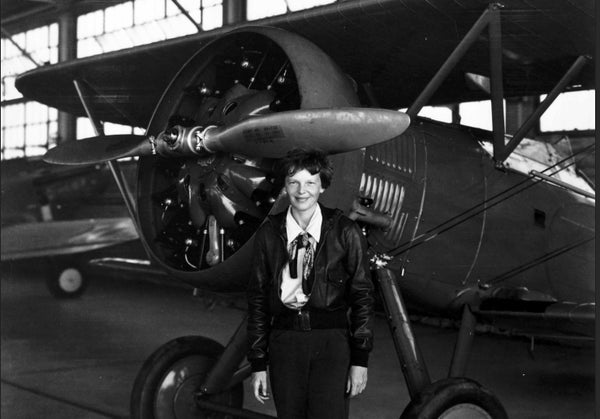
Amelia Earhart stands in front of a plane in a black-and-white photograph

A photograph of Amelia Earhart from newly released records.

U.S. National Archives and Records Administration

Join Our Community of Science Lovers!

In a weekend gift for aviation history fans, on Friday U.S. Director of National Intelligence Tulsi Gabbard announced the release of records related to the search for pioneering aviator Amelia Earhart via the National Archives.

In an attempt to become the first female pilot to circumnavigate Earth, Earhart, along with navigator Fred Noonan, vanished over the Pacific Ocean in 1937. The disappearance sparked a now long-standing mystery over her fate. President Donald Trump had ordered the declassification and release of records related to the search for Earhart in September.

The now released records include reports, maps and communications tracing Earhart’s flight, as well as other documents detailing the search after her disappearance. The National Security Agency has also declassified related files and and released information on Earhart’s last known communications. The wide-ranging records include a letter from a woman claiming that her mental telepathy indicated Earhart was still alive and another from a man claiming that the pilot’s grave was located on the island of Saipan.


On supporting science journalism

If you're enjoying this article, consider supporting our award-winning journalism by subscribing. By purchasing a subscription you are helping to ensure the future of impactful stories about the discoveries and ideas shaping our world today.


A statement from Gabbard’s office called the release a “first step,” with more records related to Earhart to be released on a rolling basis.

Editor's Note (11/18/25): This article was edited after posting to correct the description of the document in which a man claimed to know the location of Amelia Earhart’s grave, to correct the link to the document in which a woman claimed to have insight from mental telepathy and to better clarify other information about the release of records related to the famous pilot.

Dan Vergano was formerly senior editor, Washington, D.C., at Scientific American. He has previously written for Grid News, BuzzFeed News, National Geographic and USA Today. He is chair of the New Horizons committee for the Council for the Advancement of Science Writing and a journalism award judge for both the American Association for the Advancement of Science and the U.S. National Academies of Sciences, Engineering, and Medicine.

More by Dan Vergano

Subscribe to Support Independent Journalism

Great science journalism requires human expertise, time, effort and creativity. And it costs money. That’s why I and the journalists here at Scientific American hope you’ll join our community.

When you subscribe, you are supporting staff and freelance journalists who are passionate about telling science stories that are true, important and compelling. Our editors and reporters are often experts in their fields, which means they understand the nuances of big discoveries and can untangle the breakthroughs from the hype. With a subscription, you are also supporting rigorous fact-checking to ensure the words we publish are precise and accurate. And you’re supporting original illustrations, graphics and photos that bring you closer to an advanced laboratory, an ice sheet in Antarctica or a space mission in orbit. You’re helping us craft other types of high-quality journalism as well: Our newsletters are carefully written, edited and curated by staffers you have or will come to know and love. Our Science Quickly podcast is based on original reporting, collaboration with editors and scientists and exacting production.

Subscriptions keep this engine running so we can continue to deliver thoughtful, rigorous and independent science journalism to you. In an era of viral misinformation, this work is crucial. If you value what we do, I hope you’ll consider joining us as a subscriber

Thank you,

Jeanna Bryner, Editor in Chief, Scientific American

Subscribe