Are Hydroponic Vegetables Less Nutritious?

When it comes to hydroponics versus conventionally grown produce, there are lots of pros and cons to consider. Nutrition Diva weighs them all

Join Our Community of Science Lovers!


Gina writes: “We have a new hydroponic veggie grower in town. How do they compare nutritionally to soil-grown veggies?”

How Are Hydroponic Vegetables Grown?


On supporting science journalism

If you're enjoying this article, consider supporting our award-winning journalism by subscribing. By purchasing a subscription you are helping to ensure the future of impactful stories about the discoveries and ideas shaping our world today.


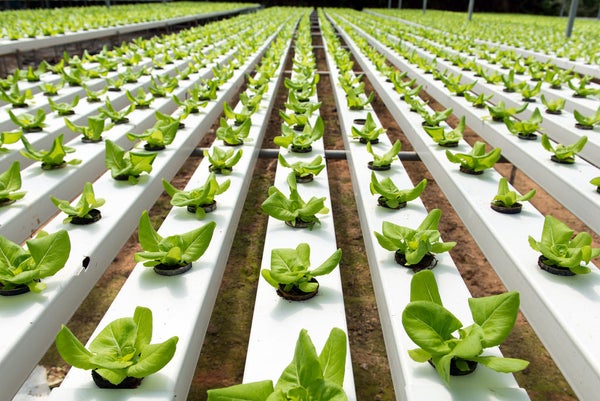
Hydroponics is a sort of high-tech farming. Instead of waiting until the right time of year, planting seeds in dirt, adding fertilizer, hoping for enough rain (but not too much), and combatting whatever pests, diseases, and or poachers might invade your field, hydroponic plants are nurtured indoors under grow lights, in a sterile medium that holds water and nutrients close to the plant roots, with precisely controlled temperature and humidity.

What Are the Pros and Cons of Hydroponic Farming?

Because the plants are not subject to the unpredictable depredations of nature, there is a lot less crop loss. Farmers don't have to worry about drought and hailstorms. They need fewer pesticides, herbicides, fungicides, and so on.

Because they can artificially control the length of the day and the air temperature, hydroponic farmers are also effectively freed from the constraints of traditional growing seasons. They can grow tomatoes in January and spinach in July if they want to. Then again, hydroponic farmers also have to pay a utility bill instead of instead of getting most of their sunlight and water for free.

»Continue reading on QuickAndDirtyTips.com

It’s Time to Stand Up for Science

If you enjoyed this article, I’d like to ask for your support. Scientific American has served as an advocate for science and industry for 180 years, and right now may be the most critical moment in that two-century history.

I’ve been a Scientific American subscriber since I was 12 years old, and it helped shape the way I look at the world. SciAm always educates and delights me, and inspires a sense of awe for our vast, beautiful universe. I hope it does that for you, too.

If you subscribe to Scientific American, you help ensure that our coverage is centered on meaningful research and discovery; that we have the resources to report on the decisions that threaten labs across the U.S.; and that we support both budding and working scientists at a time when the value of science itself too often goes unrecognized.

In return, you get essential news, captivating podcasts, brilliant infographics, can't-miss newsletters, must-watch videos, challenging games, and the science world's best writing and reporting. You can even gift someone a subscription.

There has never been a more important time for us to stand up and show why science matters. I hope you’ll support us in that mission.

Thank you,

David M. Ewalt, Editor in Chief, Scientific American

Subscribe