
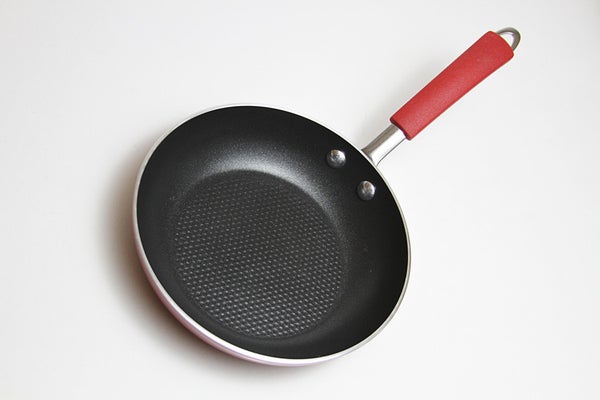

Nonstick pans are extremely popular—and it’s not hard to see why. Clean-up is a breeze, thanks to a special coating that keeps food from bonding to the surface of the pan. The nonstick surface also allows you to cook with less (or even no) oil or butter. But are they safe?
Most nonstick pans are coated with polytetrafluoroethylene, also known as Teflon. And there are a lot of rumors out there that Teflon might be toxic and that these pans may not be safe to use.
On supporting science journalism
If you're enjoying this article, consider supporting our award-winning journalism by subscribing. By purchasing a subscription you are helping to ensure the future of impactful stories about the discoveries and ideas shaping our world today.
One concern is that the nonstick coating can flake off and be ingested. This is more likely to happen with cheaper or poor-quality pans, or those that just haven’t been well taken care off. Using metal implements, for example, can scratch even a high-quality nonstick surface and make it more likely to flake. The good news is that ingesting small flakes of nonstick coating is not dangerous. The material will most likely just pass through the body. But it definitely reduces the nonstickiness of the pan.
Fortunately, most manufacturers of nonstick pans have phased out the use of perfluorooctanoic acid or PFOA, which is a suspected carcinogen. Nonstick pans never were our biggest source of exposure to this chemical, but it’s one less thing to worry about.
»Continue reading “Are Nonstick Pans Safe?” on QuickAndDirtyTips.com