
You probably know the GIF as the perfect vehicle for sharing memes and reactions. We believe the format can go further, that it has real power to capture science and explain research in short, digestible loops.
So kick off your week right with this GIF-able science. Enjoy and loop on.
Brand-Spanking-New Black Hole Visualization
On supporting science journalism
If you're enjoying this article, consider supporting our award-winning journalism by subscribing. By purchasing a subscription you are helping to ensure the future of impactful stories about the discoveries and ideas shaping our world today.
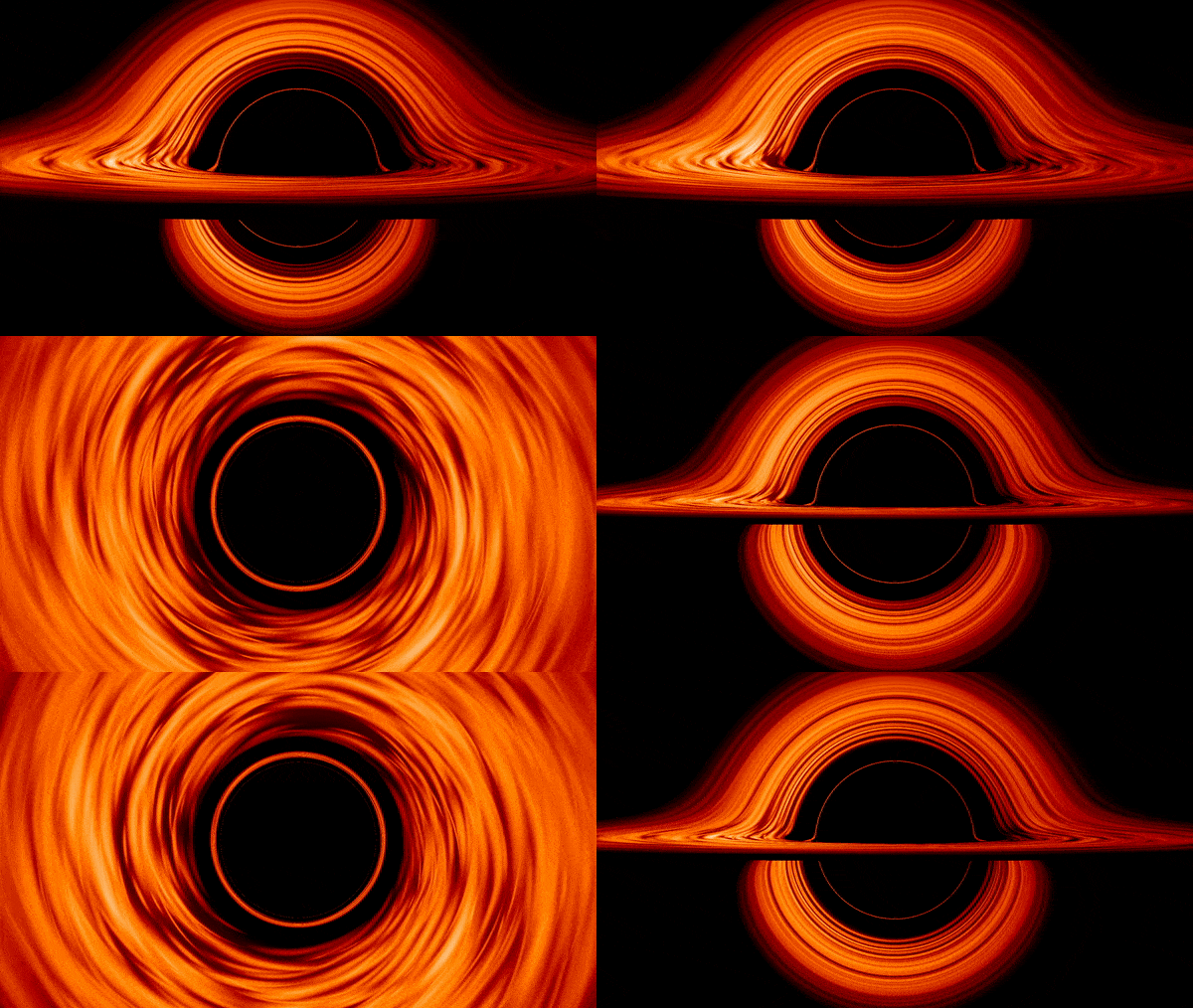
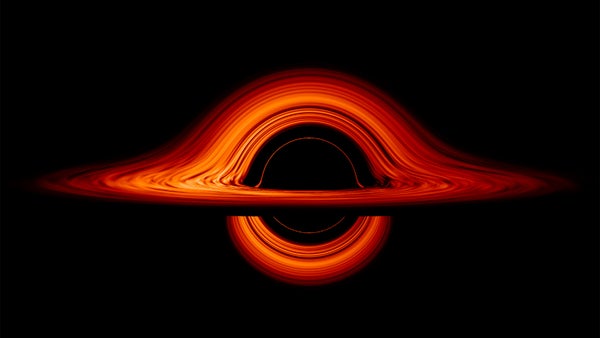
It’s hard to imagine how a black hole works, let alone what one looks like. Well, thank goodness for Jeremy Schnittman, the theoretical astrophysicist who created NASA’s latest and greatest black hole visualization.
This particular celestial body may seem familiar, because it’s the only black hole ever photographed. It exists 54 million light-years from Earth, at the very heart of the galaxy Messier 87, and has a mass of 6.5 billion suns. Like all black holes, this behemoth warps spacetime so much that it drastically bends the path of light around it. That is why, from a side-on view of the simulation, you can see light from the back side of the whirling accretion disk of material arching above and below the cosmic object.
This gravitational light bending gets so strong near the black hole that it ensnares some particles of light in a central “photon ring” (bright central circle). Photons will encircle the hole once or even multiple times before being flung out toward us, the viewers. Pretty wild, huh?—K.H.
Messages Hidden in Smoke and Ash
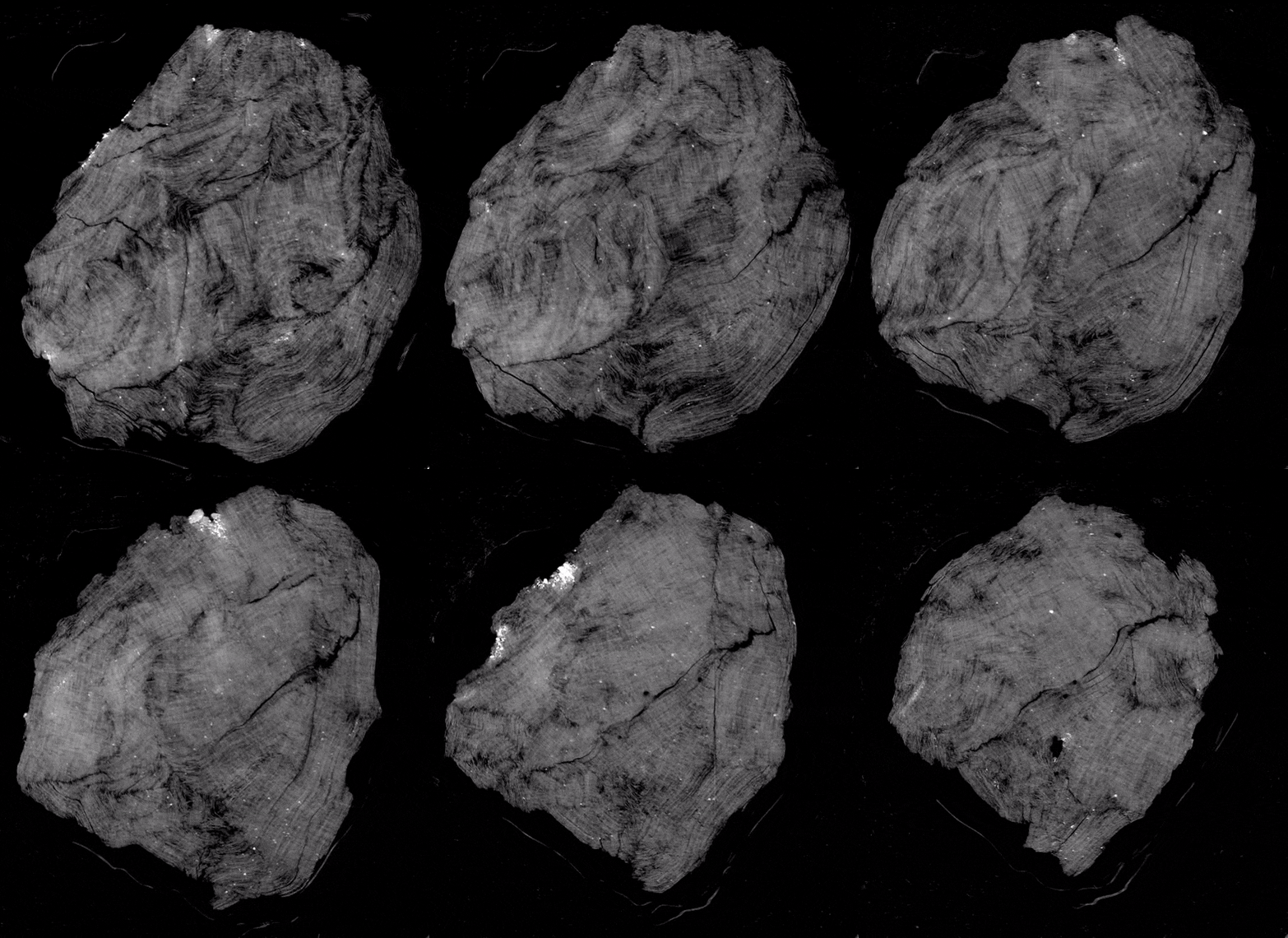
Credit: ESRF and CNR Nanotec
The ancient Greeks apparently engaged in double-sided printing, and new research is uncovering what they wrote on the backs of their scrolls. The work is a continuation of a centuries-long effort to recover words that persisted through the stinging ash and smothering gas from Mount Vesuvius. Papyri kept in a library in the ancient city of Herculaneum in what is now southern Italy were buried when the volcano erupted in 79 A.D., only to be unearthed in 1756, after which some were unrolled and stuck to paperboard toward the end of that century. The GIF shows a reconstruction of one of those scrolls if you could fly through it from end to end without it being unrolled.
Much of the scientific work over the years has been focused on piecing together the material on the front, or “recto,” of unrolled scrolls. The new work, by a group of researchers in Europe, uses a technique called hyperspectral imaging to collect information in the shortwave infrared portion of the electromagnetic spectrum and see through a mounted scroll to the back, or “verso.” An added benefit: the method also helps enhance images of the recto side of the scroll, potentially bringing even more volumes that had been kept in the same crisped library back to life.—J.D
Machine Learning Goes Cosmic
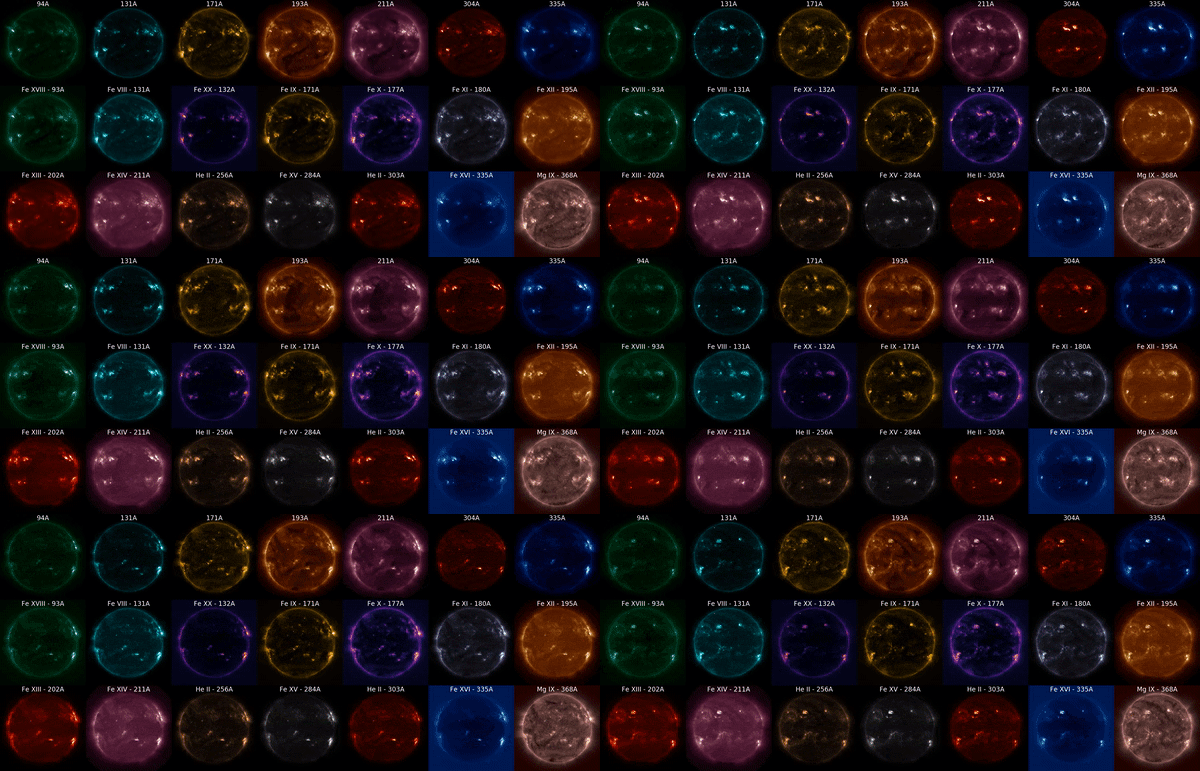
Credit: NASA SDO and AIA
When a space instrument fails, a machine learning process can perhaps replace it virtually. That’s the goal of a new study, which details how researchers simulated a busted sensor back into existence onboard NASA’s Solar Dynamics Observatory. (It malfunctioned in 2014.) The team used machine learning to compare how the instrument’s past readings lined up with measurements from the observatory’s other sensors and then estimated what it would record, were it still running. The top row of suns in the GIF above shows the actual instrument measurements the team used to generate the virtual measurements in the bottom two rows.
The observatory’s mission is to keep eyes on the sun at all times. Doing so helps us predict when solar storms might affect us here on Earth by doing nasty things such as knocking out radio communications. The study’s authors hope the machine learning approach can be used like a virtual astronaut, capable of making fixes in the vacuum of space.—J.D.
The Beat of Life
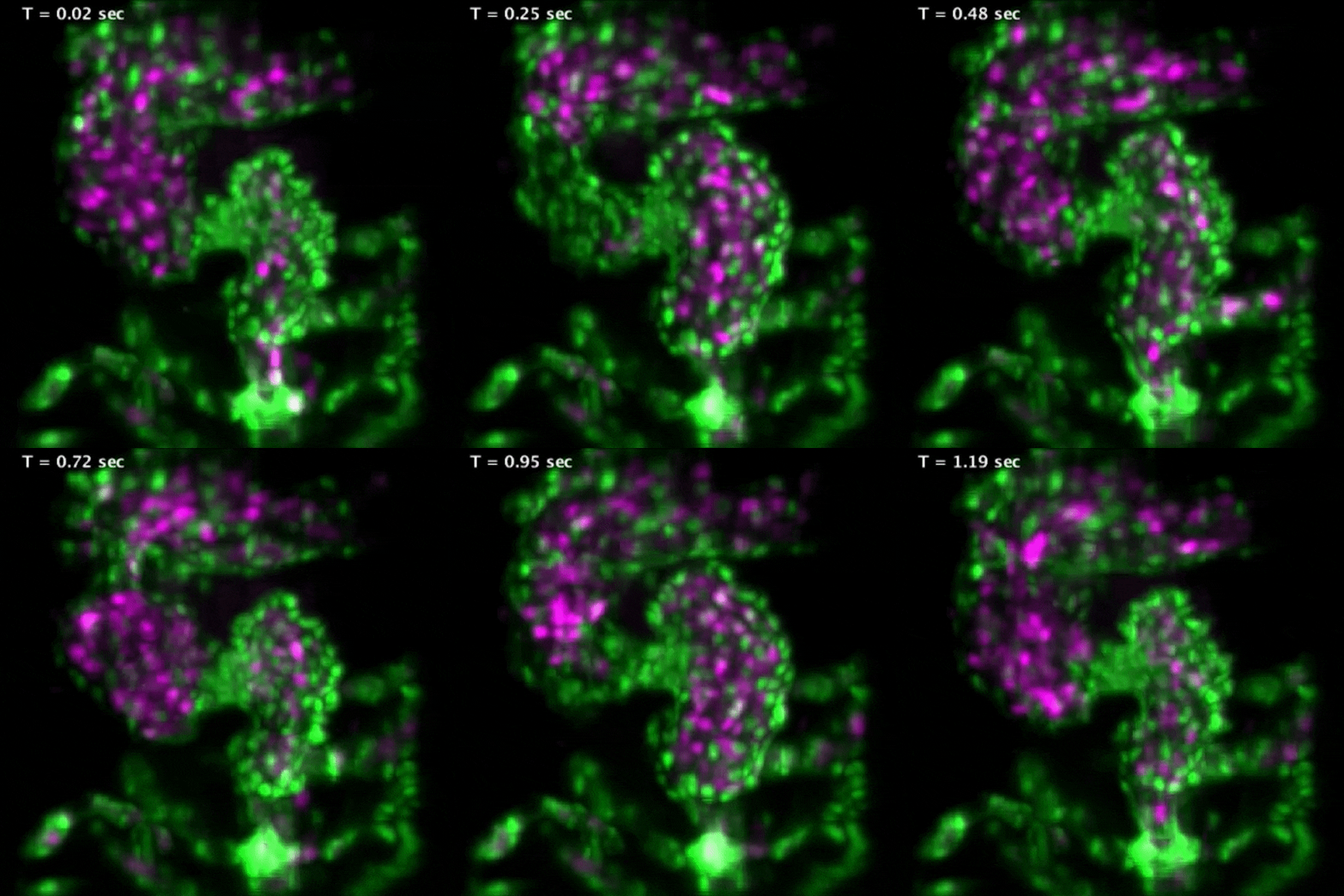
Thanks to a newly improved microscope, SCAPE 2.0, you can follow the journey of individual blood cells through the heart of a zebra fish embryo. It can even be watched from different axes, though this GIF shows just one angle. Previous microscopes couldn’t take these 3-D images fast enough to capture the continuous pumping of such a small organ.
The microscope boasts other advantages as well: it has a wide field of view, can focus on immobile or freely moving subjects and is small enough to fit in your car trunk—or at least in Elizabeth Hillman’s, who often carries the instrument with her to give hands-on demonstrations. Hillman, a professor of biomedical engineering at Columbia University, spearheaded the microscope’s creation and partnered with pediatric cardiologist Kimara Targoff, also at Columbia, to image this tiny beating heart. Targoff has said that SCAPE 2.0 will help her track how specific genetic mutations affect development of the organ in zebra fish, which could inform treatments for children with congenital heart disease.—K.H.
A Spidery Space Web
Credit: Joshua Borrow, using C-EAGLE
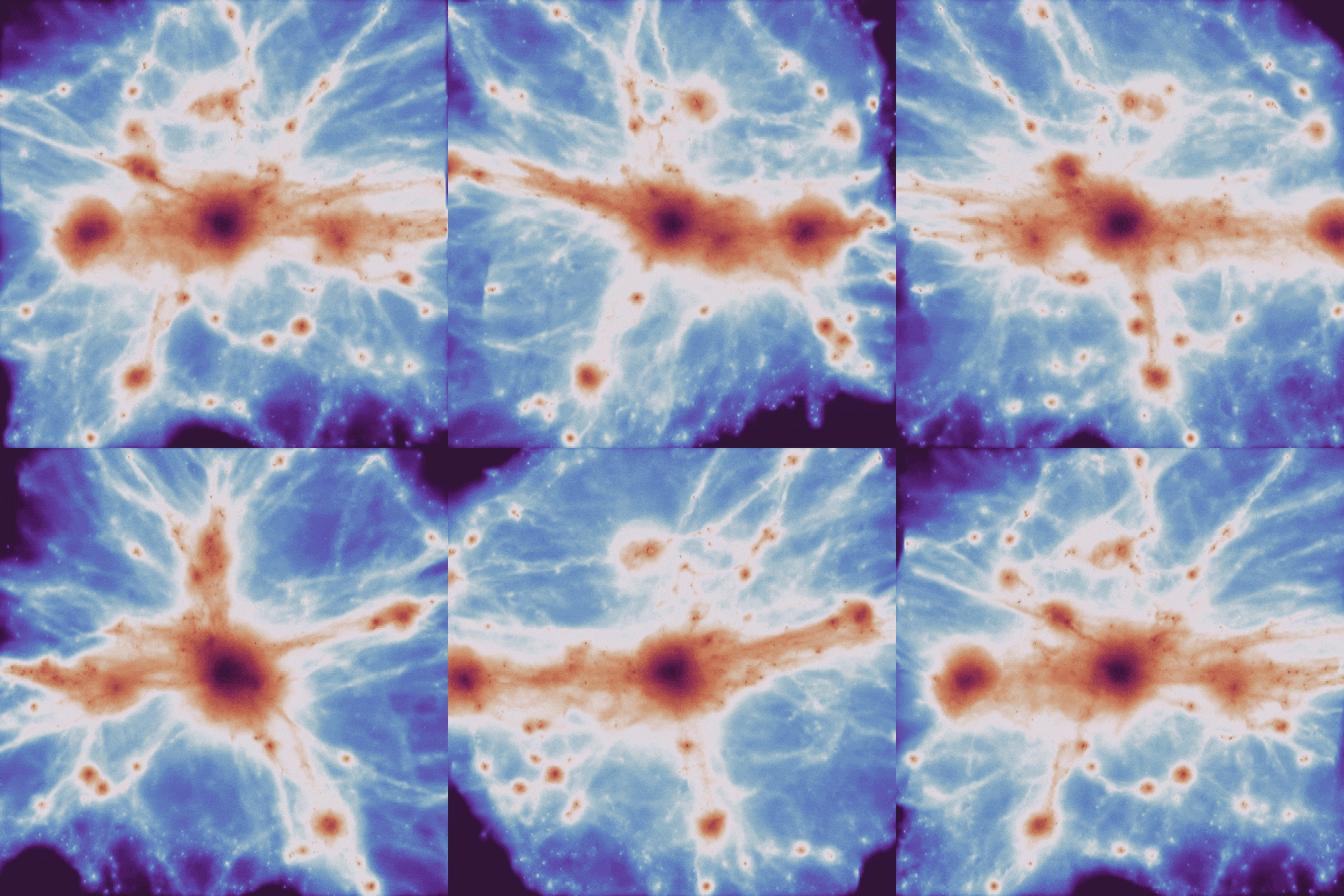
You’re looking at a simulation of a galaxy cluster forming 12 billion light-years from Earth. Those spindly white fibers are gas clouds that stretch for millions of light-years, fueling supermassive black holes and star-birthing galaxies at their dark red intersections.
Scientists created the simulation from observations of an infant cluster forming so far away that it exists in the early universe (the light takes a long time to get here). Their work demonstrates how extremely far the gaseous strings of the cosmic web stretch and provides further support for a “top-down” view of galaxy formation. Instead of suggesting that galaxies form first and then organize into clusters, this theory suggests these massive filaments fuel the formation of galaxy clusters all at once where they intersect.—K.H.