On supporting science journalism
If you're enjoying this article, consider supporting our award-winning journalism by subscribing. By purchasing a subscription you are helping to ensure the future of impactful stories about the discoveries and ideas shaping our world today.
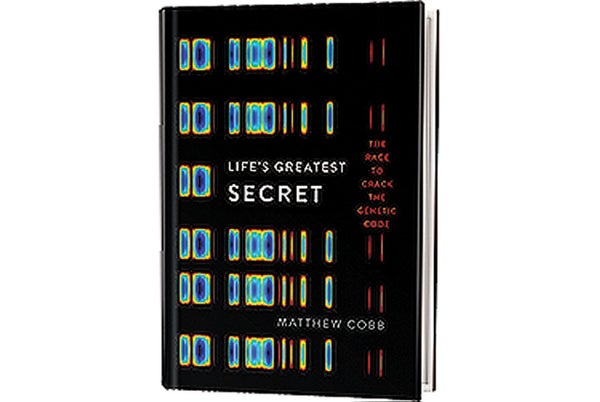
Life’s Greatest Secret: The Race to Crack the Genetic Code
by Matthew Cobb
Basic Books, 2015 (($29.99))
After Catholic monk Gregor Mendel discovered the laws of inheritance—how traits are passed on from parents to offspring—in the 1860s, his work was ignored for 35 years. But in 1900 three scientists rediscovered Mendel's findings and popularized them, spawning what zoologist and science historian Cobb calls “the century of genetics.” Cobb goes on to recount the way researchers gradually cracked the genetic code—and, indeed, how they came to think of it as a code in the first place. The idea, finally described in 1953 by James Watson and Francis Crick, that the ordering of chemical bases on DNA contains the instructions for life was not obvious, and the tale of its discovery takes many turns. By thinking of the genetic code as a repository of information, Cobb argues, the study of genetics helped to usher in the modern information age.
Subscribe to Support Independent Journalism
Great science journalism requires human expertise, time, effort and creativity. And it costs money. That’s why I and the journalists here at Scientific American hope you’ll join our community.
When you subscribe, you are supporting staff and freelance journalists who are passionate about telling science stories that are true, important and compelling. Our editors and reporters are often experts in their fields, which means they understand the nuances of big discoveries and can untangle the breakthroughs from the hype. With a subscription, you are also supporting rigorous fact-checking to ensure the words we publish are precise and accurate. And you’re supporting original illustrations, graphics and photos that bring you closer to an advanced laboratory, an ice sheet in Antarctica or a space mission in orbit. You’re helping us craft other types of high-quality journalism as well: Our newsletters are carefully written, edited and curated by staffers you have or will come to know and love. Our Science Quickly podcast is based on original reporting, collaboration with editors and scientists and exacting production.
Subscriptions keep this engine running so we can continue to deliver thoughtful, rigorous and independent science journalism to you. In an era of viral misinformation, this work is crucial. If you value what we do, I hope you’ll consider joining us as a subscriber