On supporting science journalism
If you're enjoying this article, consider supporting our award-winning journalism by subscribing. By purchasing a subscription you are helping to ensure the future of impactful stories about the discoveries and ideas shaping our world today.
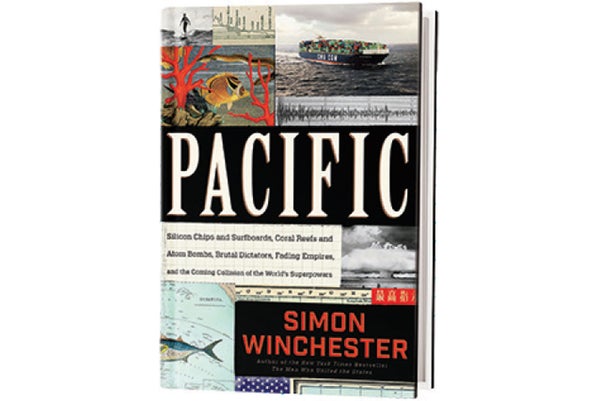
Pacific: Silicon Chips and Surfboards, Coral Reefs and Atom Bombs, Brutal Dictators, Fading Empires, and the Coming Collision of the World’s Superpowers
by Simon Winchester
HarperCollins, 2015 (($28.99))
The Pacific Ocean is a place of superlatives: the oldest and largest, the most seismically active and biodiverse, and the site of the world's greatest mountains and deepest trenches. Journalist Winchester plumbs the ocean's science and its influence on people throughout time, writing, for example, of how the alluring geography of many Oceania islands has spurred imperial powers to usurp land from native peoples. And he explores the damage humanity has wreaked on the Pacific, polluting it with whirlpools of trash and destroying coral reefs, among other environmental insults. Ultimately Winchester shows that the Pacific has played a central part in history and is likely, through its ecological and geopolitical importance, to be just as vital to the future.
Subscribe to Support Independent Journalism
Great science journalism requires human expertise, time, effort and creativity. And it costs money. That’s why I and the journalists here at Scientific American hope you’ll join our community.
When you subscribe, you are supporting staff and freelance journalists who are passionate about telling science stories that are true, important and compelling. Our editors and reporters are often experts in their fields, which means they understand the nuances of big discoveries and can untangle the breakthroughs from the hype. With a subscription, you are also supporting rigorous fact-checking to ensure the words we publish are precise and accurate. And you’re supporting original illustrations, graphics and photos that bring you closer to an advanced laboratory, an ice sheet in Antarctica or a space mission in orbit. You’re helping us craft other types of high-quality journalism as well: Our newsletters are carefully written, edited and curated by staffers you have or will come to know and love. Our Science Quickly podcast is based on original reporting, collaboration with editors and scientists and exacting production.
Subscriptions keep this engine running so we can continue to deliver thoughtful, rigorous and independent science journalism to you. In an era of viral misinformation, this work is crucial. If you value what we do, I hope you’ll consider joining us as a subscriber