
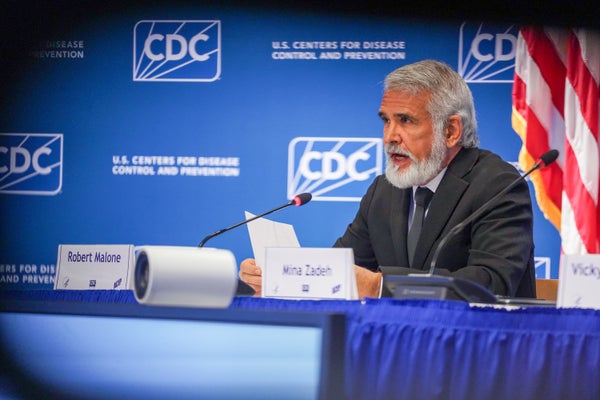
An influential vaccine panel that was due to vote on whether to change recommendations for hepatitis B vaccines for infants has postponed its vote after the day’s deliberations fell into confusion and disarray on Thursday.
The U.S. Centers for Disease Control and Prevention’s Advisory Committee on Immunization Practices (ACIP) was scheduled to rule on recommendations for the hepatitis B vaccine for newborns, but several panel members seemed confused as to what they were voting on. The ballot is now set to take place on Friday.
“There was, again, general disarray and confusion and a clear lack of expertise from both the presenters and the ACIP members,” says Helen Chu, an immunologist and physician at the University of Washington. ACIP initially discussed hepatitis B vaccines at a September meeting, but the members tabled the vote on whether to change the recommendations.
On supporting science journalism
If you're enjoying this article, consider supporting our award-winning journalism by subscribing. By purchasing a subscription you are helping to ensure the future of impactful stories about the discoveries and ideas shaping our world today.
Under current recommendations, all babies receive the first of three doses of the hepatitis B vaccine hours after they are born. The policy, instituted in 1991, has dramatically reduced childhood cases of the disease in the U.S.
ACIP appears to be considering three possible votes, including to make the birth dose optional for infants born to pregnant people who tested negative for the hepatitis B virus. That proposal, whereby parents would be required to discuss vaccination for newborns with a health care provider, prompted significant confusion among members.
“I apologize that it’s taking me a while to thoroughly read this,” said ACIP member Joseph R. Hibbeln, a psychiatrist and neuroscientist, at the meeting, adding that he had had little notice to consider the proposals. “This is the third version of the questions that we at most of the ACIP have received in 72 hours.”
“I’m having a hard time, too,” said ACIP member Cody Meissner, a pediatric infectious disease epidemiologist.
The presentation of the voting information at Thursday’s meeting deviated from past ACIP meetings, says Chu, a former ACIP member, who was dismissed by Secretary of Health and Human Services Robert F. Kennedy, Jr., a noted vaccine skeptic, in June.
The language for votes is “usually decided well ahead of time in the working groups and is shared ahead of time, which allows for both public comment and for review by the ACIP members so that they can come prepared to vote,” she says.
During today’s meeting, “there have been multiple arguments between ACIP members. It’s frankly embarrassing,” says Angela Rasmussen, a virologist at the University of Saskatchewan. “At the last ACIP meeting, they were unable to develop [hepatitis B] recommendations they could vote on. It seems this problem had not been solved.”
Editor’s Note (12/4/25): This story was updated to include further clarification on the proposed votes.