
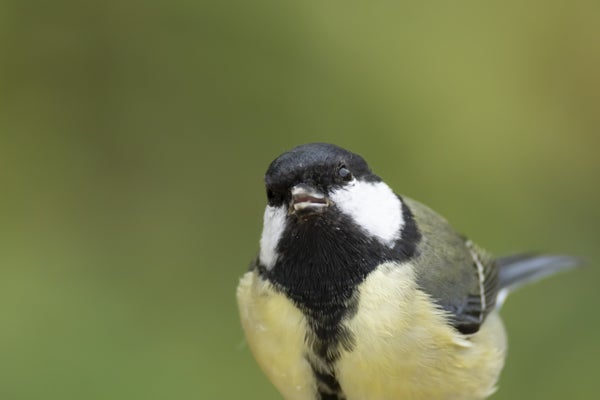
European Great Tits and 36 other bird species on the continent are more afraid of women than they are of men, according to a recent study—and researchers have no idea why.
In the study, men could get about a meter closer to birds than women could before the animals flew away, according to the results. This pattern remained regardless of what the men and women were wearing, what their height was or how they tried to approach the creatures. That suggests birds may be able to suss out the sex of a human, though the researchers aren’t sure how.
“I fully believe our results, that urban birds react differently based on the sex of the person approaching them, but I can’t explain them right now,” said Daniel Blumstein, a co-author of the study and a professor at the University of California, Los Angeles, in a statement.
On supporting science journalism
If you're enjoying this article, consider supporting our award-winning journalism by subscribing. By purchasing a subscription you are helping to ensure the future of impactful stories about the discoveries and ideas shaping our world today.
The researchers looked at birds living in urban centers in five European countries. They included birds that are known to flee as soon as a human approaches, such as magpies, and those that tend to flap off later, such as pigeons. The outsize fear response to women was consistent across the species.
In the paper, the team hypothesized that birds may be sensing chemical signals, such as pheromones, or using cues such as body shape to recognize a person’s sex. But more research is needed before they can come to any conclusions. Notably, previous findings in mammals also suggest these animals can tell men and women apart: for example, lab rats have been observed to feel greater stress when male researchers handle them than when female researchers do so.
“We have identified a phenomenon, but we really don’t know why. However, what our results do highlight is the birds’ sophisticated ability to evaluate their environment,” said study co-author Federico Morelli, an associate professor at the University of Turin, in the same statement.
“There are several possibilities for what cues birds are picking up on. It could be smells, it could be people’s [gait]. But how do we test this? Perhaps a study resembling Monty Python’s Ministry of Silly Walks,” said Blumstein, referring to the famous British comedy show sketch.