
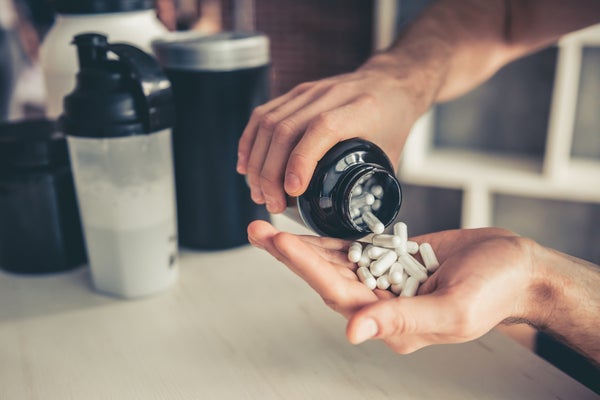

Let’s start with the basics. The most common muscle-building supplement there is can be found right in your fridge. It’s called protein.
When you eat protein, your body breaks the protein down into amino acids. Those amino acids are then used to repair and grow new muscle fibers. When you consume an adequate amount of protein, your body will experience something called a positive balance of nitrogen.
On supporting science journalism
If you're enjoying this article, consider supporting our award-winning journalism by subscribing. By purchasing a subscription you are helping to ensure the future of impactful stories about the discoveries and ideas shaping our world today.
Nitrogen balance is a measure of protein metabolism. That may sound complicated, but it simply means that if the intake of nitrogen into your body is greater than the loss of nitrogen from your body, there is an increase in the total body pool of protein. This positive balance signals your body to get itself into an anabolic, or muscle-building, state.
Here’s an interesting aside: Periods of growth in children, hypothyroidism, tissue repair, and pregnancy are also associated with a positive nitrogen balance.
People who don’t have access to sufficient amounts of protein can experience muscle atrophy and muscle wasting. The US Recommended Daily Allowance (RDA) for protein is 0.36 grams per pound. You’ve probably heard reports saying that Americans eat far more protein than required. But, as my fellow Quick and Dirty Tipper, the Nutrition Diva, pointed out in an article, that isn’t exactly true.
Most Americans are not tearing down muscle under a barbell regularly. But for an active person who works out, a protein intake of approximately 0.45 grams per pound of body weight is adequate.
But before the higher number I just gave gets you thinking that more protein must be better, keep in mind that many studies have found that protein intake above 1.2 grams per pound of bodyweight provided no additional muscle-building benefits. In fact, in extreme cases, excess protein consumption could increase the risk of dehydration and kidney damage.
So yes, we need to consume adequate protein to build muscle, but don’t go overboard. Researchers recently measured the effects of protein on muscle synthesis by feeding people steaks and then measured the rate at which their bodies built new muscle tissue after the meal. They found that muscle synthesis went up by 50% after eating some beef. But 4 ounces of beef worked just as well as 12 ounces.
»Continue reading “ Do Amino Acids Build Bigger Muscles?” on QuickAndDirtyTips.com