
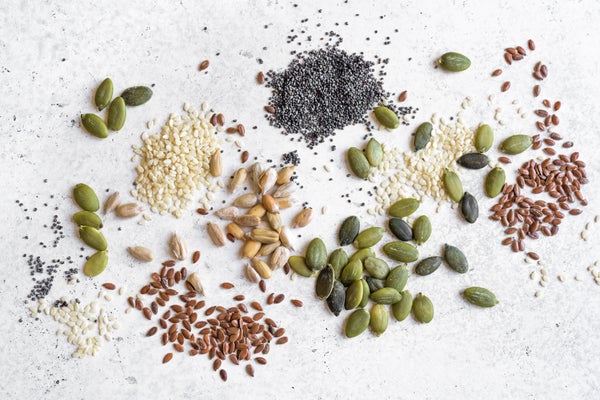

Several of you have written to ask about seed cycling, a practice that claims to help with premenstrual syndrome, menopausal symptoms, and general hormonal balance. Does eating certain seeds at certain times really help regulate hormones? Let's look at the research.
What is seed cycling?
On supporting science journalism
If you're enjoying this article, consider supporting our award-winning journalism by subscribing. By purchasing a subscription you are helping to ensure the future of impactful stories about the discoveries and ideas shaping our world today.
Seed cycling is not really new but it is newly trendy. The idea behind seed cycling is that certain types of seeds, such as pumpkin, flax, and chia, can help regulate the levels of estrogen, progesterone and other hormones. Synchronizing your consumption of various seeds with your menstrual cycle can allegedly relieve hormone-related symptoms such as PMS, PCOS, irregular periods, hot flashes, and generally increase your level of well-being. Some even claim that seed cycling can help you get pregnant.
In a typical seed cycling protocol, you eat two tablespoons of ground seeds every day. You can mix the seeds into a smoothie or sprinkle them on your oatmeal. Purists insist that the seeds be raw and freshly ground. (Chewing well, of course, counts as grinding.)
Phase One: During phase one, which lasts two weeks, you eat a tablespoon of flax and a tablespoon of pumpkin seeds.
Phase Two: During phase two, which also lasts two weeks, you switch to sunflower and sesame seeds. This adds about 100 calories, 9 grams of fat, 4 grams of protein, and 3 grams of fiber to your day.
If you're still menstruating, you’d start phase one (pumpkin and flax) on the first day of your period and switch to phase two (sunflower and sesame) on day 14. If you are no longer menstruating, you can start phase one on the first of the month. Some women like to synchronize their seed cycling to the phases of the moon, beginning phase one on the new moon and phase two on the full moon. Howling is optional.
During a normal menstrual cycle, your estrogen and progesterone levels ebb and fall in a predictable rhythm. As you approach menopause, your hormone levels may start to fluctuate more erratically. After menopause, production of both hormones settles at a significantly lower level.
Theoretically, seed cycling either enhances or inhibits the production of estrogen and progesterone in the body (depending on what is needed), thereby balancing and optimizing your hormones and relieving symptoms due to hormonal imbalance. A few months of cycling is said to be enough to begin seeing the benefits.
As the trend has taken hold, seed cycling recipe collections, smoothie mixes, energy bars and cookies have appeared online and in healthfood stores.
Continue reading “Does Seed Cycling Help Balance Hormones?” on QuickAndDirtyTips.com