
As leaders converge on COP 28 in the United Arab Emirates, the international climate change meeting will have for the first time an explicit focus on climate change’s effect on health and wellness.
As physicians based in the Democratic Republic of Congo (DRC) and the U.S., we applaud that meeting organizers are doing a deep dive on health issues; health and human rights should be an integral part of discussions throughout COP 28, particularly as they involve the mining of natural resources to meet renewable energy demands. The DRC is an example of this, where even seemingly progressive and beneficial energy policy could make worse the working conditions, the overall health and the living conditions of the poorest children and adults who work in mines. Countries striving for independence from fossil fuels must ensure that shifting to a green economy does not add to what some public health experts call “modern day slavery.”
Our own countries, both part of the meeting, seem to be business-oriented, taking for granted some of the health disparities propagated by climate change initiatives. In November the World Bank released its DRC Country Development Country Climate and Development Report. It noted the DRC’s potential to be at the forefront of fighting climate change. Similarly, President Biden’s Bipartisan Infrastructure Law and Inflation Reduction Act has provided lucrative incentives for Americans to invest in a number of options to support clean energy.
On supporting science journalism
If you're enjoying this article, consider supporting our award-winning journalism by subscribing. By purchasing a subscription you are helping to ensure the future of impactful stories about the discoveries and ideas shaping our world today.
But these policies increase the demand for the raw materials to make green technology, particularly a key ingredient: the mineral cobalt. The DRC produces more than 70 percent of the world’s cobalt, which has to be mined through intensive labor efforts that often go unregulated. And while a World Bank report acknowledged greater transparency is needed in the mining industry to ensure economic equity, it did not discuss the vast health disparities currently being driven by policies like Biden’s that are meant to better the environment.
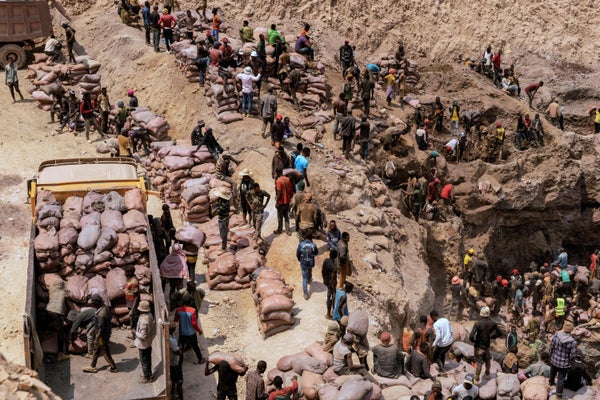
Up to 30 percent of the DRC’s cobalt is extracted through “artisanal mining”—small scale operations that rely on child labor, unsafe working conditions and exposure to hazardous pollutants that lead to poor health outcomes, such as neurological impairment or respiratory failure. Children often start working in the mines at an early age, without proper equipment, food or health care. Many mines have high levels of radioactivity, and a high risk of collapse, leading to injury or death.
The global push towards renewable sources of energy has overshadowed the humanitarian crisis that has been happening over the past several decades in the DRC. More than five million people have been displaced within the country and more than one million Congolese have sought asylum. While much of the displacement has been fueled by conflict, mining has also caused people to be evicted or otherwise threatened to leave their homes, contributing to further forced relocation.
The world often refers to the DRC as an under-resourced country. However, the DRC is one of the richest countries in terms of natural resources. The majority of Congolese do not benefit financially from the world’s demand for cobalt. A significant part of the health care system is dependent on fees paid directly by patients for services. As a result, the poor and displaced, including some of those mining for cobalt, have difficulty accessing care, because of inability to pay and the lack of health insurance. Health care providers in the country care for these people, some with conditions resulting from their hazardous work, with little infrastructure to support them.
The Biden administration has increased its focus on the DRC’s natural resources, but has taken little responsibility in supporting Congolese refugees, who top the list of countries of origin for U.S. asylum applicants. The DRC is the only country of the top five, which includes Syria, Sudan, Burma and Ukraine, not designated for Temporary Protected Status, which would allow for streamlined acceptance of asylum seekers. It is unfathomable that the U.S. government has not granted TPS to DRC refugees and has taken a selective solidarity approach by not including this one country along with the others.
There is an overwhelming price for the shift to energy independence, and it is being paid by the most vulnerable citizens of the DRC. Most of the world is aware of the devastating effects of climate change, but many are not aware of the unintended consequences that sourcing of minerals like cobalt have caused. We cannot selectively demand for decreasing carbon emissions and at the same time be blind to the injustices that are happening in the DRC.
The delegates at COP 28 and the world need to ensure that the focus on renewable energy is not myopic. While funds have been provided to the DRC to support better mining conditions, there needs to be more transparency about how the funds are being used, and if the individual workers are indeed experiencing improvements to their quality of life. COP 28 countries should also support those who have been displaced with more fair and just asylum practices. The world’s environmental freedom should not come at the expense of disenfranchisement of the citizens of the DRC.
This is an opinion and analysis article, and the views expressed by the author or authors are not necessarily those of Scientific American.