
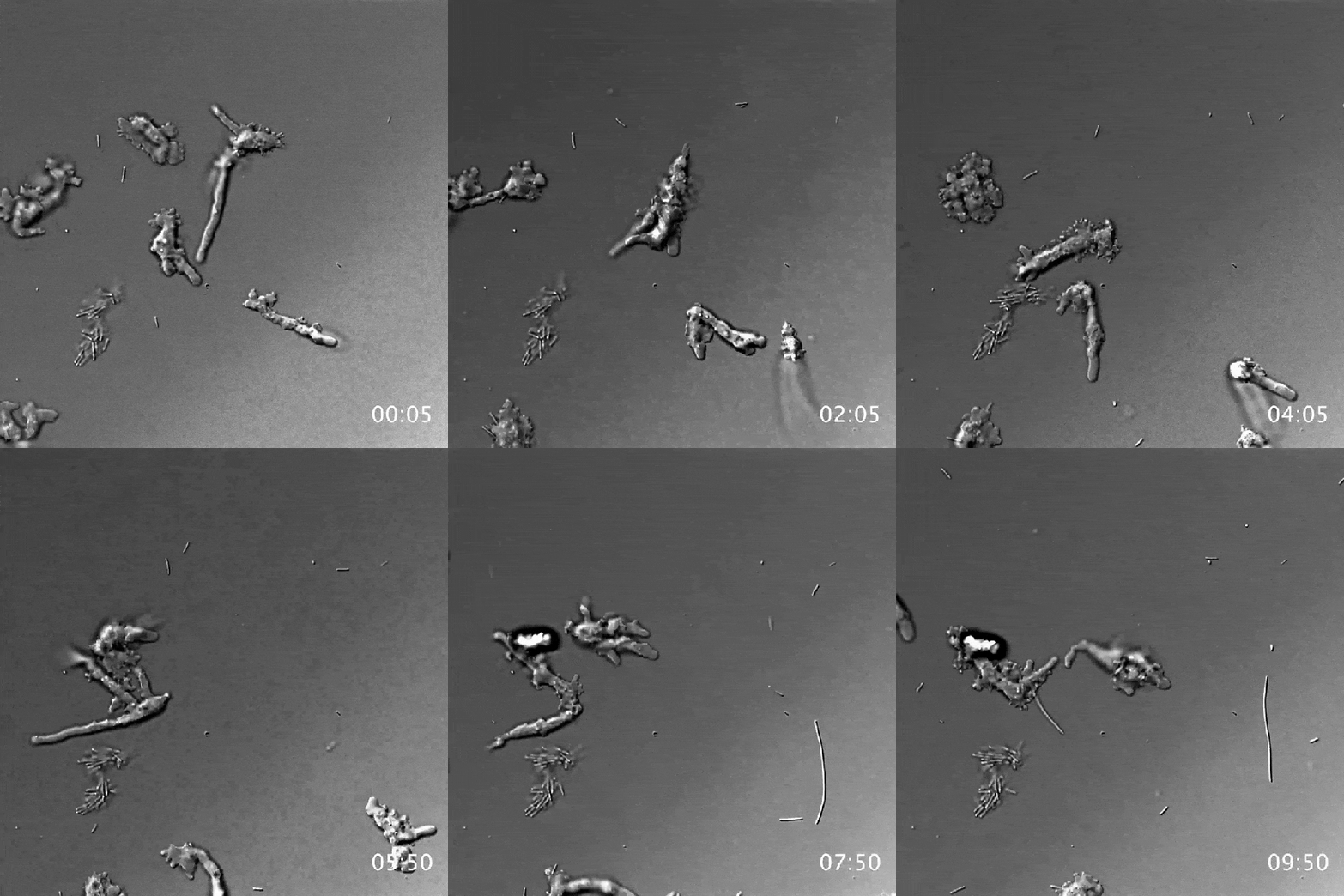
A tiny amoeba has broken a pretty big record.
The newly discovered species of single-celled organism can divide and reproduce at a piping hot 63 degrees Celsius (145 degrees Fahrenheit), a higher temperature than possible for any other known complex form of life. The discovery, described in a preprint study on the server bioRxiv and not yet peer-reviewed, “pushes the boundaries of our understanding of life’s limits on Earth and the implications for life beyond Earth—where else and how else life might be able to take hold and thrive,” says microbial ecologist and astrobiologist Luke McKay, who was not involved with the study.
Much of the existing research into extremophiles—life-forms that thrive at extreme temperatures, acidity levels, or other environmental conditions—has concentrated on bacteria and archaea that lack a nucleus or membrane-bound cell organelles. The record-holding organism for withstanding high temperature is an archaean, Methanopyrus kandleri, which can grow at temperatures of 122 degrees C. The most heat-loving bacteria, Geothermobacterium ferrireducens, can grow at temperatures up to 100 degrees C.
On supporting science journalism
If you're enjoying this article, consider supporting our award-winning journalism by subscribing. By purchasing a subscription you are helping to ensure the future of impactful stories about the discoveries and ideas shaping our world today.
But conventional wisdom since the early 1970s had been that eukaryotes—organisms with a cell nucleus, from amoebas to animals—would not be able to cope with high temperatures as readily because of their more complex biology. High temperatures can, for example, cause proteins necessary for life to fall apart. Before now, eukaryotes had been shown to tolerate temperatures up to only about 60 degrees C, and scientists typically assumed they could tolerate nothing higher than 62 degrees C.
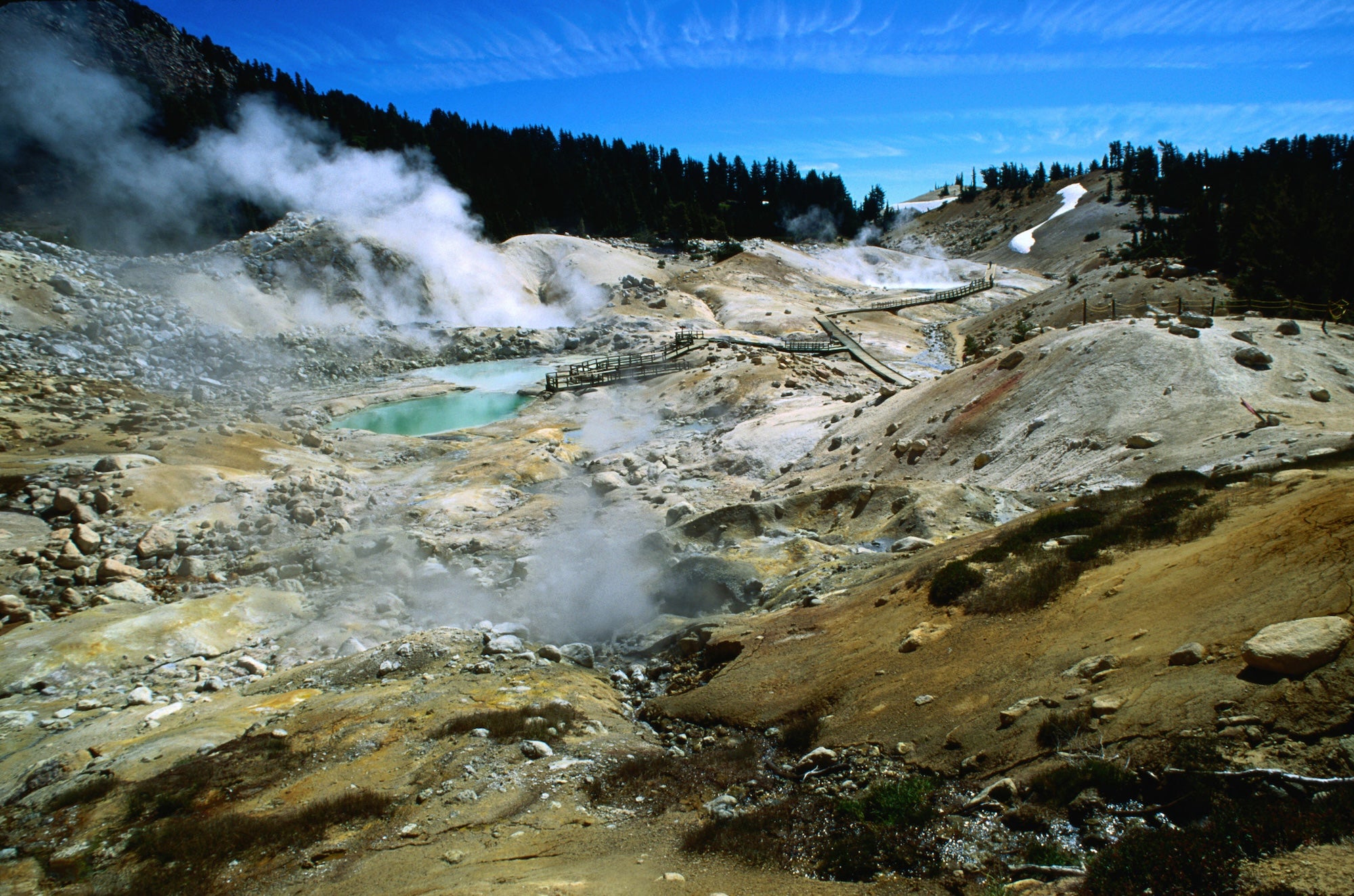
Lassen Volcanic National Park.
John Elk/Getty Images
To explore the world of eukaryote extremophiles, microbiologists Angela Oliverio and Beryl Rappaport, both at Syracuse University, and some of their colleagues took samples from Lassen Volcanic National Park, in the Cascade mountain range in northern California, and cultured them in flasks back in their laboratory. Within a few weeks of sample growth, researchers spotted the never-before-seen amoeba species in flasks that had been kept at temperatures similar to those of the stream it was found in. As the researchers notched up the temperature, the amoeba, dubbed Incendiamoeba cascadensis (meaning “fire amoeba from the Cascades,” according to the preprint), kept on going. It was able to replicate itself in temperatures of up to 63 degrees C, remain active at up to 64 degrees C, and form a protective coating and survive encased in it at up to 70 degrees C, reawakening when the temperature was lowered again. “Our minds were kind of blown at that point,” Oliverio says.
The researchers also sequenced the amoeba’s genome and looked at its proteome, the proteins its genes are predicted to produce. Their findings suggest its go-to proteins have a higher average melting temperature than those of its nearest amoeba relative.
“The difference between 60 and 63 degrees C may sound small but represents a relatively large shift in our current understanding of eukaryotic limits,” says McKay, who works at biotechnology research company Symbiotic Biosystems.
“A Geothermal Amoeba Sets a New Upper Temperature Limit for Eukaryotes,” by H. Beryl Rappaport et al. Preprint posted to bioRxiv on November 24, 2025 (CC BY-NC-ND 4.0); Aerial Filmworks/Getty Images
The new finding has implications beyond just biology: for instance, understanding how such organisms survive high heat can help researchers develop heat-tolerant proteins and enzymes for other applications. “Why would I care about an amoeba in a random national park?” Oliverio says. “Well, your laundry detergent might be improved.”
But she dwells more on the existential implications: “It raises a lot of interesting questions about what are the constraints” on life, Oliverio says. “And we have really no idea. We sampled the stream and got this amoeba from one geothermal area. There could be hotter things out there. There probably are.”