
Credit: Danté Fenolio/Science Source
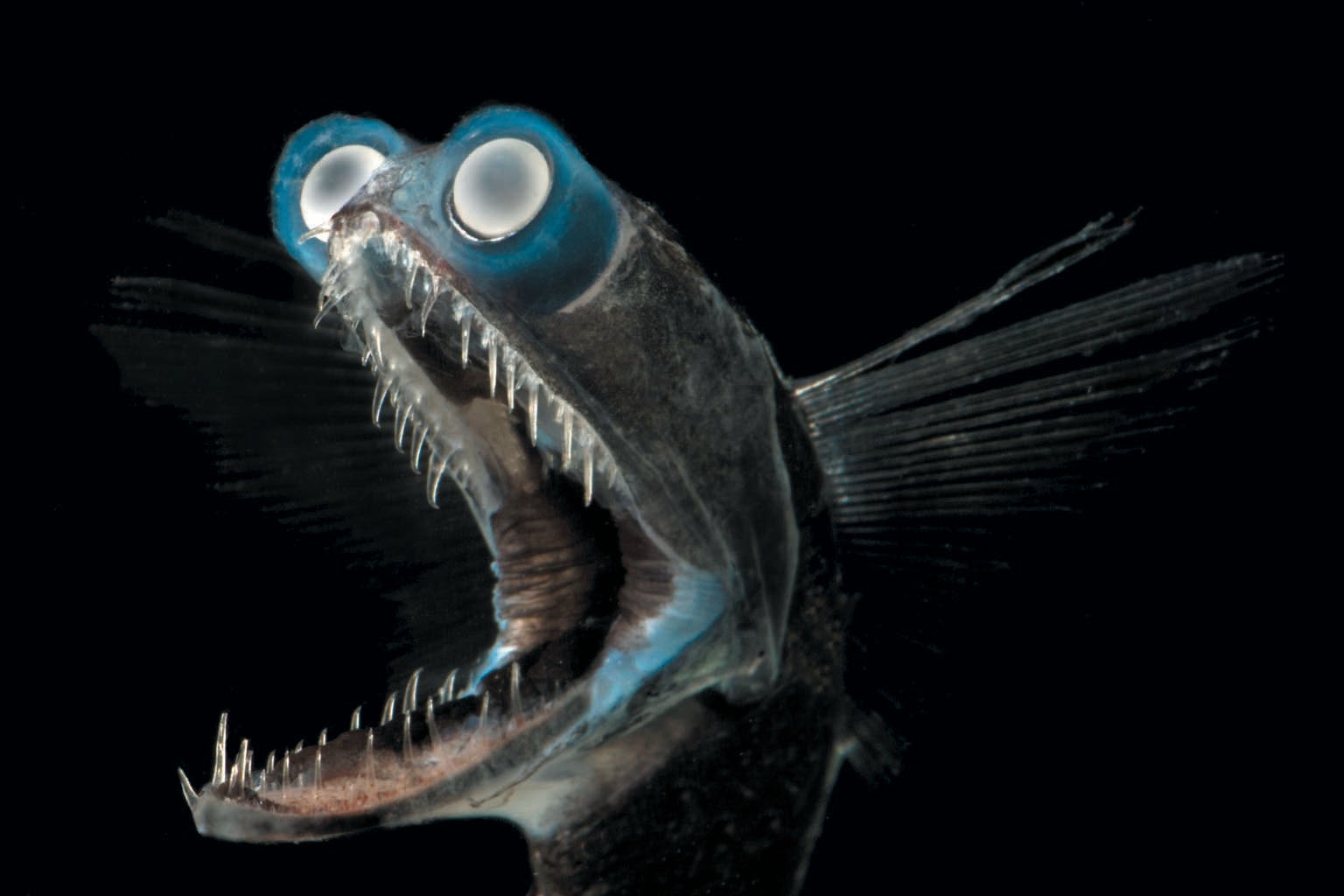
BLACKOUT EATER
Reclusive telescopefish live nearly a mile below the ocean’s surface, where they feed on bioluminescent creatures. They orient themselves vertically to pick out the silhouettes of prey swimming overhead, then strike with their nasty jaws. Whenever they ingest a glowing meal, they risk lighting up from within, broadcasting their location to their own predators. To stay hidden in the dark waters, the fish have evolved an opaque stomach that acts like a built-in blackout curtain after they have eaten.
Credit: Mike Bartick
On supporting science journalism
If you're enjoying this article, consider supporting our award-winning journalism by subscribing. By purchasing a subscription you are helping to ensure the future of impactful stories about the discoveries and ideas shaping our world today.
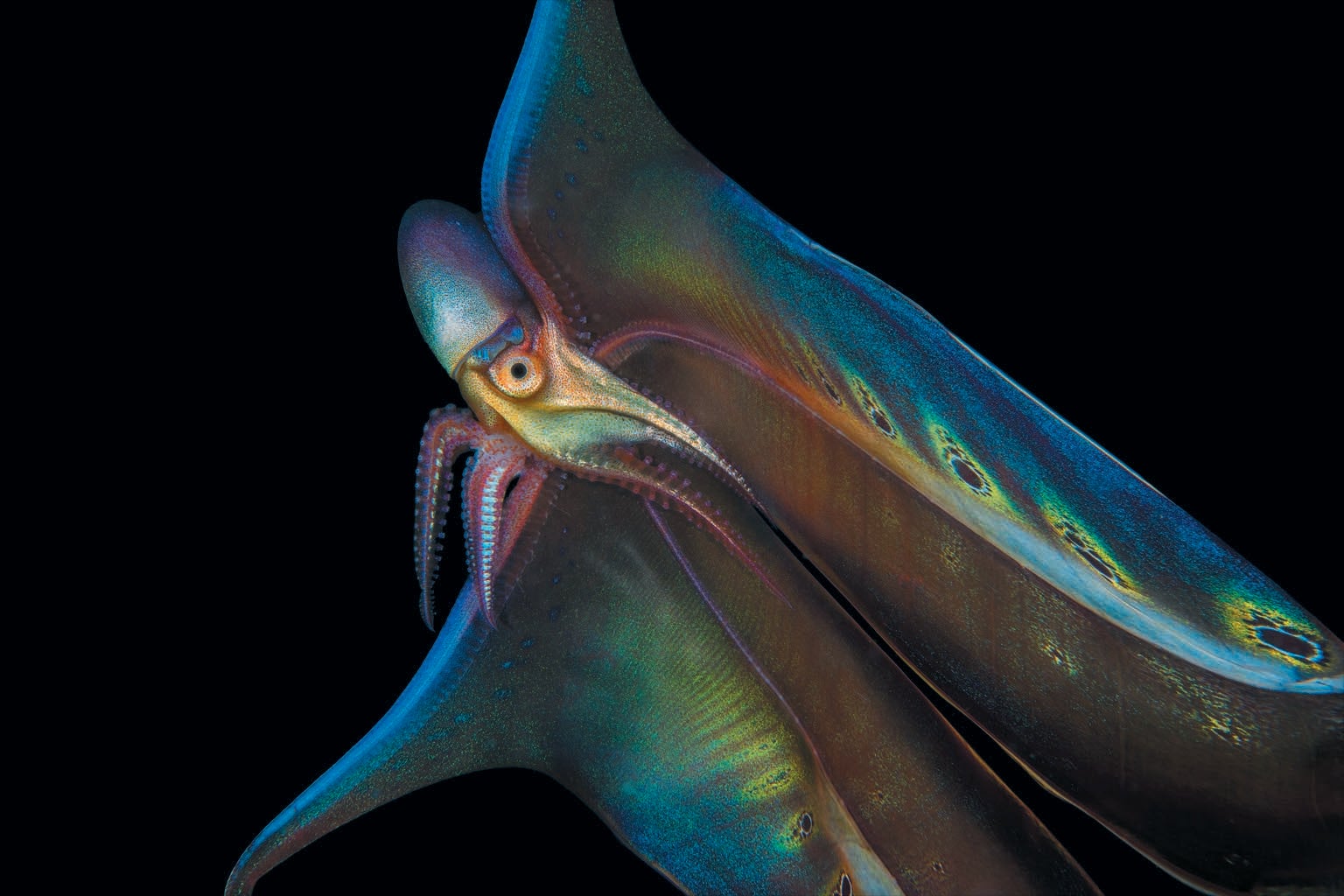
INTIMIDATOR
A female blanket octopus unfurls her iridescent cape. Scientists suspect that the membranous webbing helps to deter would-be predators by making the octopus appear larger and more intimidating. The female can grow to six feet long and up to 40,000 times heavier than the male, which is smaller than a Ping Pong ball—one of the most extreme sex differences in the animal kingdom.
Credit: Tui De Roy/Minden Pictures
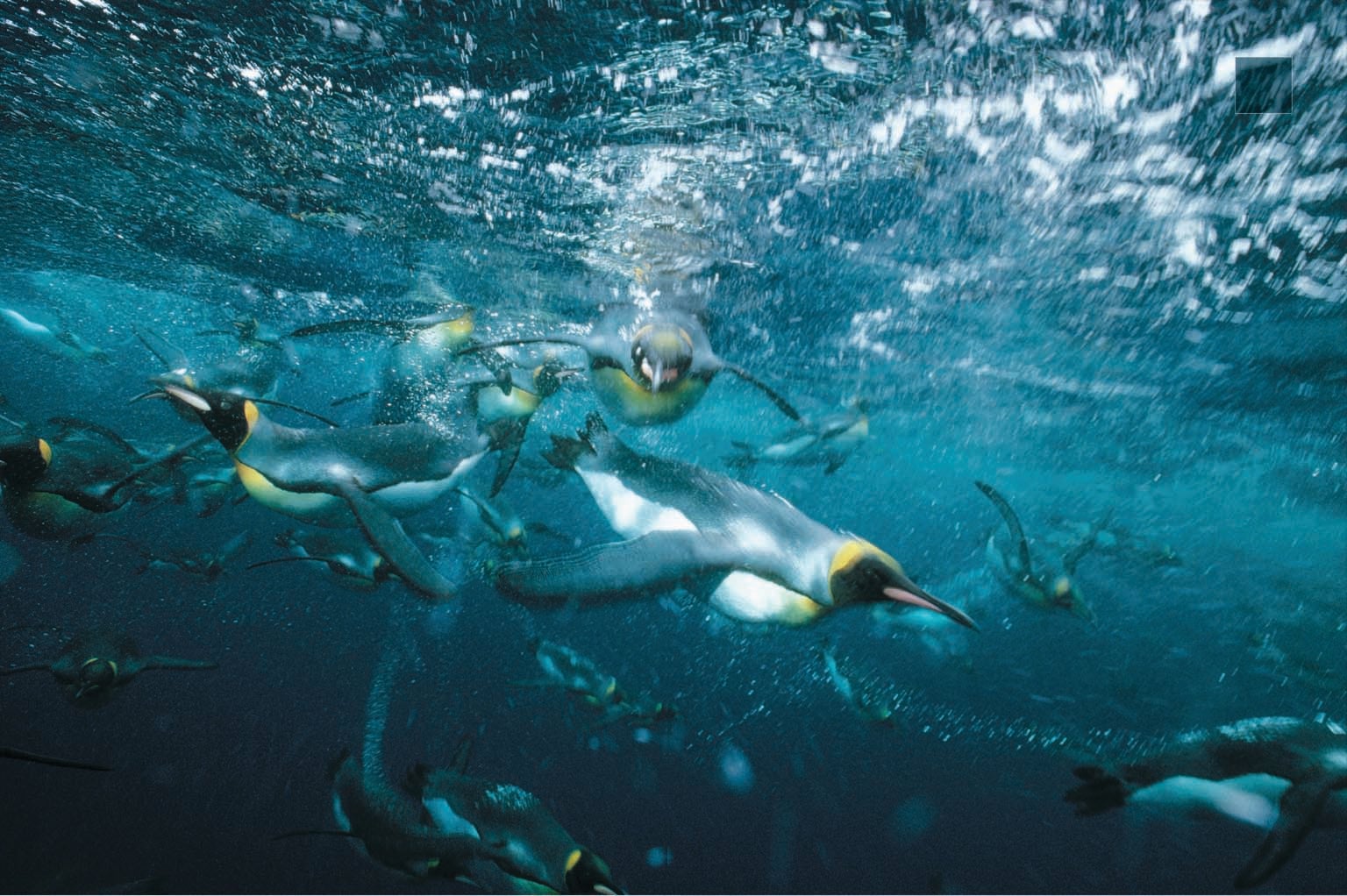
DIVE KINGS
King penguins nest in massive colonies—sometimes with hundreds of thousands of birds—on sub-Antarctic islands. They do not build nests. Instead they keep each egg warm on the top of their feet. The males take the first incubation shift, which can last for weeks, while the females venture to the sea for a well-earned meal. Measuring about three feet tall, the kings are the second-largest of all penguins, eclipsed only by the emperors.